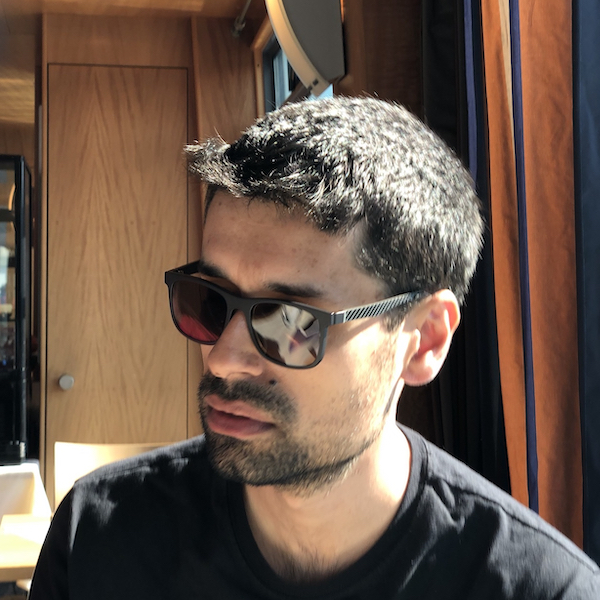
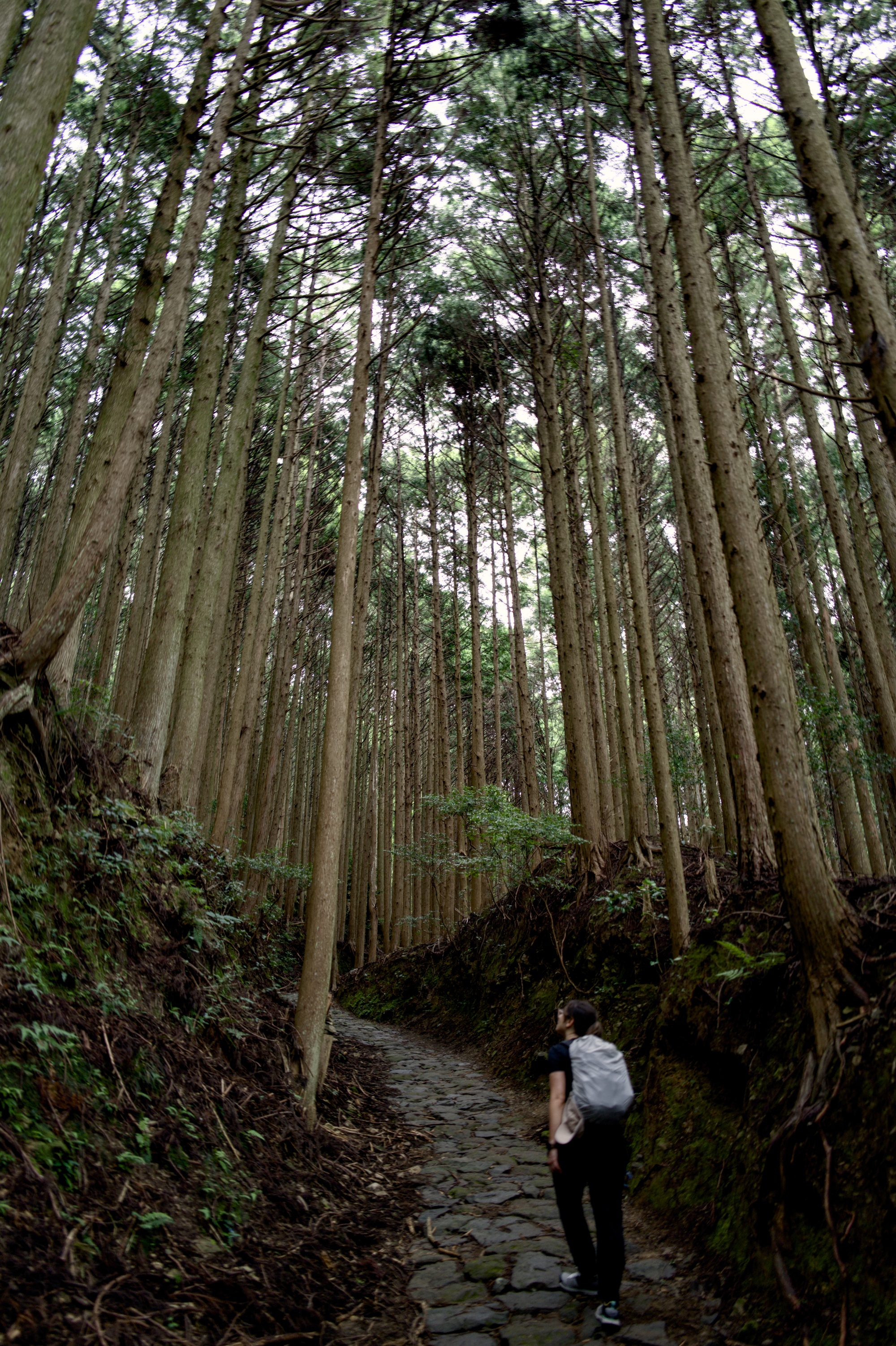
It’s 9:00 am, September 29, Takijiri-oji (滝尻王子). The river runs shy between the rocks and mirrors the forest, with mountains rising behind it. I hear a faint bell ringing somewhere up the slope while two hikers pass and disappear into the cedar shade. I set a boot on a stone step braided with roots, take a long breath, and let it out.
People have walked the Kumano Kodo (熊野古道) hills for a thousand years. I came for five days of walking and a mental reset I couldn’t quite define. I don’t know yet that the stairs will go on for hours, whether I’ll encounter bears, or if I’ll arrive before sunset. I only know the pack sits on my back, my breath is steady, and my eyes aim at the trail.
“Is one of these the one we’ll climb”? I wonder. When our Airbnb host dropped us at the trailhead this morning, the mountains looked imposing and impenetrable, steep like a wall. Last night at dinner, another guest who had walked from Takijiri-oji to Takahara (高原) tried to dissuade us from starting here. They vehemently argued we should skip this section. I sipped wine and shrugged: “where would the fun be in that? I traveled around the planet for this”.


A total reset
Disconnecting from routine
The idea of a total reset had been circling my mind for quite some time, a need to disconnect from routine, tune out the noise, and reconnect with my own thoughts. The Kumano Kodo trails in Japan felt like the right backdrop for that experiment. I assumed the effort would be rewarded by shrines. I didn’t know yet that the walk itself would become the destination, and each step a small arrival.
For thousands of years, these trails have guided pilgrims toward sacred temples and connected walkers in search of meaning, or just adventure. While walking those paths for five days in search of the latter, I may have stumbled upon a little of the former.
The absence of Switzerland’s turquoise lakes or the dramatic Alps of France meant the landscape wouldn’t steal the spotlight, it would walk beside me instead, like a quiet companion. Yet, by the final day, all I wanted was to start again. Those soft, green mountains held more beauty than I expected.
From the start, this had to be a distraction-free walk. Even when the idea was still forming, it was clear that I wanted full immersion: no social media, no podcasts, no music. Just the here and the now. No autopilot, only awareness.
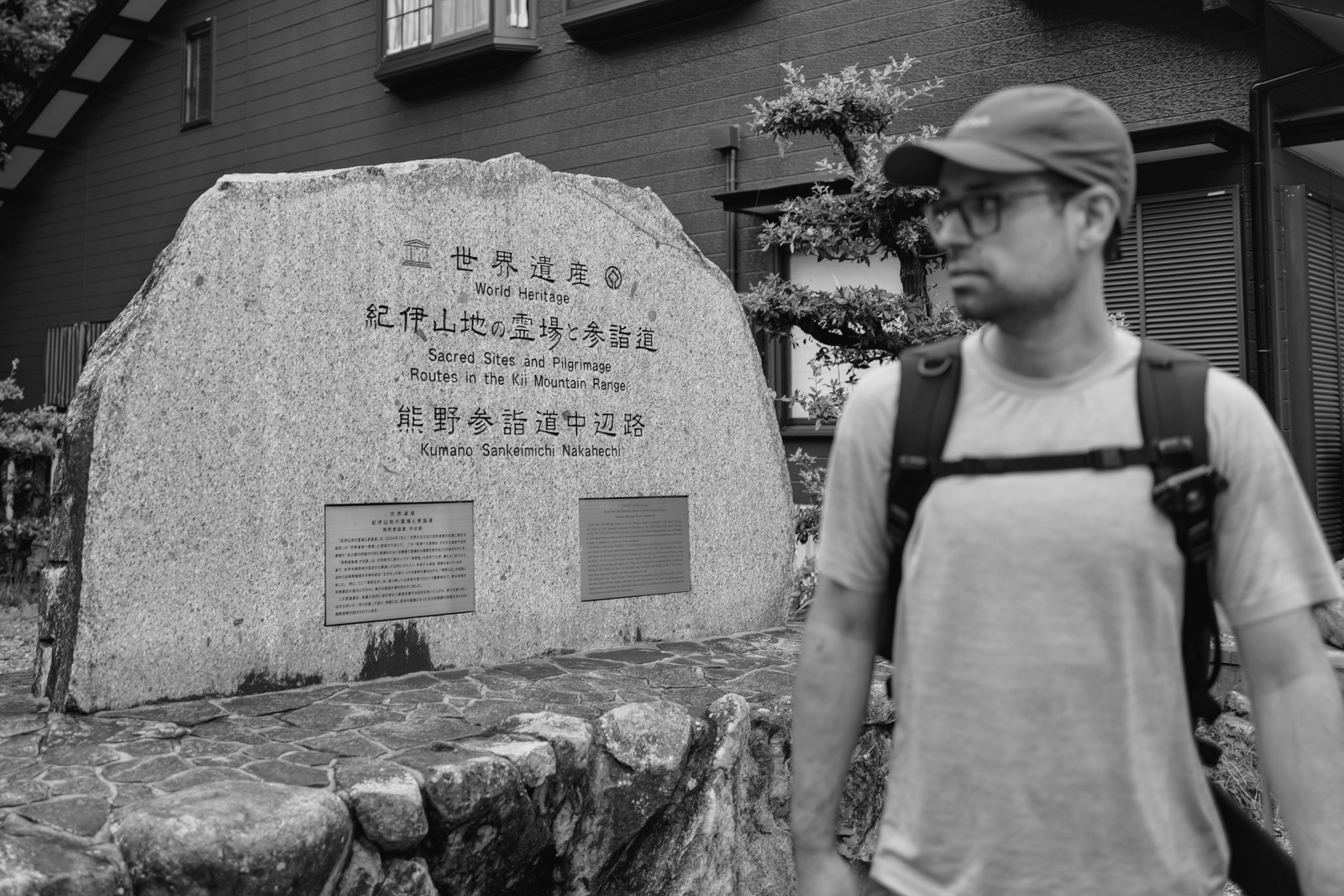
Day 1: Takijiri-oji to Chikatsuyu
Finding the rhythm of the path
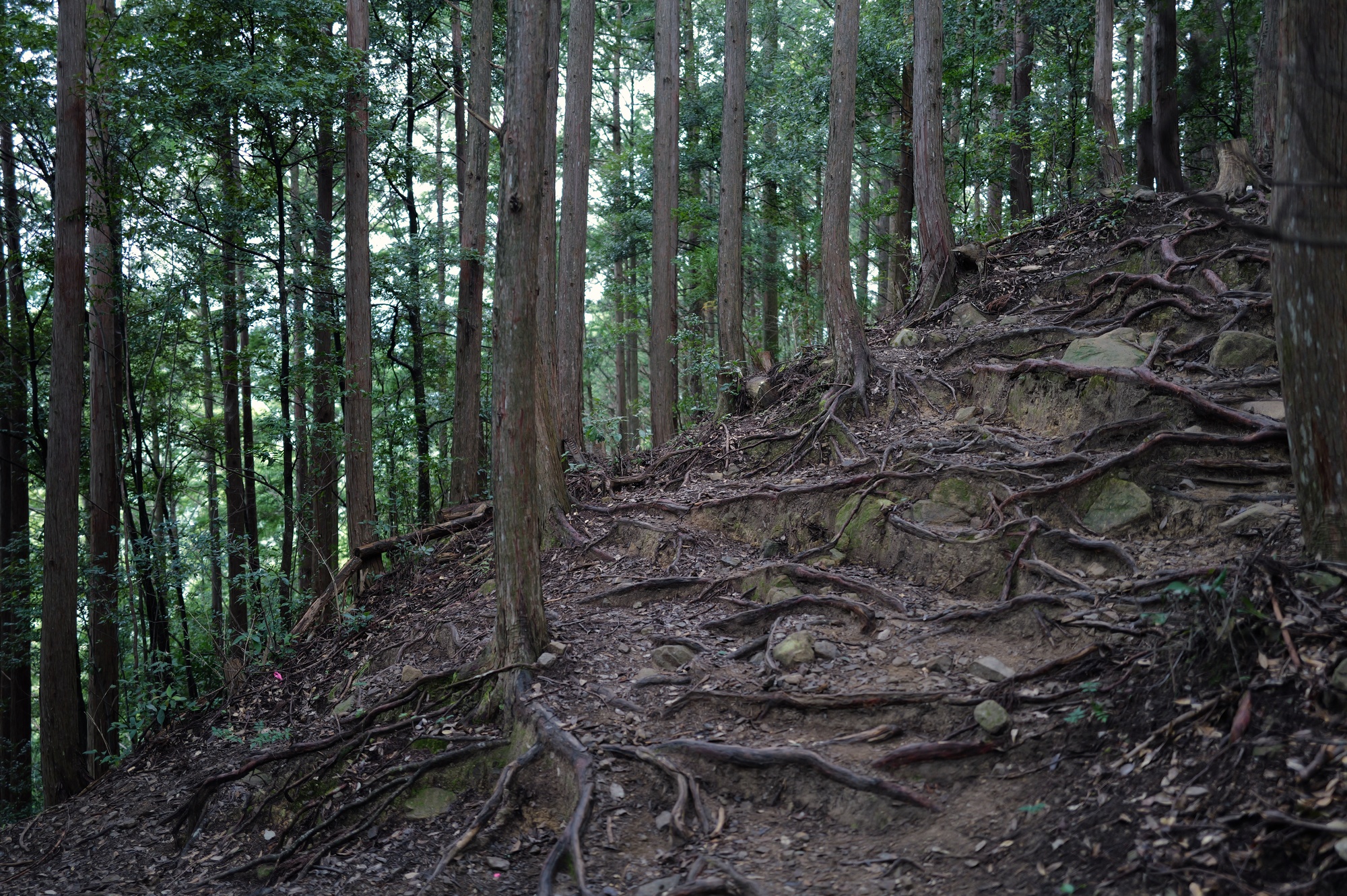
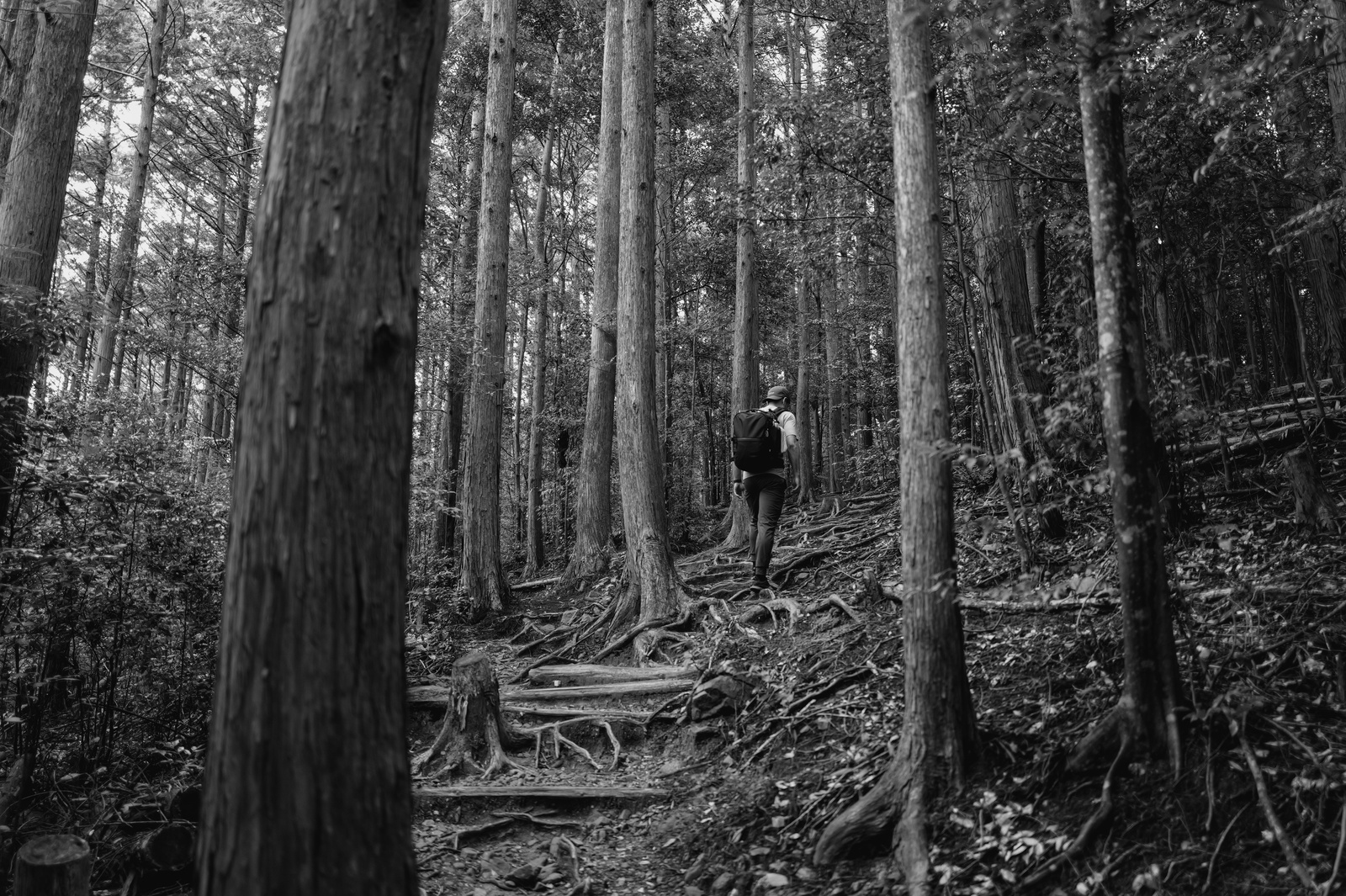
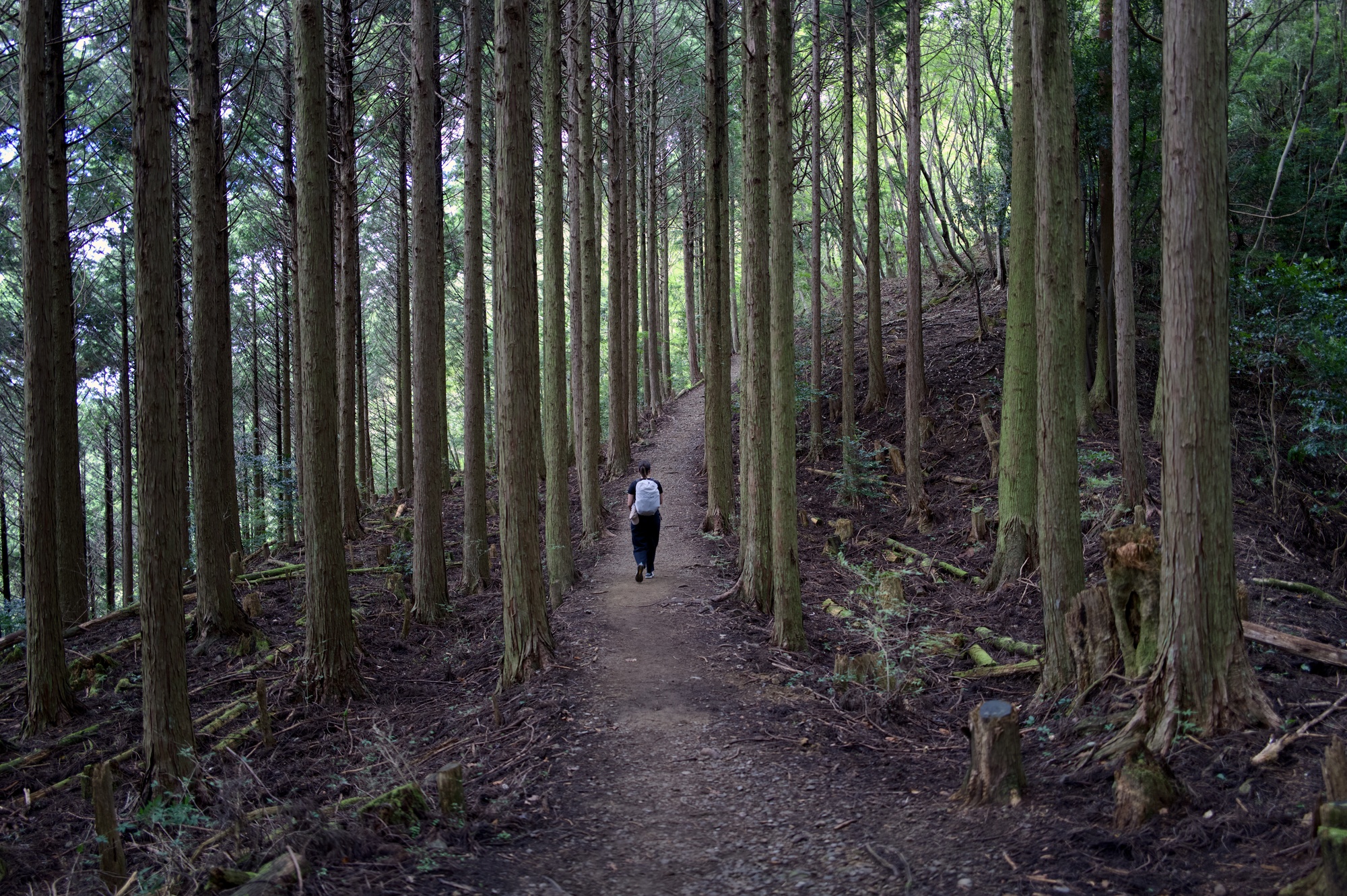
The walk starts off climbing a staircase with steps twice the regular height, and I feel a slight burn in my thigh. It’s just a warm up. At first, my wife and I are enchanted by the beauty and historical significance of this place. “Lots of photography opportunities”, I think. You don’t see rocky stairs intertwined with tree roots like these anywhere.
The staircase never stops. We’re ten, thirty, fifty minutes in and it’s an endless, tough ascent. After 656 feet of elevation (200 meters), my body is protesting loudly, “what the hell are you doing, Alex?”. The initial climb is sudden, dramatic and slow, but a smile escapes me when I remember Tom ascending to heaven in an infinite staircase.
After a while, the stairs morph into marble-sized little rocks. Every step is a meticulous task of positioning the foot properly, as if my ankles are dancing. The physical intensity is only matched by the mental challenge of choosing where to tread among the infinity of roots. Think of tetris, but with your feet.
Light rain needles through the canopy, forming dots on my forearms. “Uh oh”, I exhale, hoping to stay on a dry path.
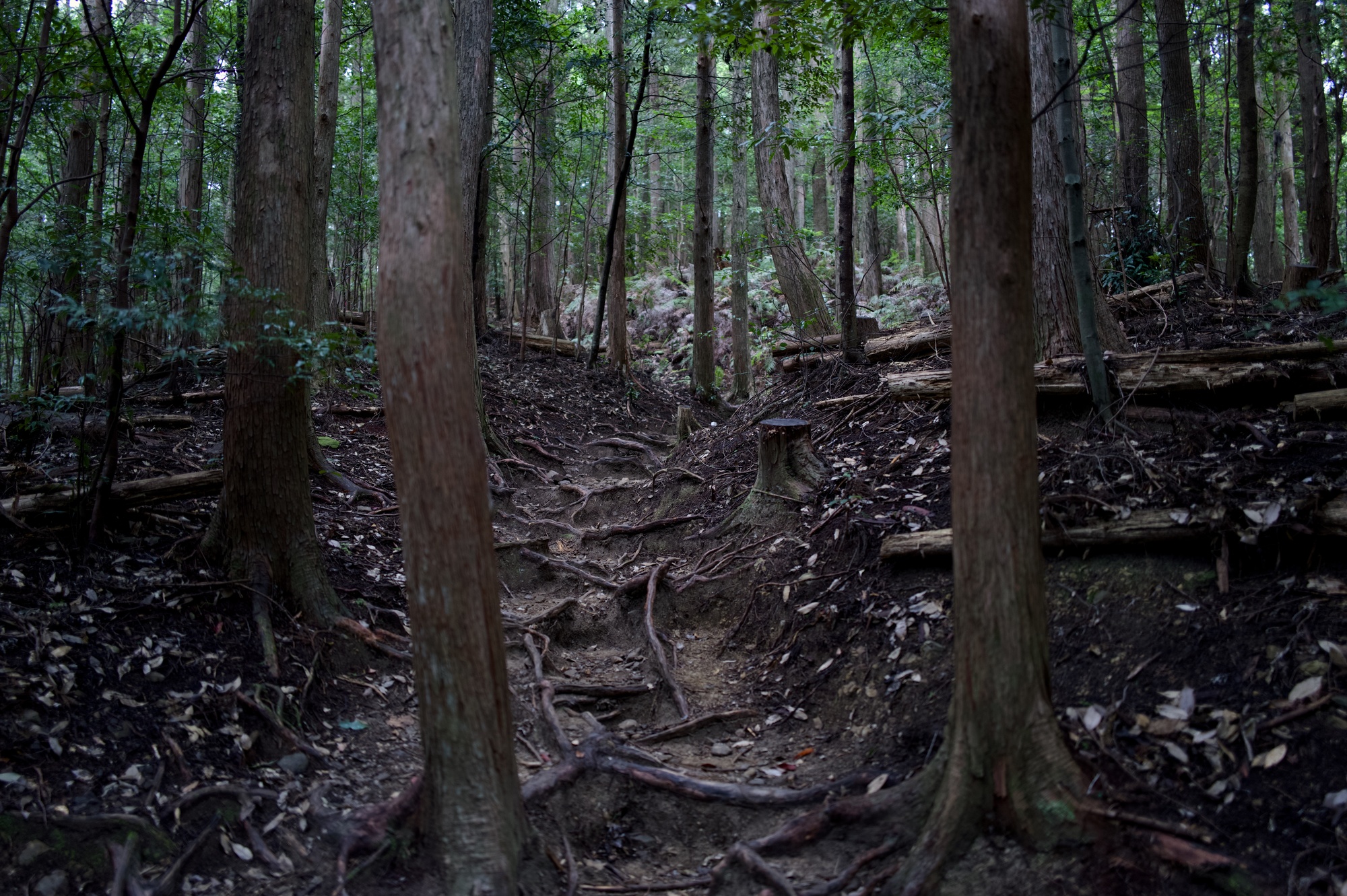
After a brutal initial ascent, we reach a flat section where we can accelerate and keep a better pace. The watch displays 10:42am and 1,040 feet of elevation gain (317m). After 3.44km, heart rate drops to 111bpm. The knot in my throat disappears and I can breathe again. The rain stopped and I realized it’s been a while since I thought about it.
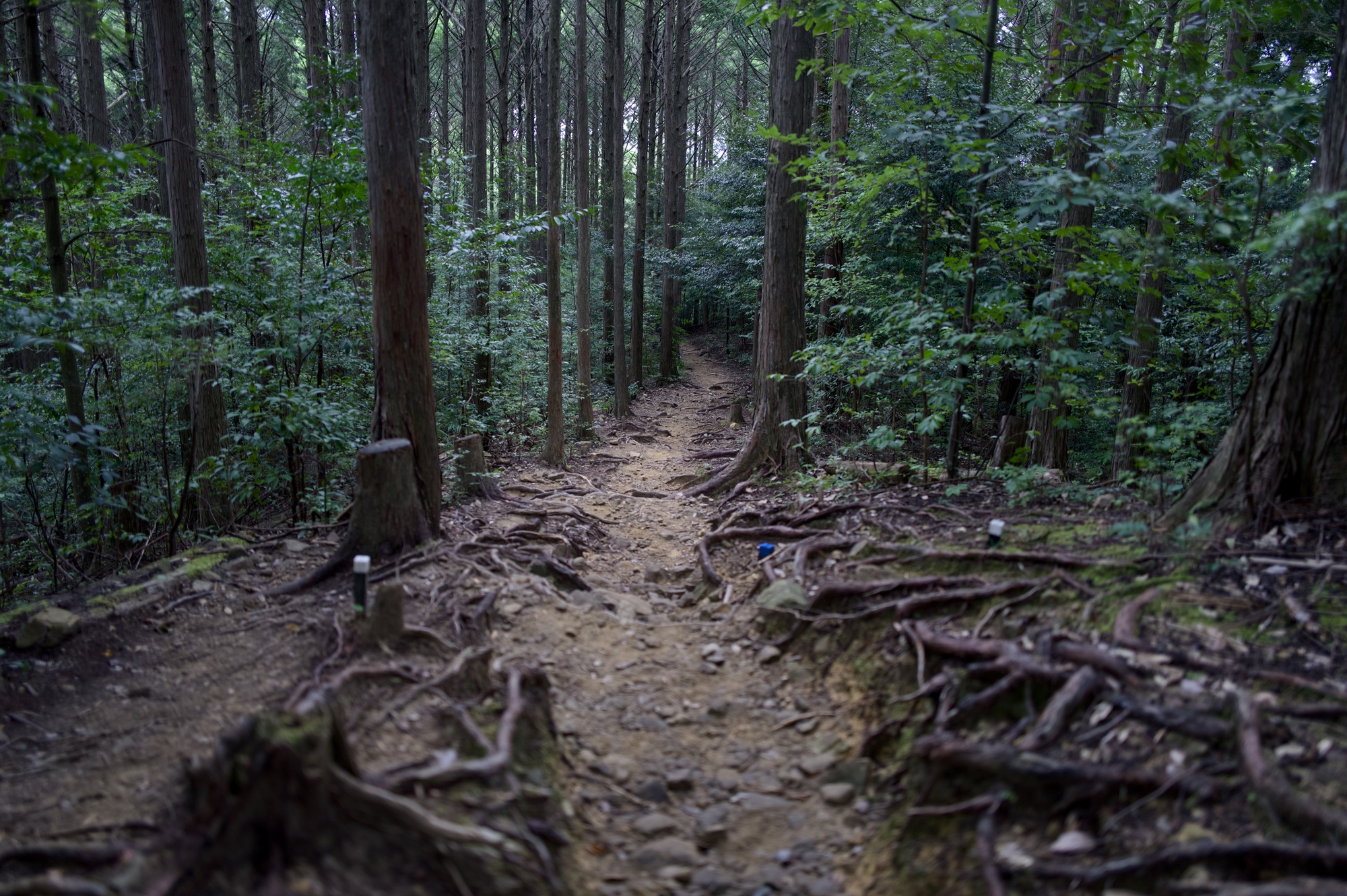
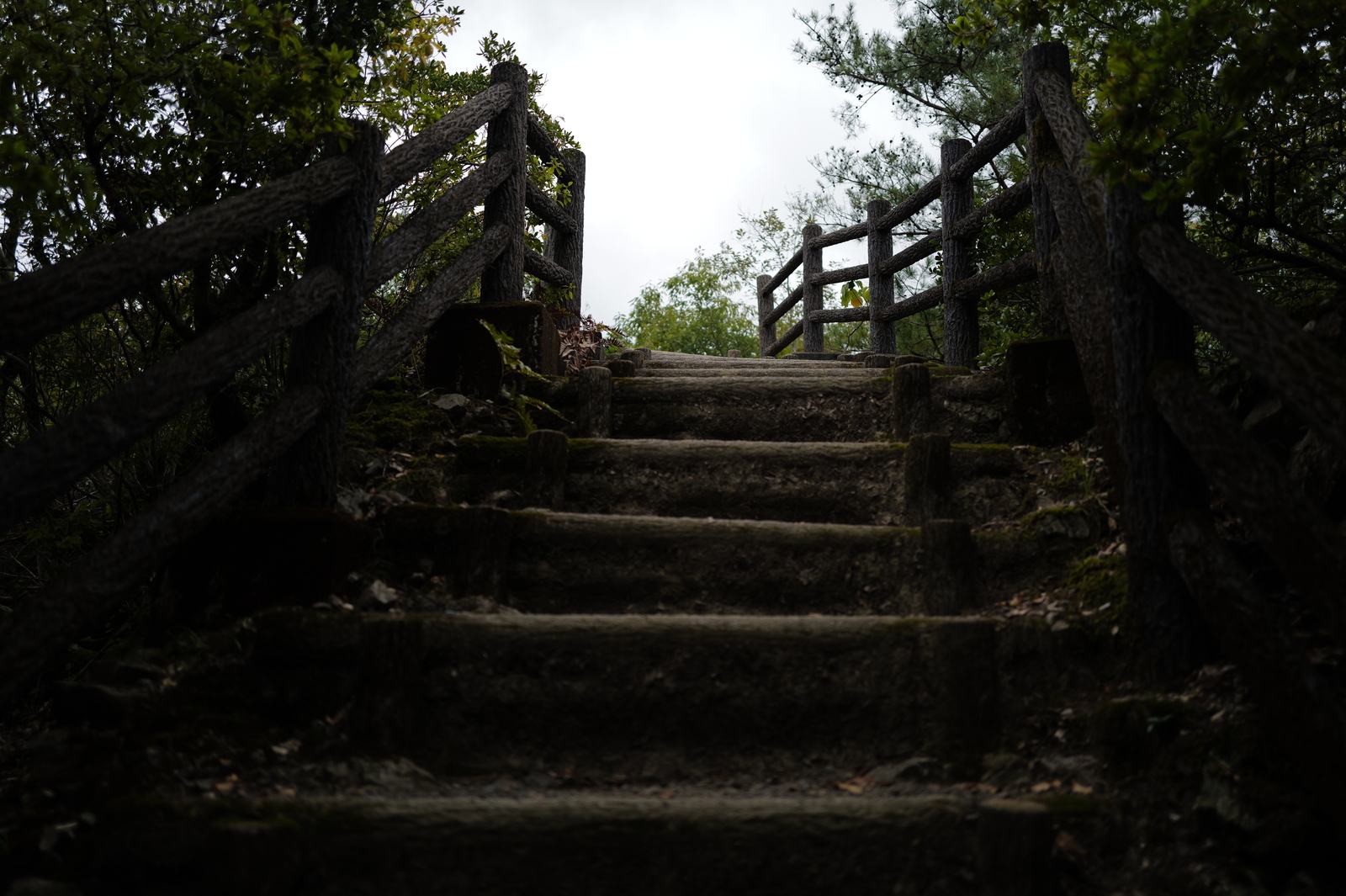
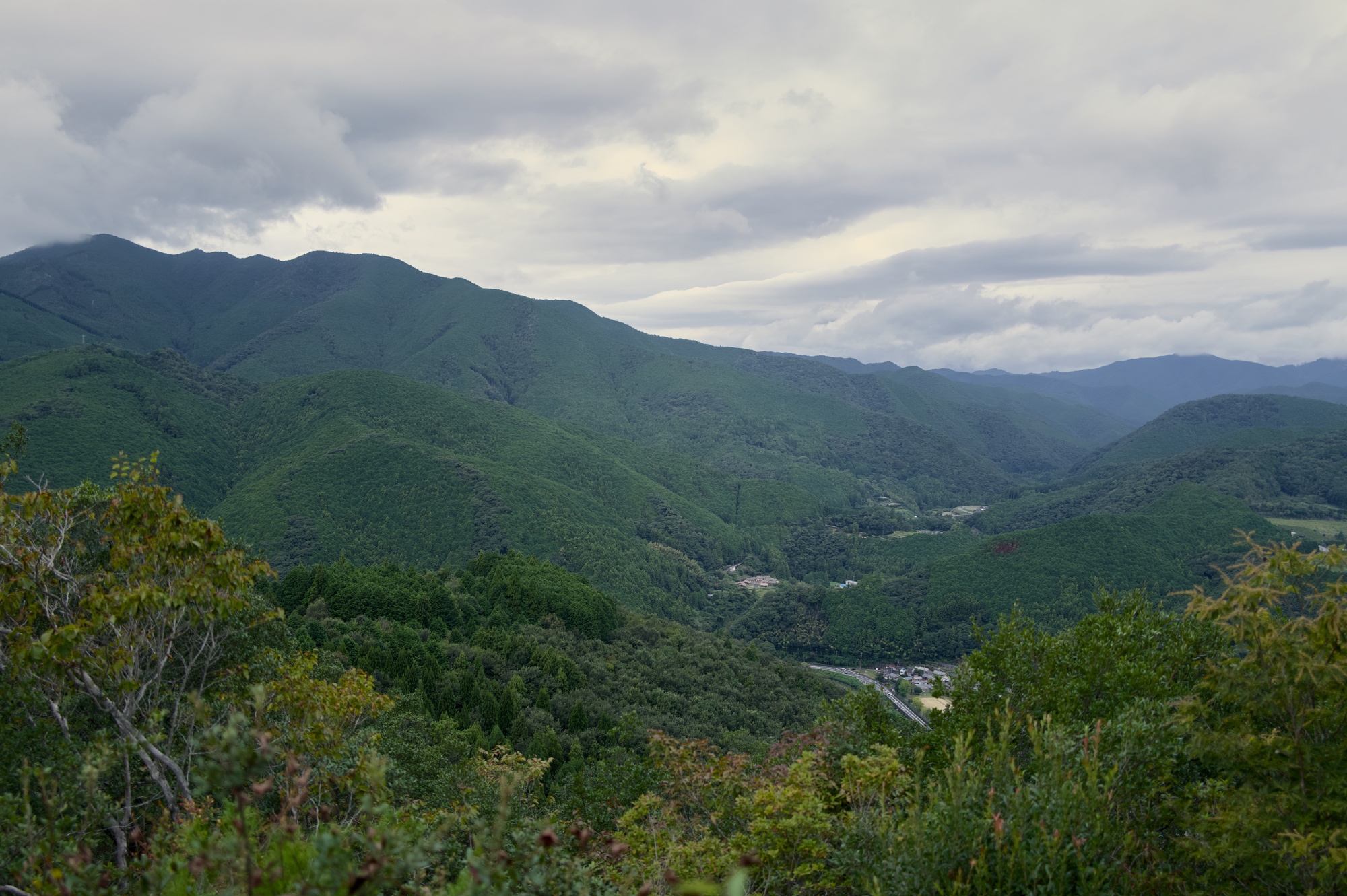
Half an hour later, we step on asphalt and arrive in a small village with an open space where walkers rest. The gradient horizon reveals mountains stretching further away, alternating like a folder cabinet containing ancient history. The view is the reward.
The trail from here bifurcates on to Takahara (a short 1km trip), or to Chikatsuyu for another 8.5km, our original plan. The place has toilets, seats, tables, a vending machine full of sold out drinks, a cute cat, and pay phone available. We admire the distance for a good 30 minutes, absorbing the significance of where we are.
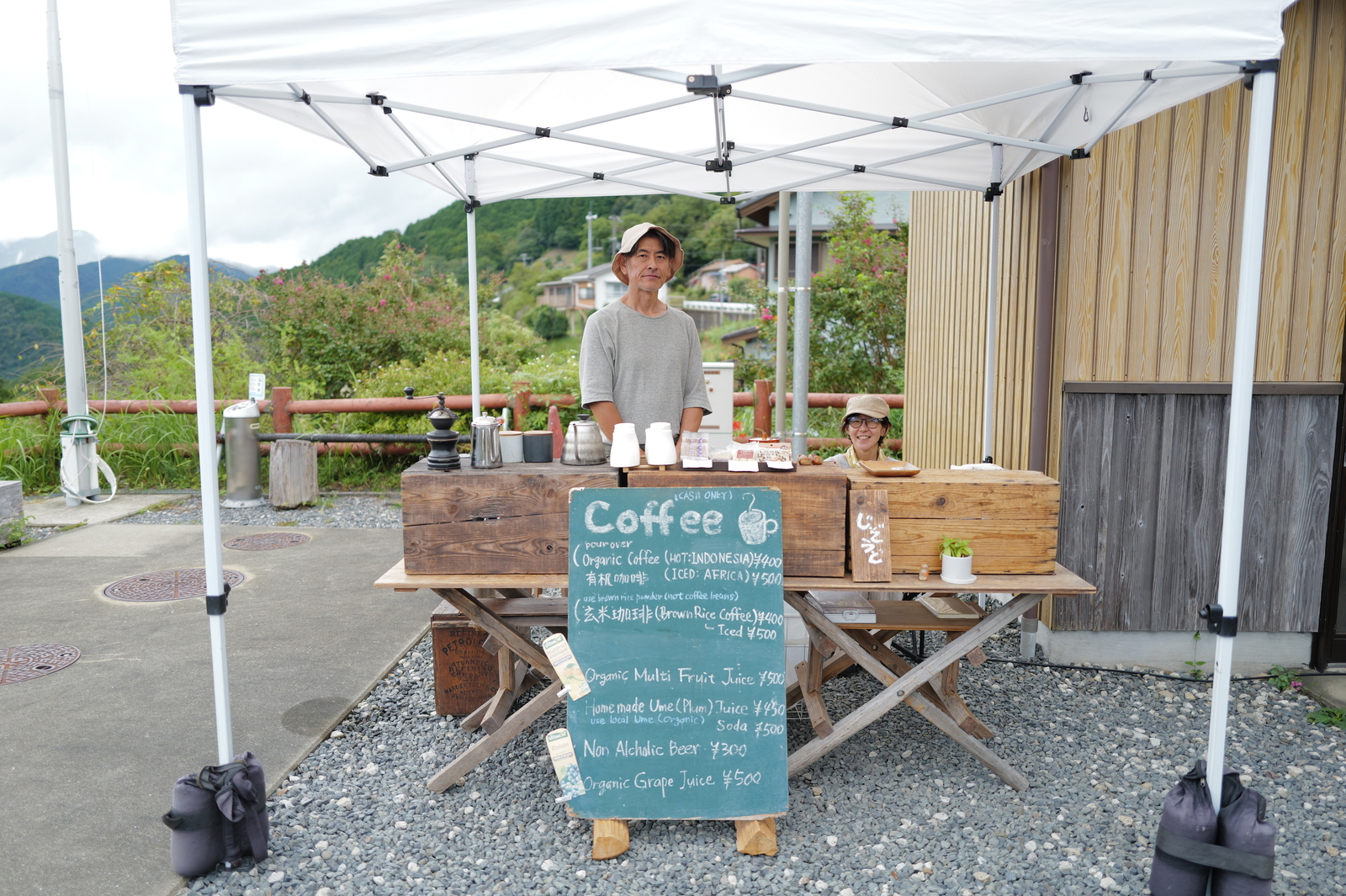
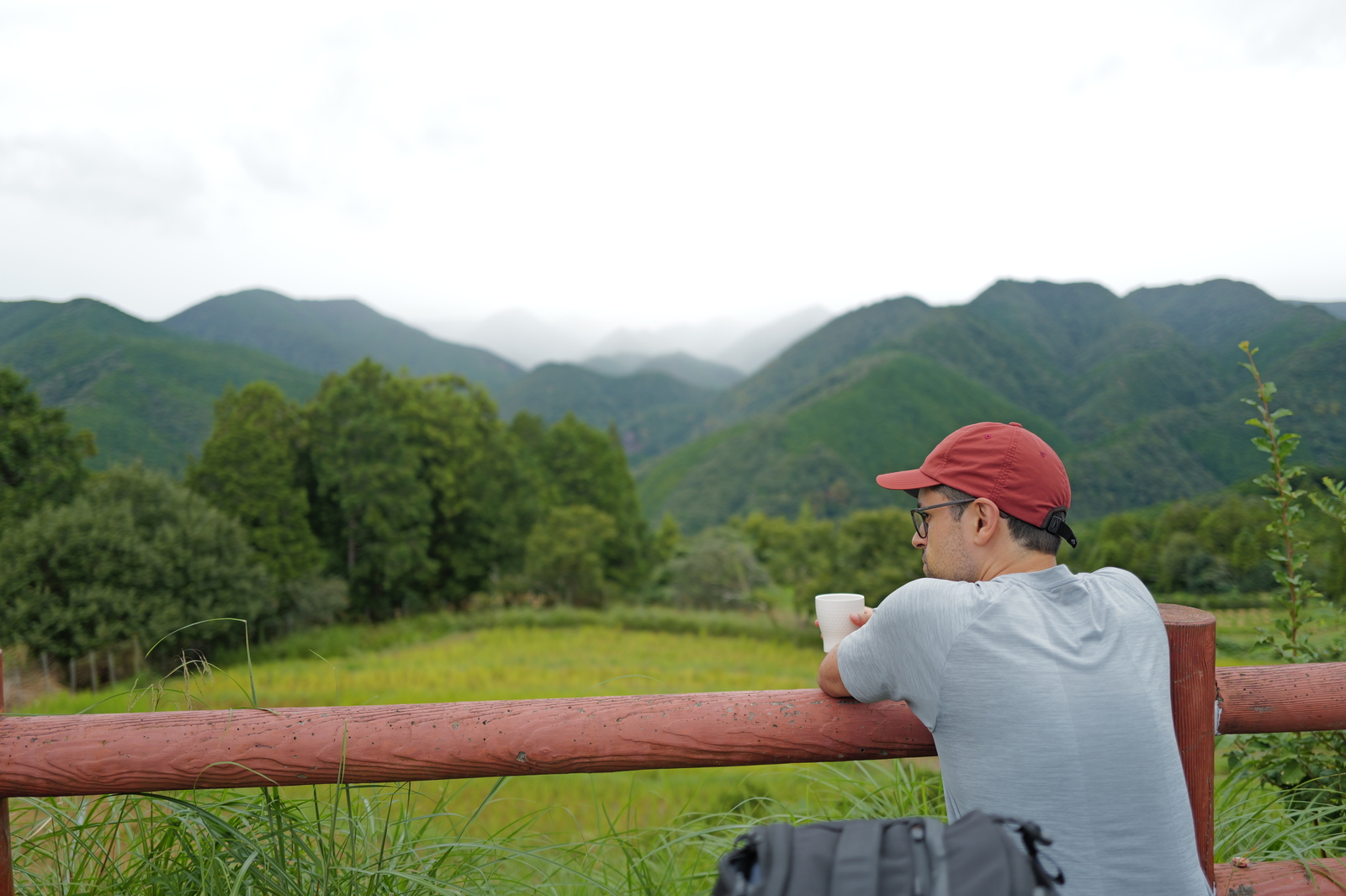
The clock displays 12:38pm. The forecast shows rain incoming again, and our legs already climbed 1,686 feet (514 meters). We do have time to walk to Chikatsuyu, we just need to keep a decent pace and to reach the guesthouse we’ll be staying at before 5pm.
We ponder on the alternative of taking a bus from here because if it starts raining, the lime stones get really dangerous. I sip my coffee, bought from a local tent shop, and shrug, “where would the fun be in that? We travelled around the planet for the challenge”. And so we decide to continue.
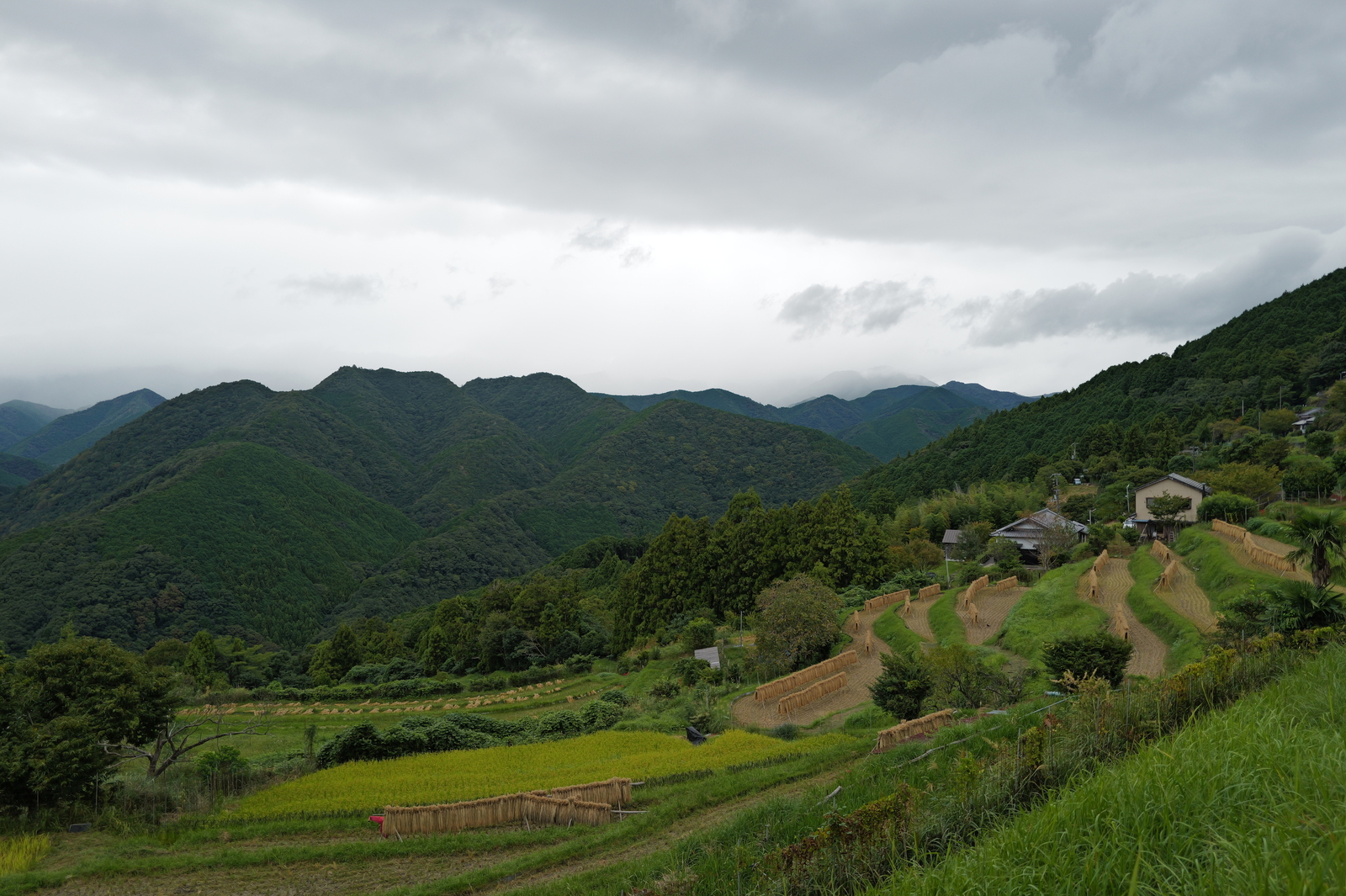
After resting for half an hour, we get back into the trail to Chikatsuyu and meet another steep ascent. This time, it’s not a staircase, but a flat, sloped surface that makes your shin muscles burn. 15 minutes in and it feels extremely tiresome.
The tiredness isn’t the problem (I expected exhaustion, so I won’t dwell on that). It’s the brain asking how long until it gets easy, or how long until the pain stops. That’s not really useful thought, though. First, we have barely started, so c’mon already. Second, it’s a waste of mental energy to ponder about things you can’t change, or the path that has been planned a long ago. Where we are now is just a zone of discomfort and the right thing to do is to push the body forward. That’s the focus that matters.
Our hectic arrival in Japan after a 10-hour, sleepless flight added a layer of complexity and mental exhaustion to this walk. When we landed in Tokyo, we had about 24 hours to go through immigration, travel another 12 hours by train, sleep, pack, buy gear, and figure out where to get bear spray. Oh boy, don’t even get me started on the bear spray adventure.
In Tanabe the evening before the walk, our taxi driver ignored our directions and drove us somewhere else, stressing us out and making us late to our Airbnb. We put our host on the speaker at some point, and even he got mad at the driver for ignoring him and not knowing basic information about routes.
At some point, as we rode uphill on dark roads, I conceded the possibility that he’d drop us in the middle of nowhere. “How am I telling my wife we’re sleeping by the road tonight”? I don’t understand Japanese, but I do understand a taxi driver yelling on his phone to an unknown person, “something something gaijin, something gaijin”. I learned from the series Shogun that gaijin means foreigner, and the word is often used in a derogatory way. Later, our host explained the driver was quite elderly, which helped explain the confusion.
In the end, everything worked out fine, but when we were dropped at the trail the next morning, some of the adrenaline was still there. It felt like parachuting into a combat zone. It took a while of walking to finally cool down and get into the mental flow we came here for.
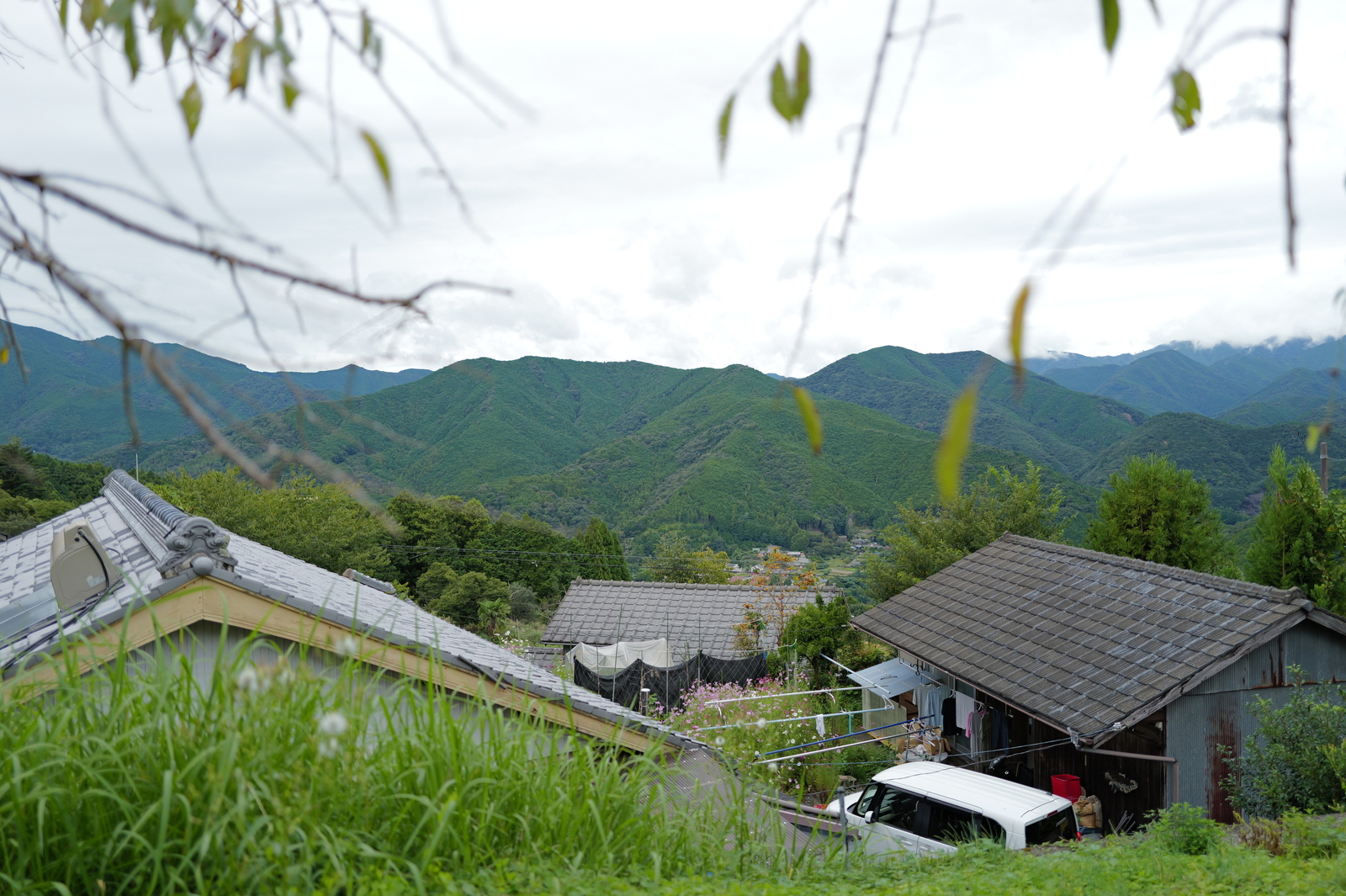
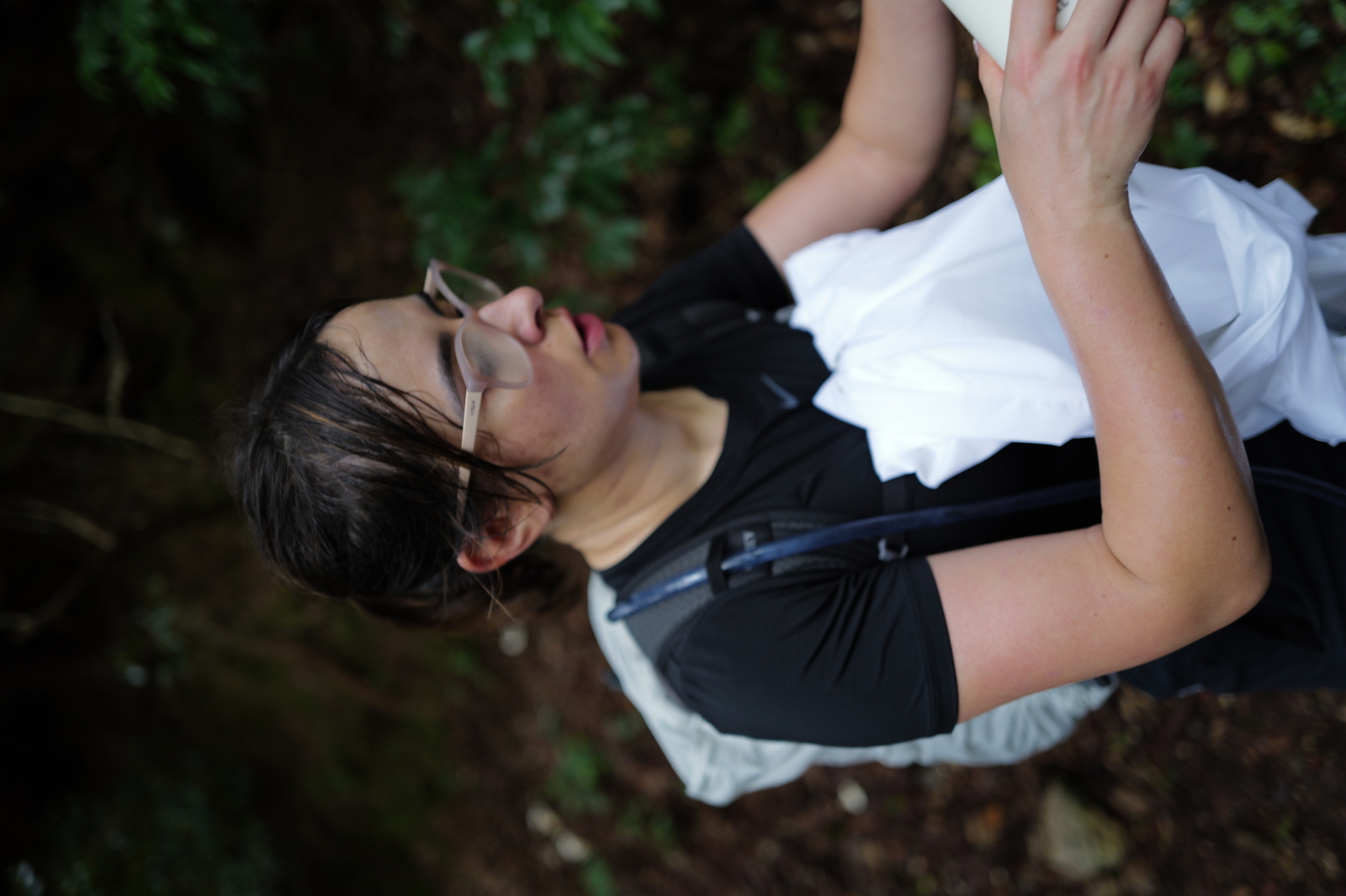
This section of the walk is a grind, and my back hurts. It’s fine, and I was expecting that, expecting it earlier. During my preparation for this walk, my back has been bothering me quite a lot. For some reason it hadn’t hurt for a while, but now it does again, and this heavy backpack isn’t helping. It weighs roughly 15kg.
I brought a laptop to unload my camera photos and write. The ritual involves working hard with my legs during the day while my mind wanders aimlessly, and then write about the journey in evening while my legs rest. That should keep my mind engaged during these 5 days.
What alleviates my back pain a bit is engaging my core, like when someone’s gonna punch you and you flinch. As I brace my abs and my belly tightens, I feel a relief in my spine. Overall, we’re following the plan as intended, but I guess at this point, the decision is picking the less annoying annoyance, pain or effort.
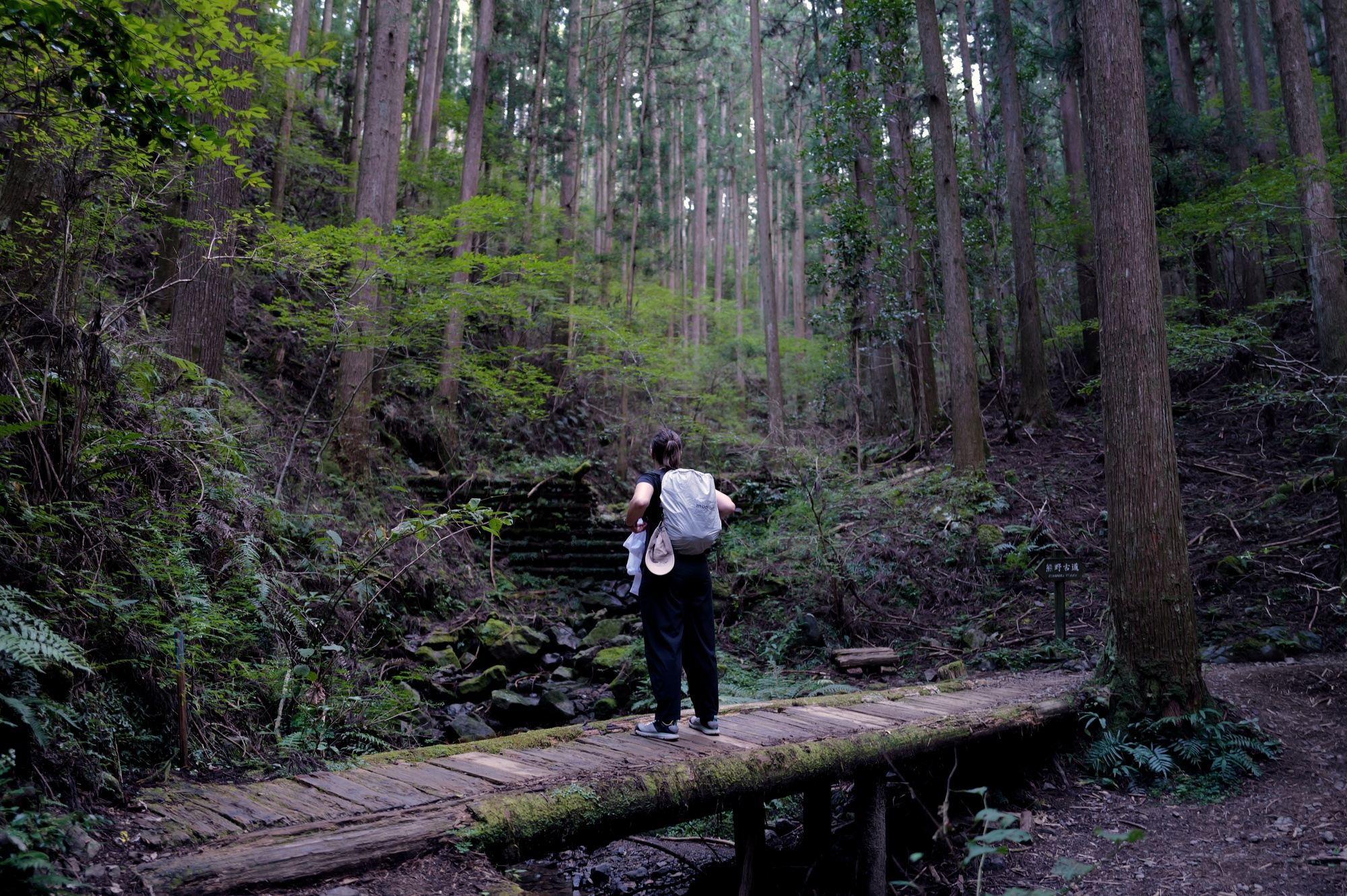
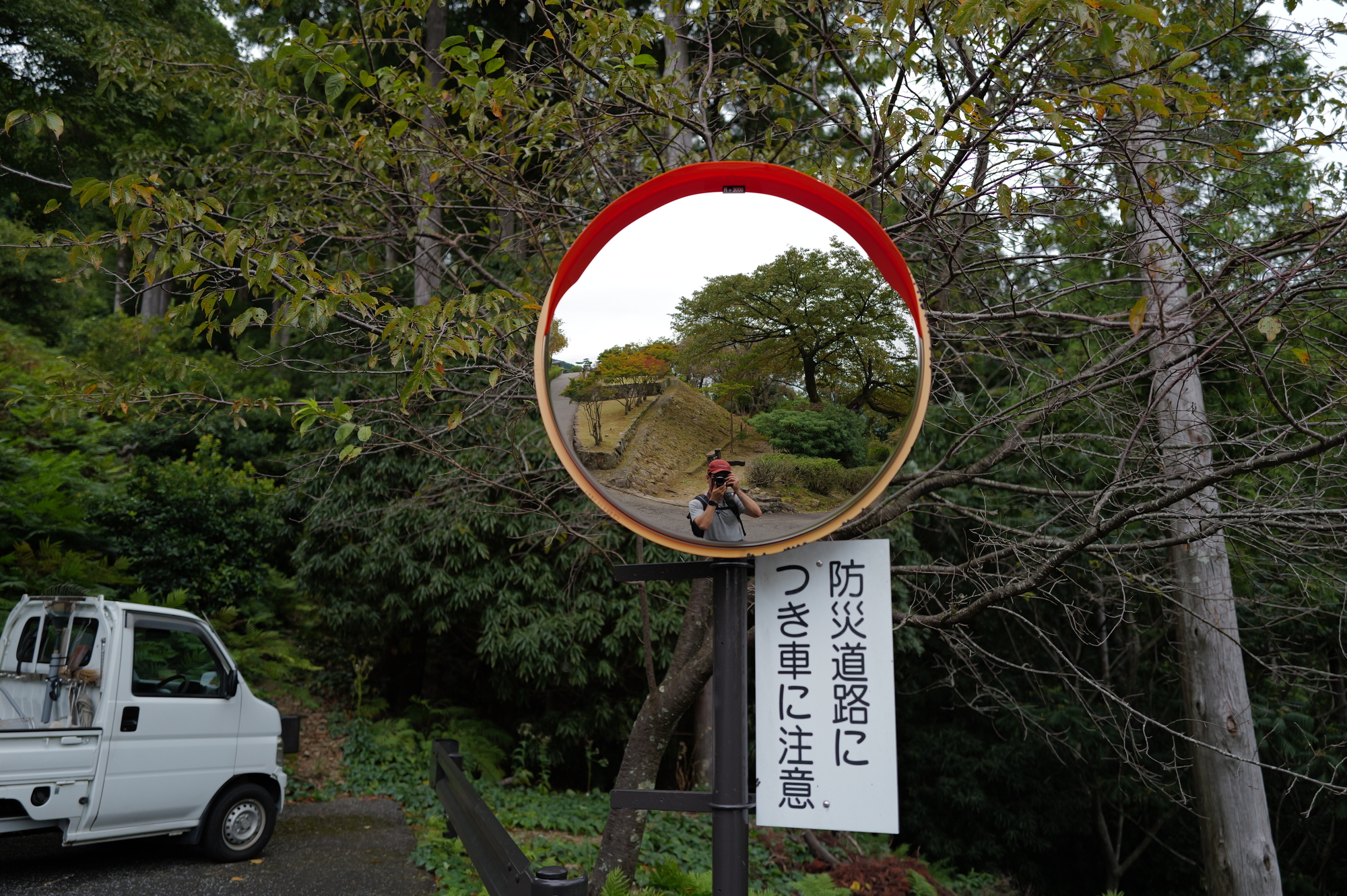
A mile and a half into this section to Chikatsuyu, after beautiful forests and trails, we are welcomed by an incredible lake reflecting the trees and the sky like glass.
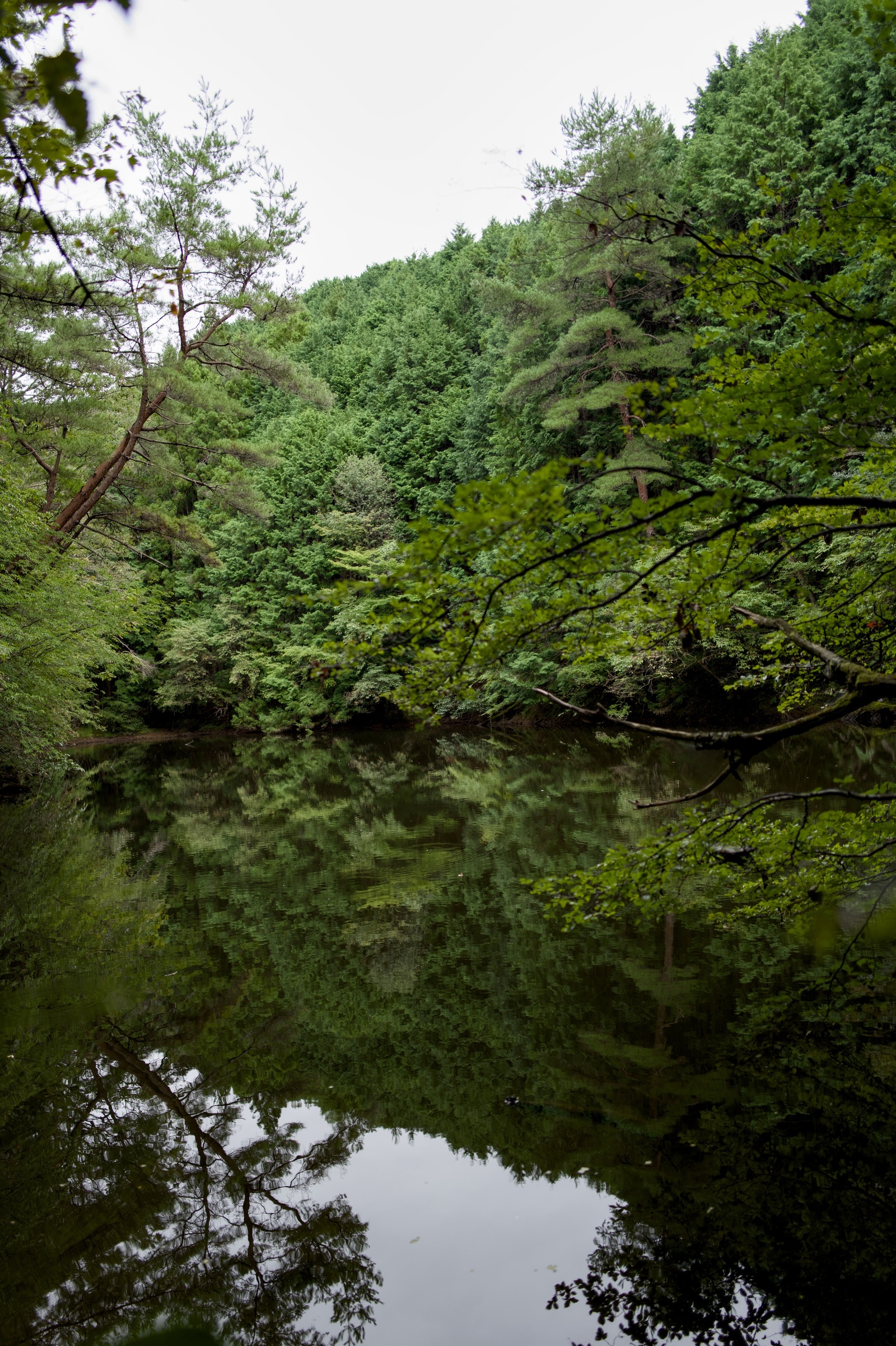
I’m still trying to grasp the beauty and mystery of this place, and words escape me. I ponder the countless people who have walked these paths before, all their experiences and the memories stacked together. Yet, here I am.
In the 12th century, retired Emperor Go-Shirakawa walked the Kumano Kodo thirty-four times. Emperor Go-Toba twenty-eight. It was while walking these trails in 1160 that Taira no Kiyomori got word that his opponent, Minamoto Yoshitomo, had taken the opportunity to stage a coup in Kyoto (京都).
I’m not a pilgrim, at least not by any formal measure. I came for five days and a reset I couldn’t name, to walk until the noise thinned out. The sense of gratitude just for being able to start the trail, let alone finish it, fills my chest. To be able to touch a little of this history is a privilege I wish all my friends could experience.
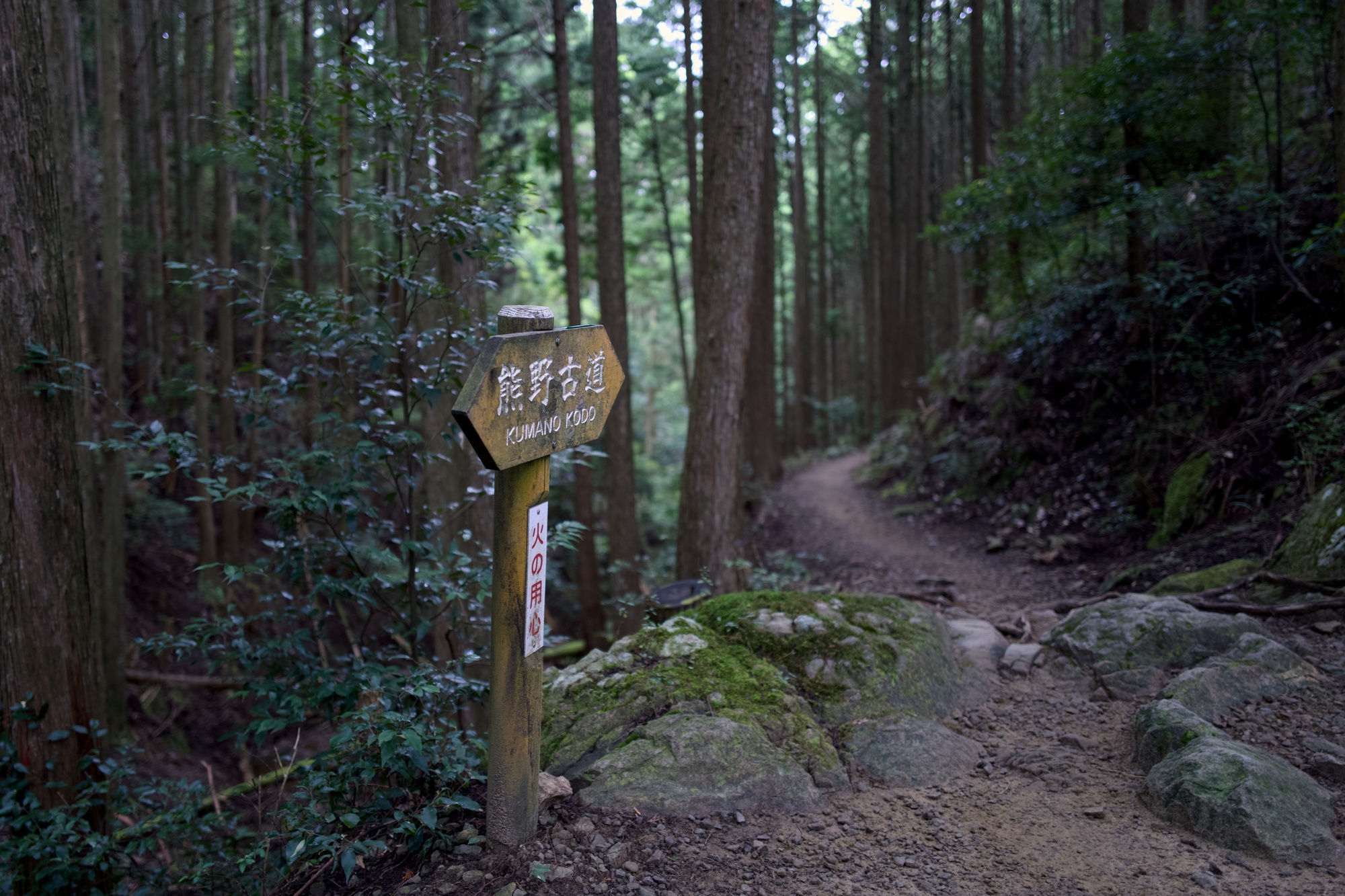
The wrist watch shows 2:57pm and we’re two thirds into the trail to Chikatsuyu. A total of 05h06 so far, 2,982 feet of elevation gained (909m) and 11km.
When comparing to the beginning of the trail, this section feels like the hardest. Contrary to what the Tanabe Prefecture’s website says, that Takijiri→Takahara is harder than Takahara→Chikatsuyu, I found the opposite to be true. Well, I could also attribute that to the weight, energy and aggregated tiredness, which feels like it has compounded a lot by now.
My left knee hurts, so I resort to using my hips more for walking than the knees, to alleviate the pain through the endless ups and downs. Some sections almost force us to use our hands to climb without falling. It just keeps going on and on and on.
My back pain got worse, and no amount of core engagement is helping, but according to my calculations we’re towards the end of today’s trail, hopefully soon we get to the section in which descends all the way to Chikatsuyu.
When we finally get to the descent section, an annoying pain two inches below my knee starts. It’s insistent like a tip of an arrow against my shin, but it’s fine. It’s also understandable, a probable weak muscle I ignored in the gym. A muscle that is never used until you jump into millennia-old hike, like the Kumano Kodo.
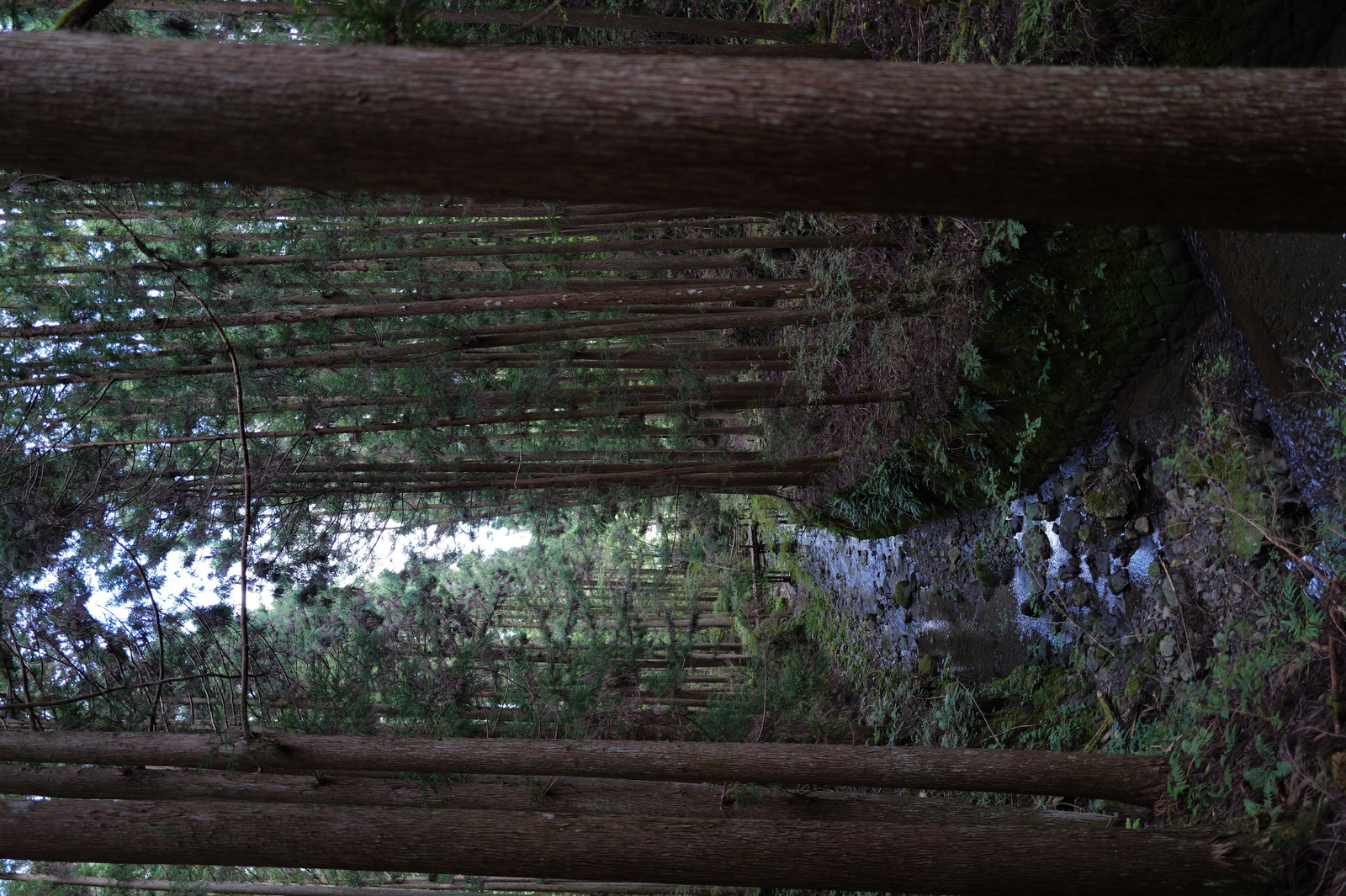
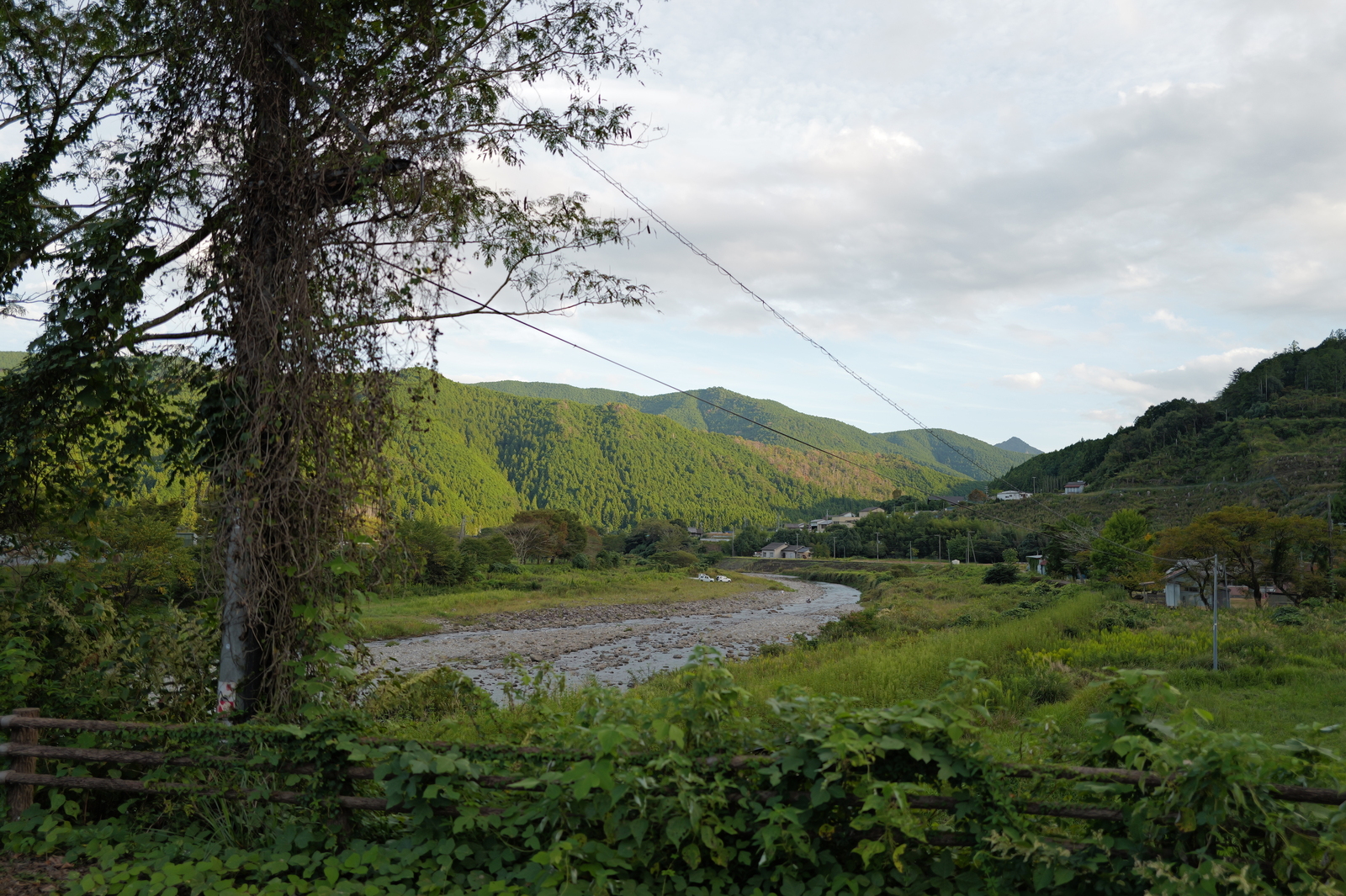
We suddenly spot Chikatsuyu on the horizon, in between the trees. My eyebrows rise, my chest inflates and I exhale a sigh of relief. The sun illuminates the mountain tops and we speed up our feet to get to the village before it gets dark.
We enter the village by what looks like a backdoor, coming in from the mountains. The clock shows 5:40pm, twenty minutes before the only grocery store closes. We rush our feet and get in just in time.
When I put the heavy backpack on shopping cart, my back smiles, a smile of relief. We buy instant noodles for dinner, along with desserts we have no idea about. We want a little surprise. Eggs and bread for breakfast the next morning aren’t forgotten.
At the guesthouse, shower, dinner, resting. The body pulsates a mix of soreness and satisfaction. The walk was tough but rewarding. I can’t wait for tomorrow.
Time for the sleep of the gods.
Day 2: Hosshinmon-oji to Hongu
Shrines, silence, awe
We wake up in Chikatsuyu. This is the first proper morning in god-knows-how-long. Four days, I think. A slow morning, to sit down and chill without a burning need to get somewhere. The last night in the United States I could barely sleep 2-3 hours, thinking non-stop about the trip, only to get up at 5:30 to head to the airport.
So, yes, we’ll take our time. I step outside, take the deepest and longest inhale you can imagine, and stroll the village under bright blue skies to buy black coffee. I head back to prepare scrambled eggs and toast. Pack things and close the electronic door behind us.
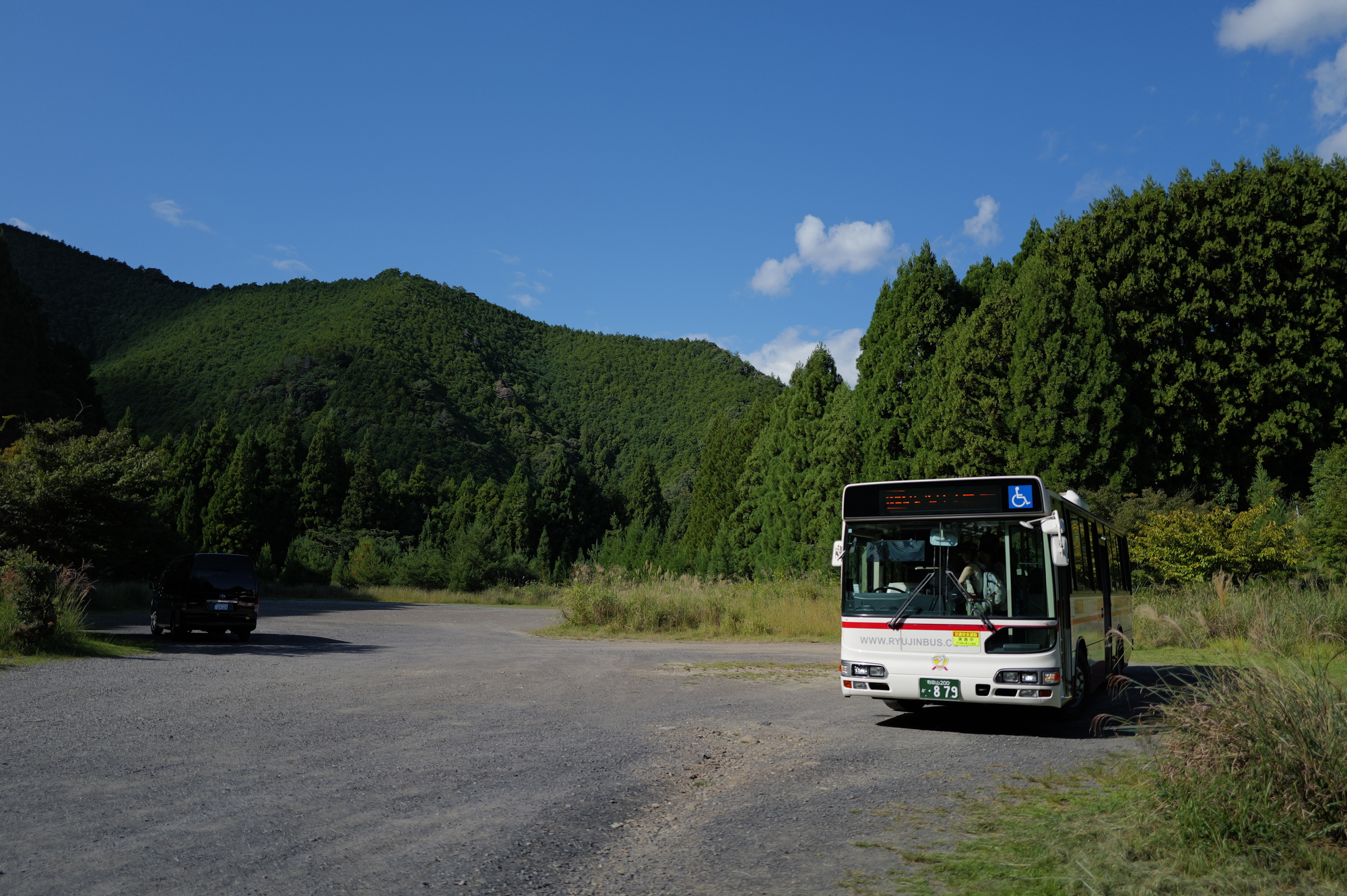
Time to jump on a bus to Hosshinmon-oji (発心門王子). The plan: walk down to Hongu (本宮). Most people just walk straight from here, but, presumably, the views as you descend from Hosshinmon-oji are nicer than starting in Chikatsuyu, so we will make that bet. We’ll hop on a bus to get to the trail. Ultimately, the destination is the same.

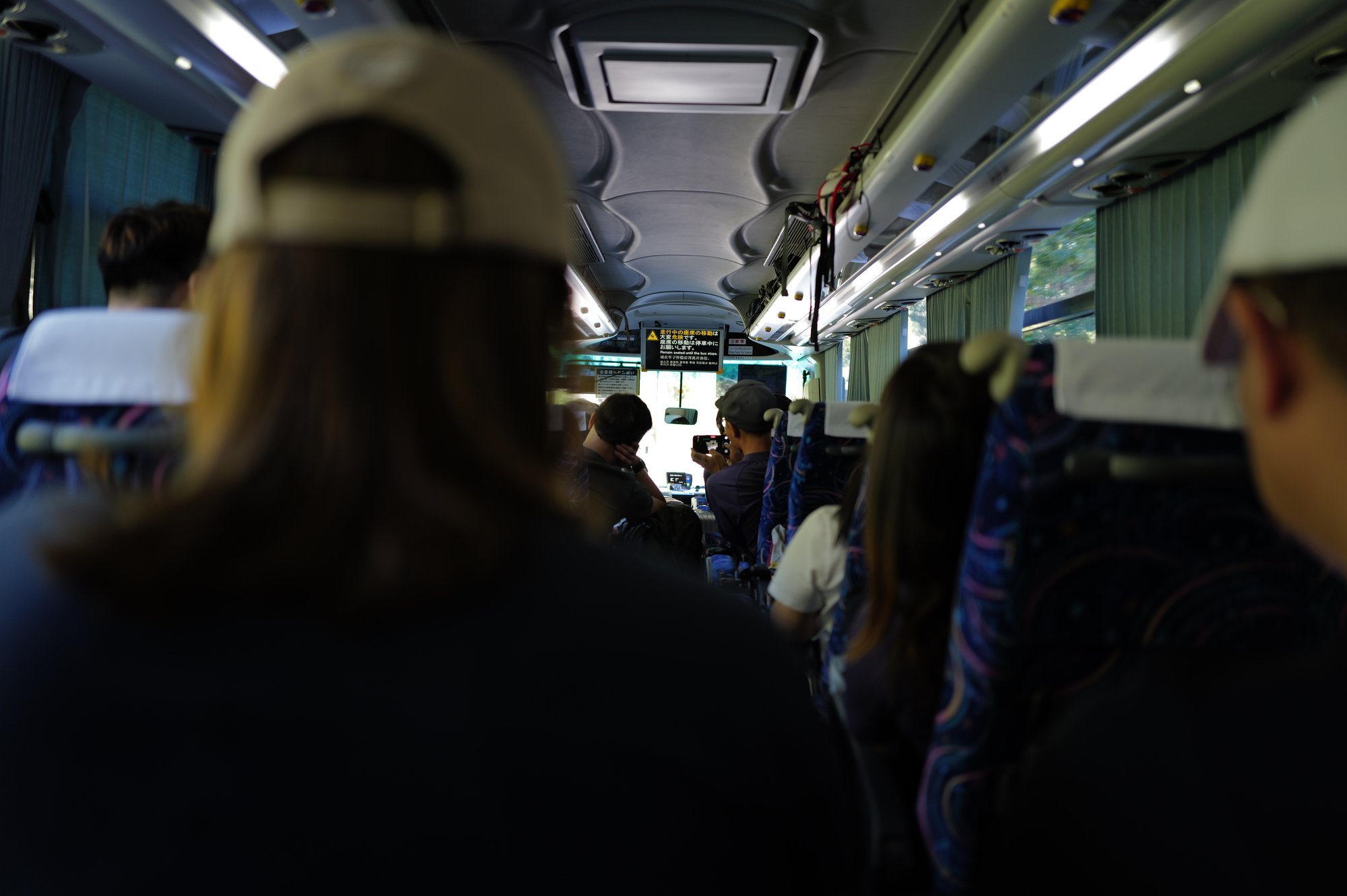
“What’s going on here?” I wonder, confused as I get on the bus. There’s like what appears to be two hundred people inside. It feels chaotic and messy, and everyone’s staring at us while we orient ourselves. I sigh. “I can’t believe we’re standing for a whole hour with these heavy bags!”.
As I look around to figure out where to stay or where to stack the backpack, humbly peeking over backrests in search of spots, I notice people are sitting on their luggage in the aisle. “Weird”, I frown one eyebrow. I’ve never seen that before. It looks totally unsafe, but who am I to judge?!
A woman points at me and to the aisle, as if saying, “You, stay there!” I get even more confused. But, as I scan the corridor, I don’t see any suitcase or luggage wheel. Wait a second! This bus has a fifth seat that folds from beside another seat, fitting five people per row! I nod and, while saying a few Arigato’s, rush to sit down.
Japan really is the country of the future.
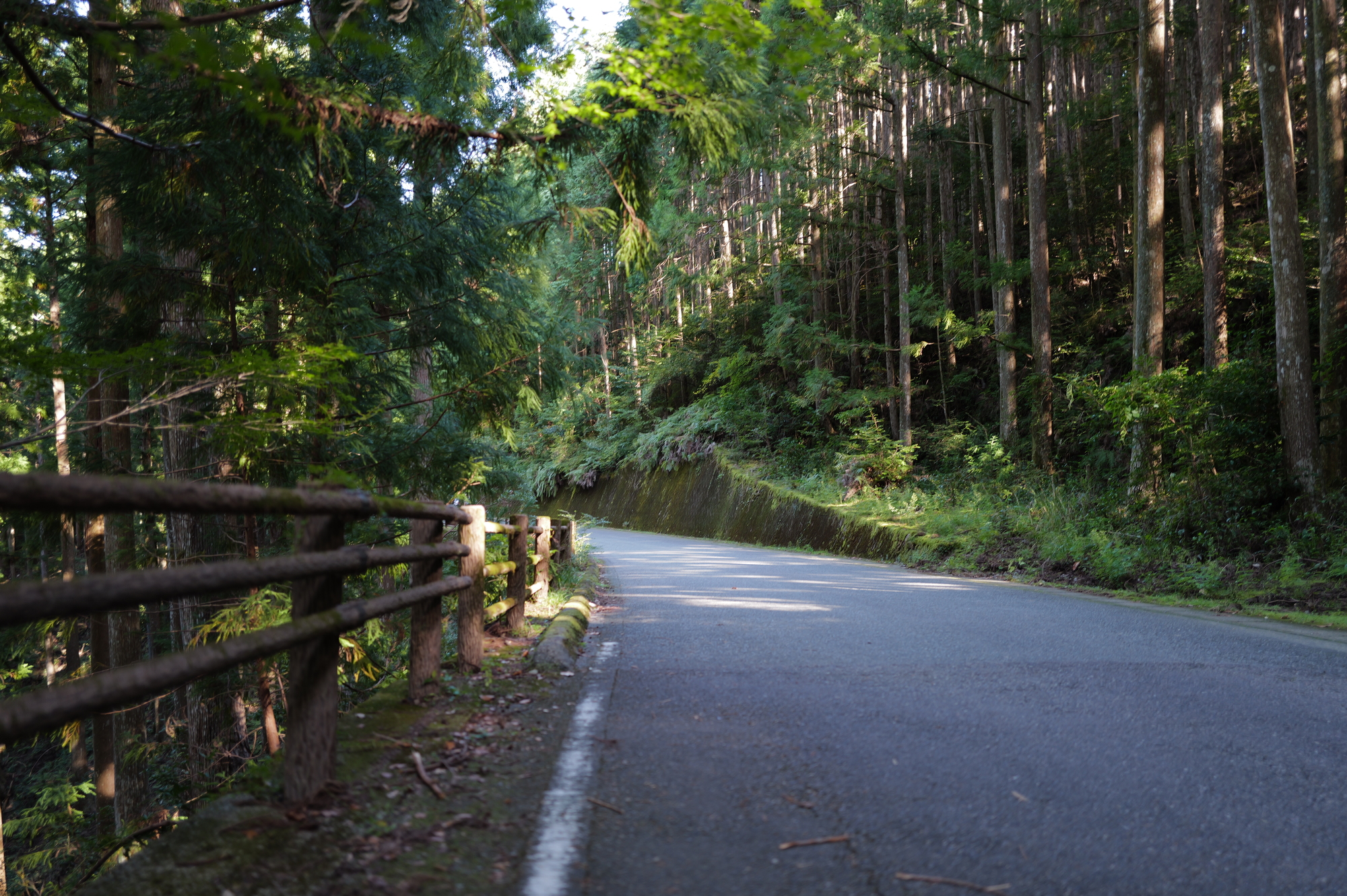
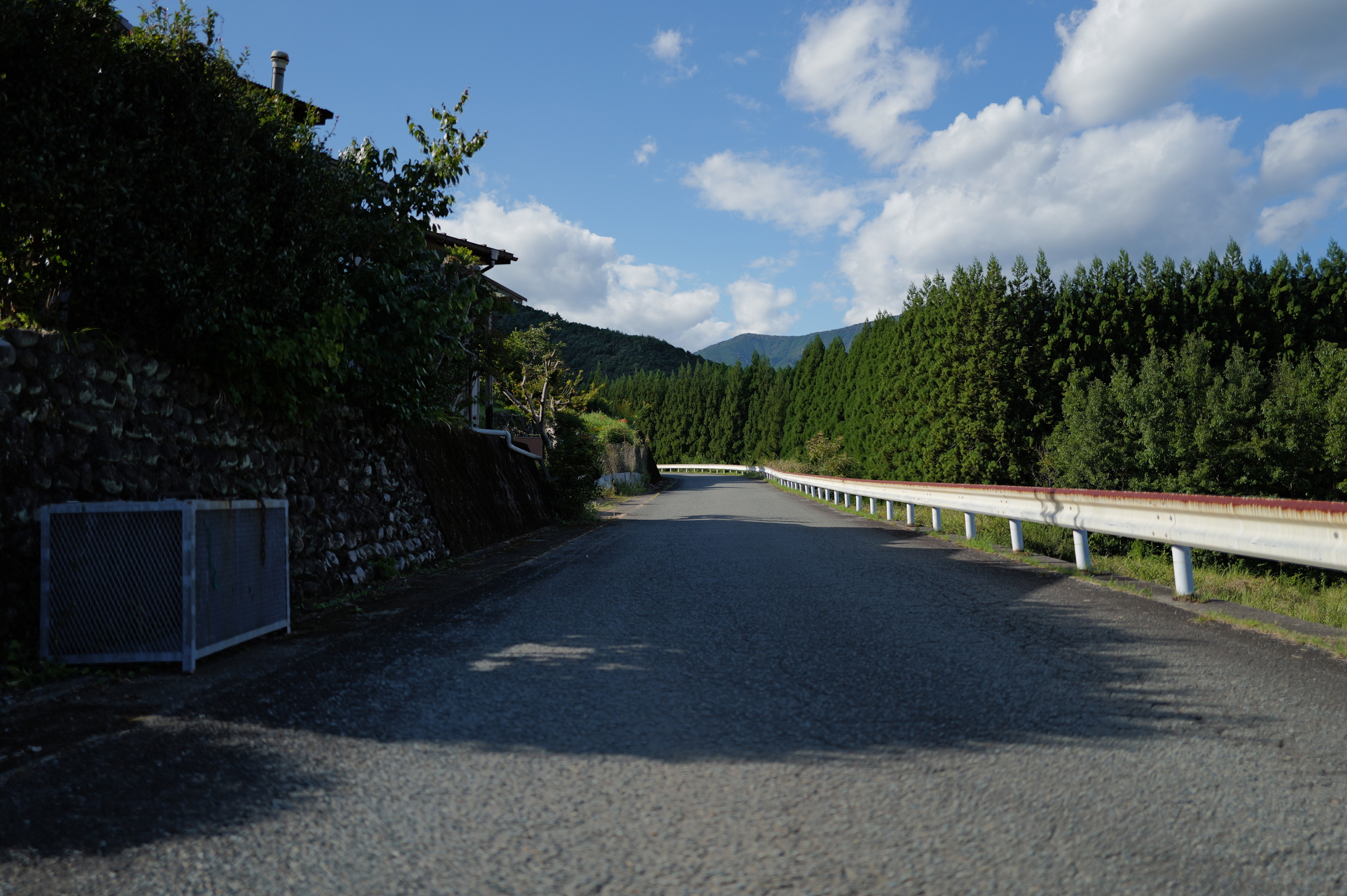
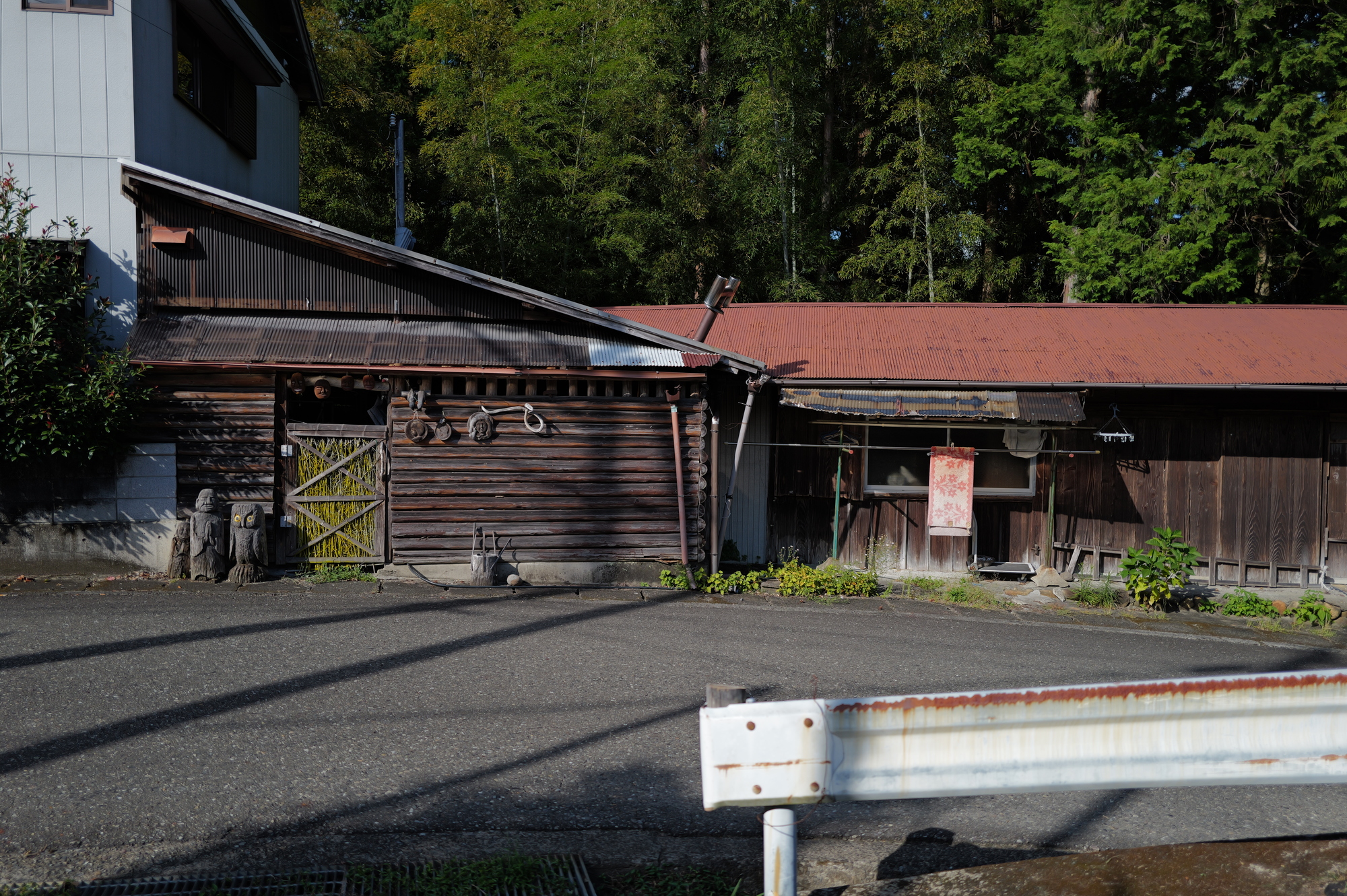
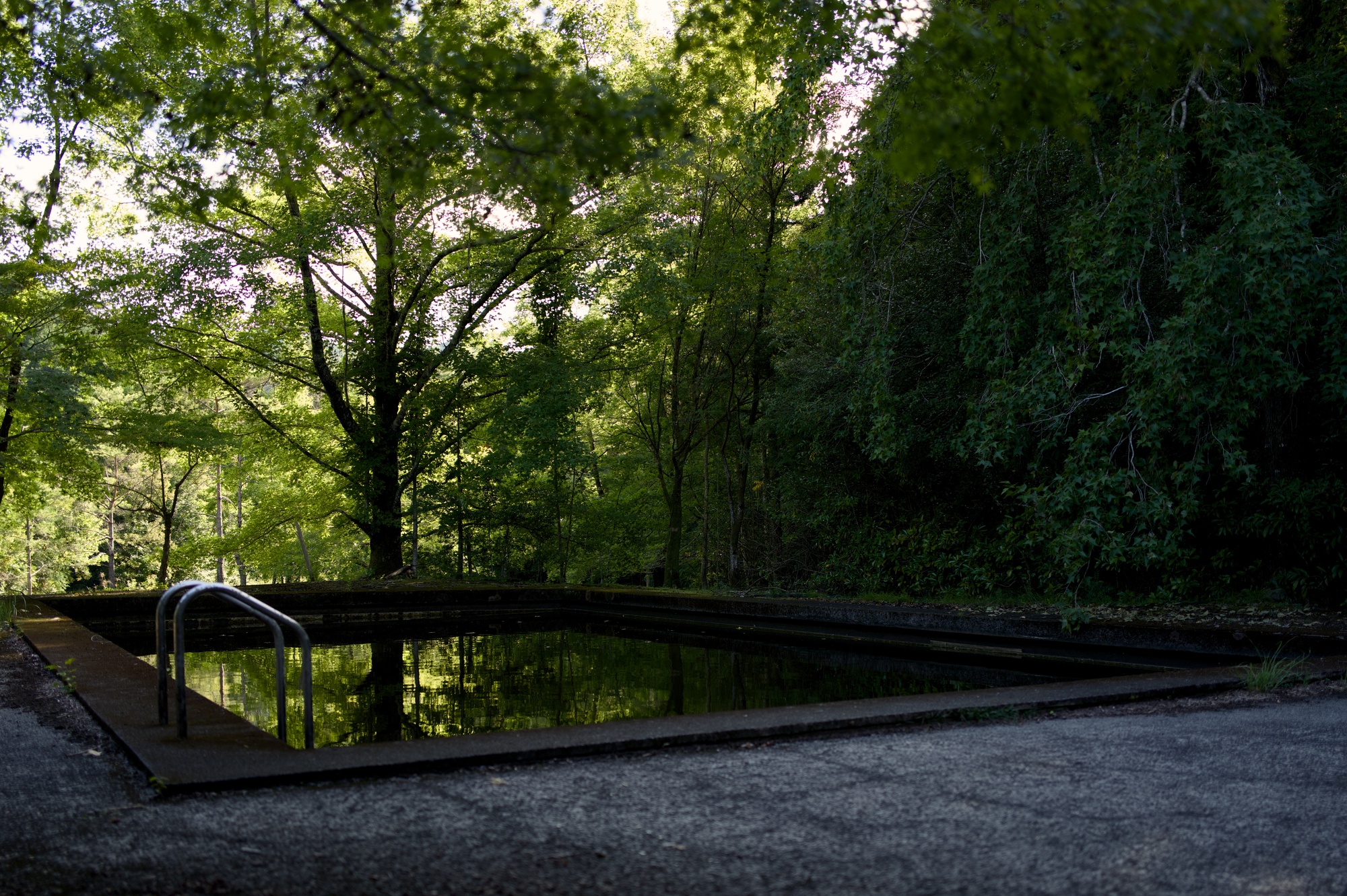
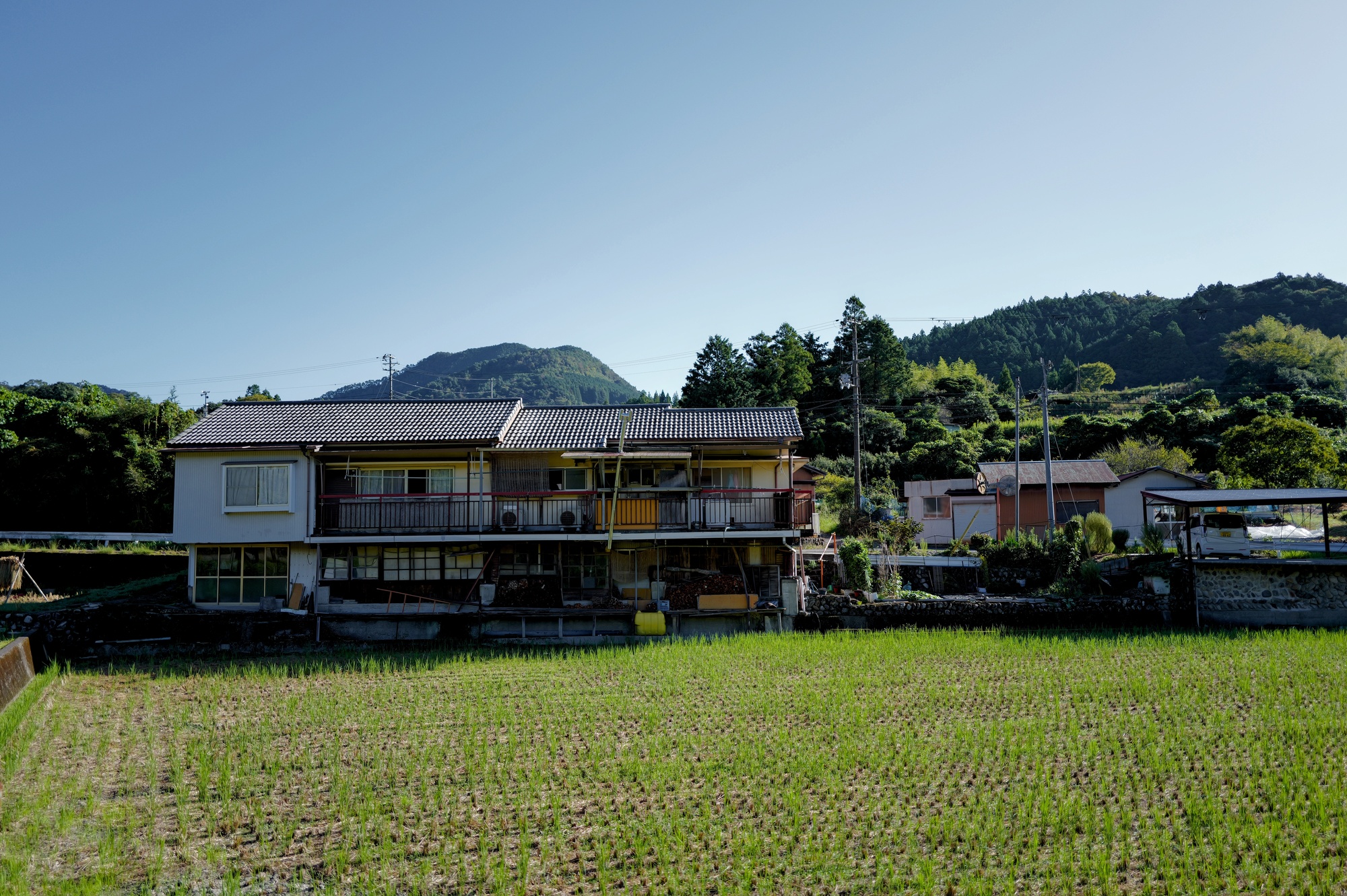
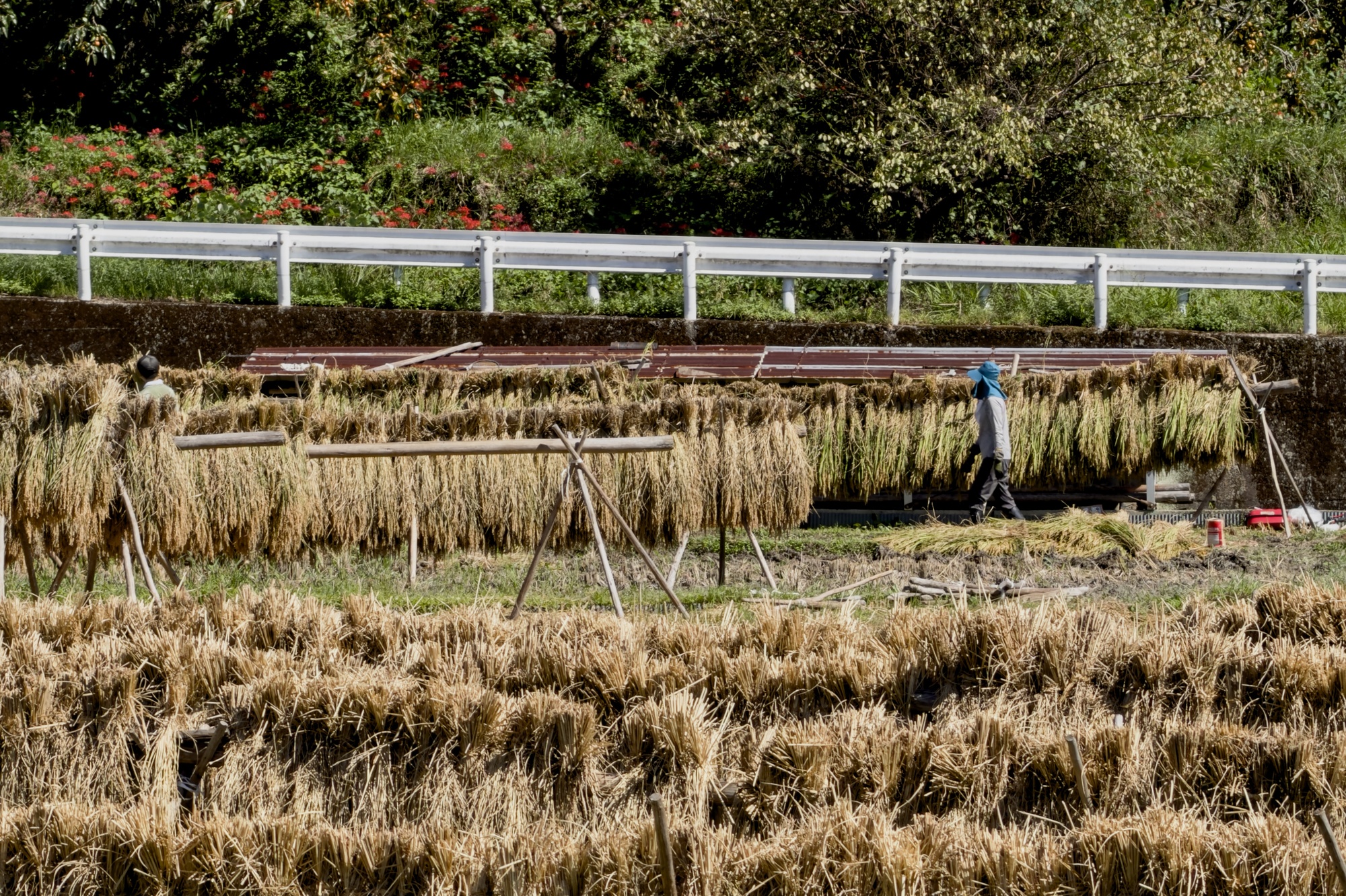
We walk on asphalt for 10 minutes before getting on to serious business. The trail is stunning, with the modern roads meeting the old. Asphalt and hamlets again, a symbiosis of community and nature.
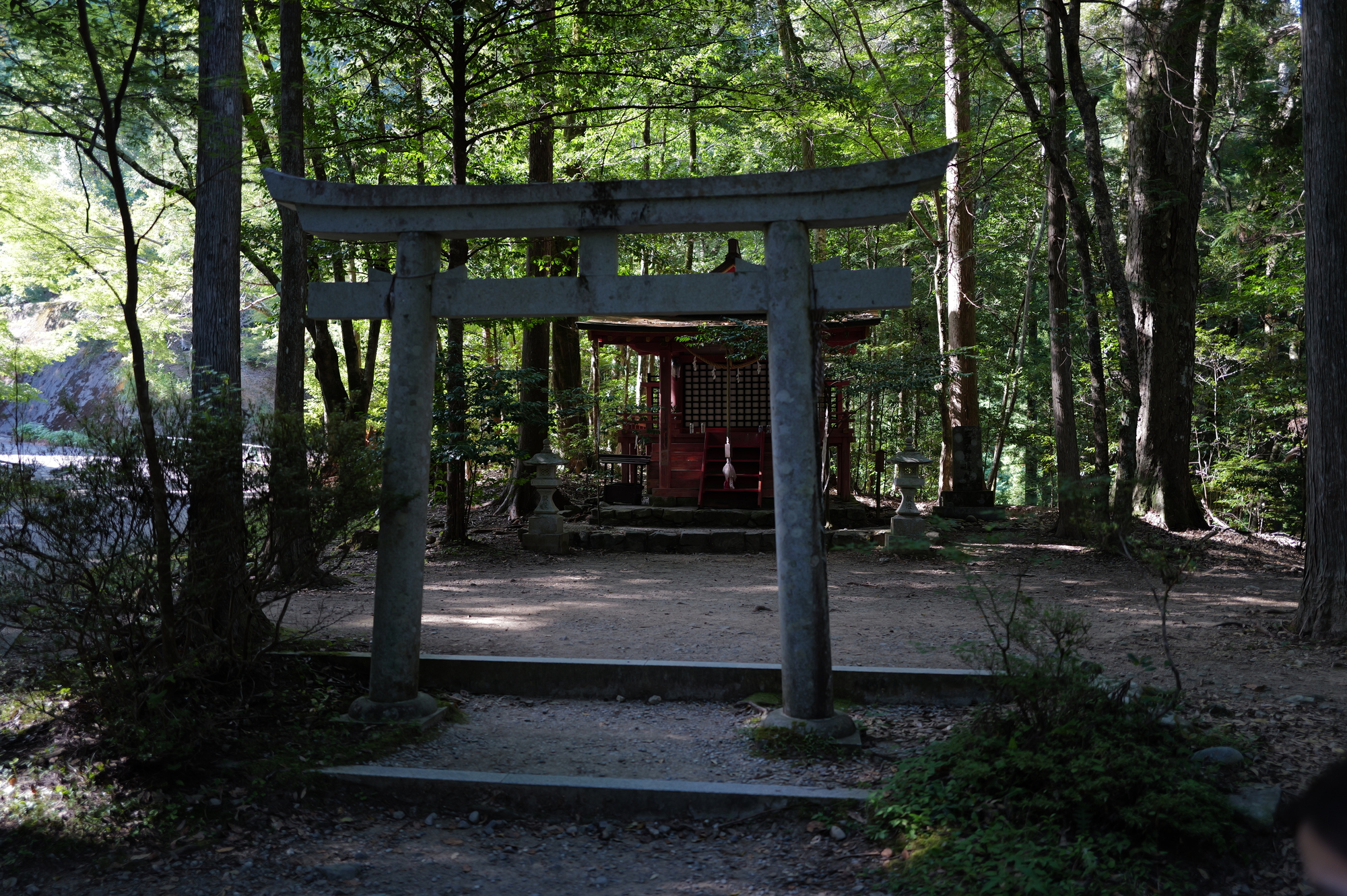
The trail is breathtaking, and some spots seem to whisper in my ear, “Please, stop and admire me”. I oblige, of course.
We slow down, gazing at the quaint hamlets, letting our eyes absorb the light like a sensor during a long exposure, etching memories onto a film of our minds. We want to remember this moment later, as vividly as possible.
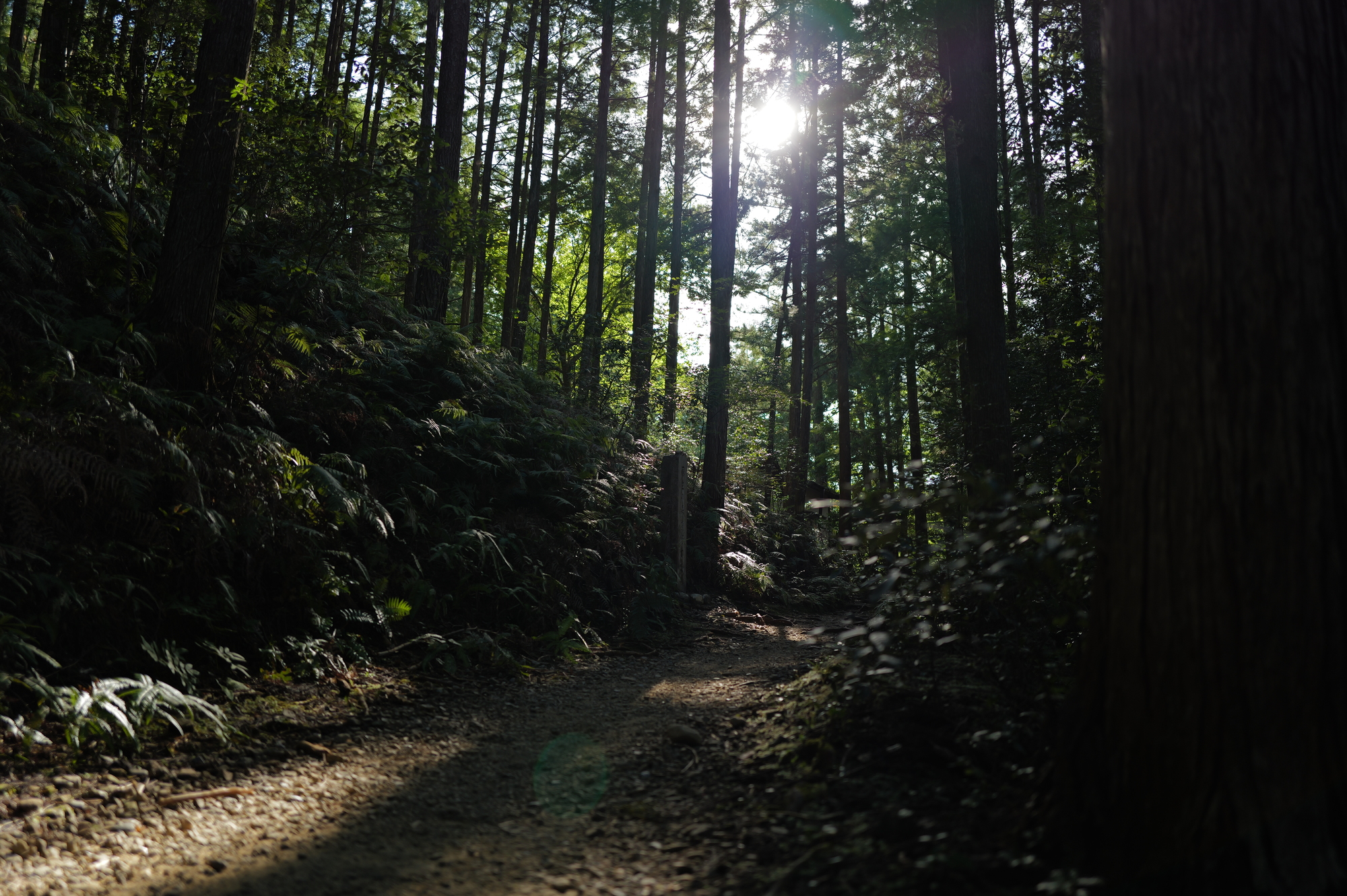
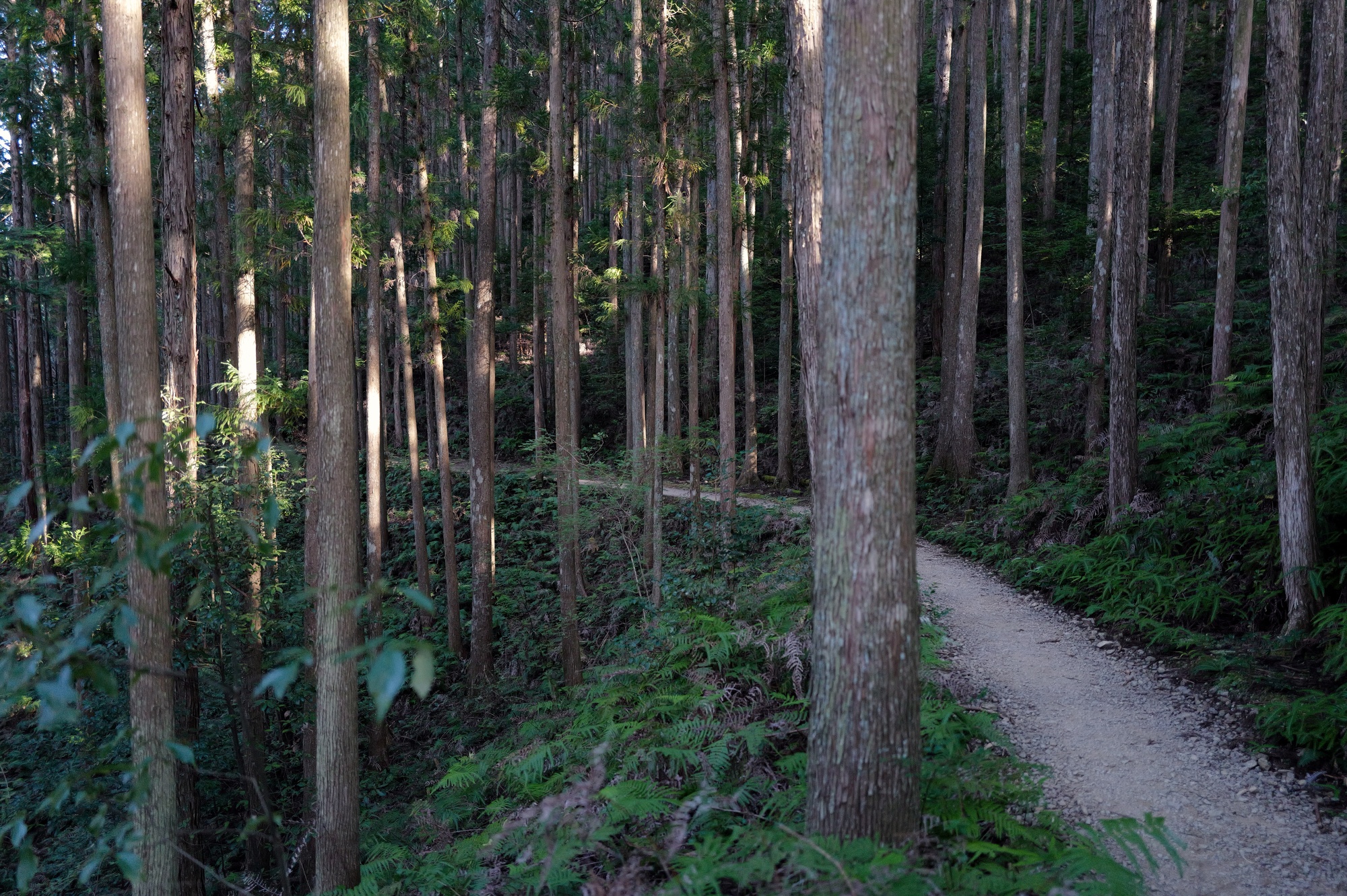
Suddenly we’re out of the woods again, into a small village in the mountains.
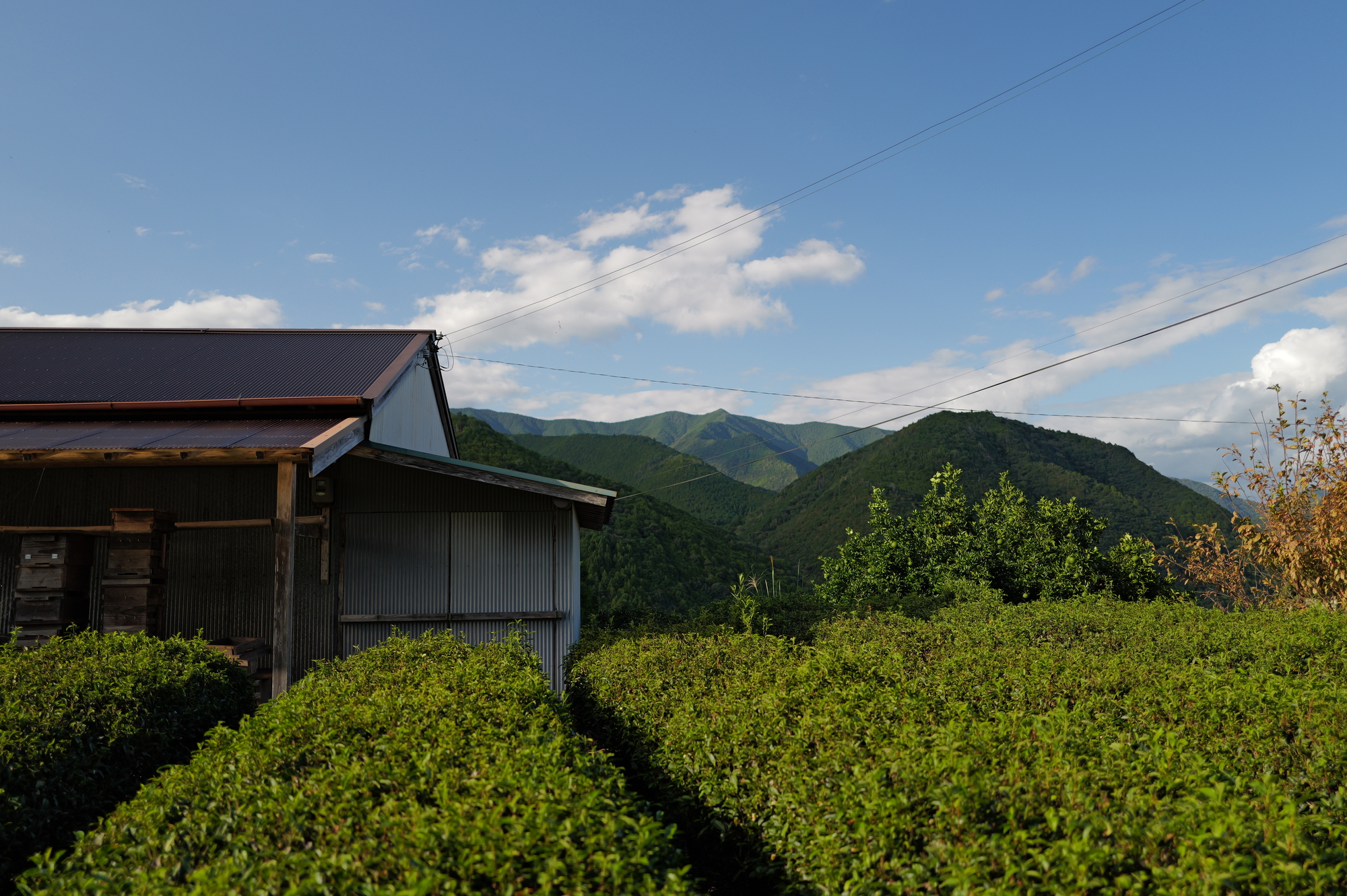
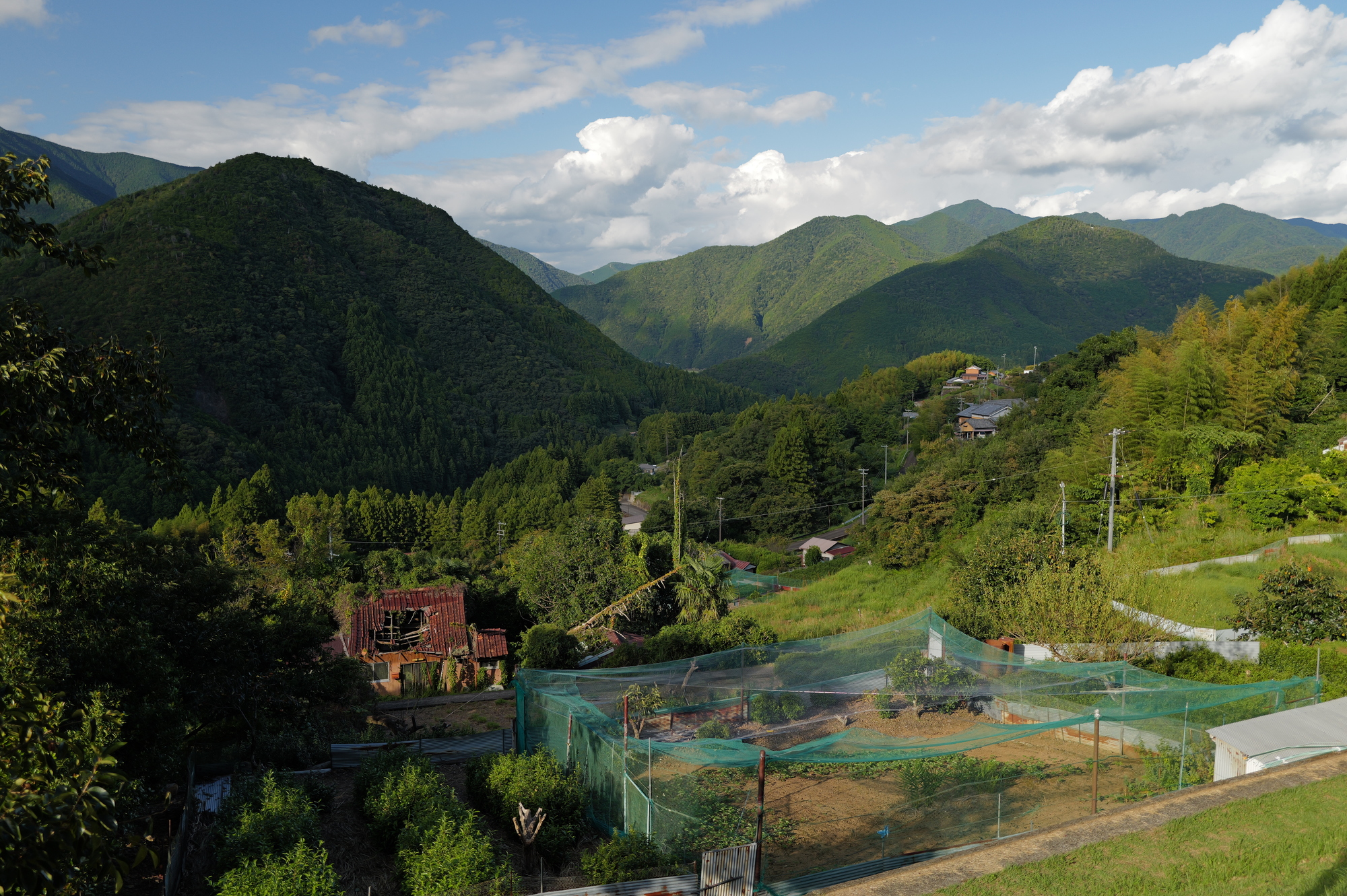
And back again into the woods.
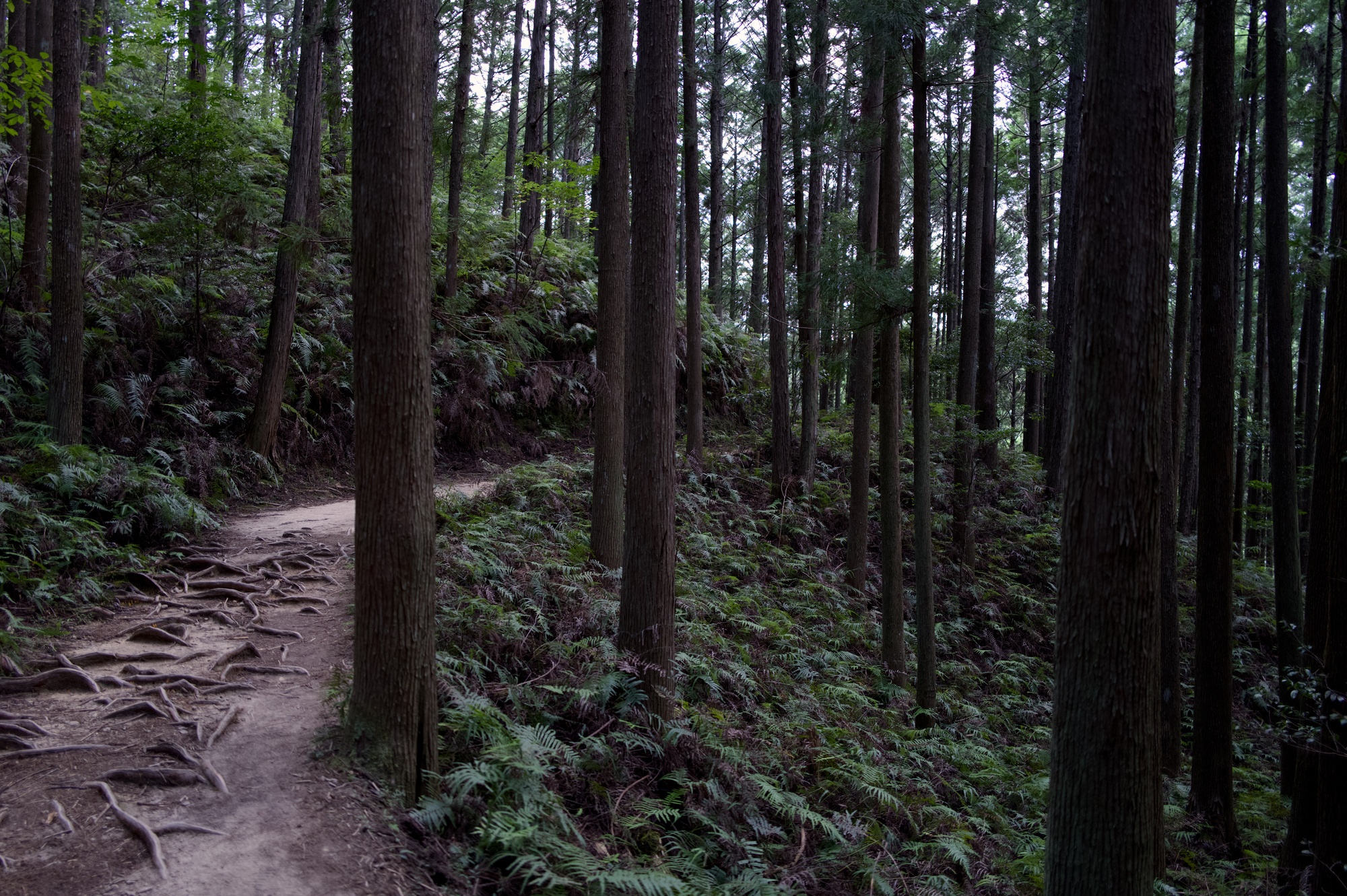
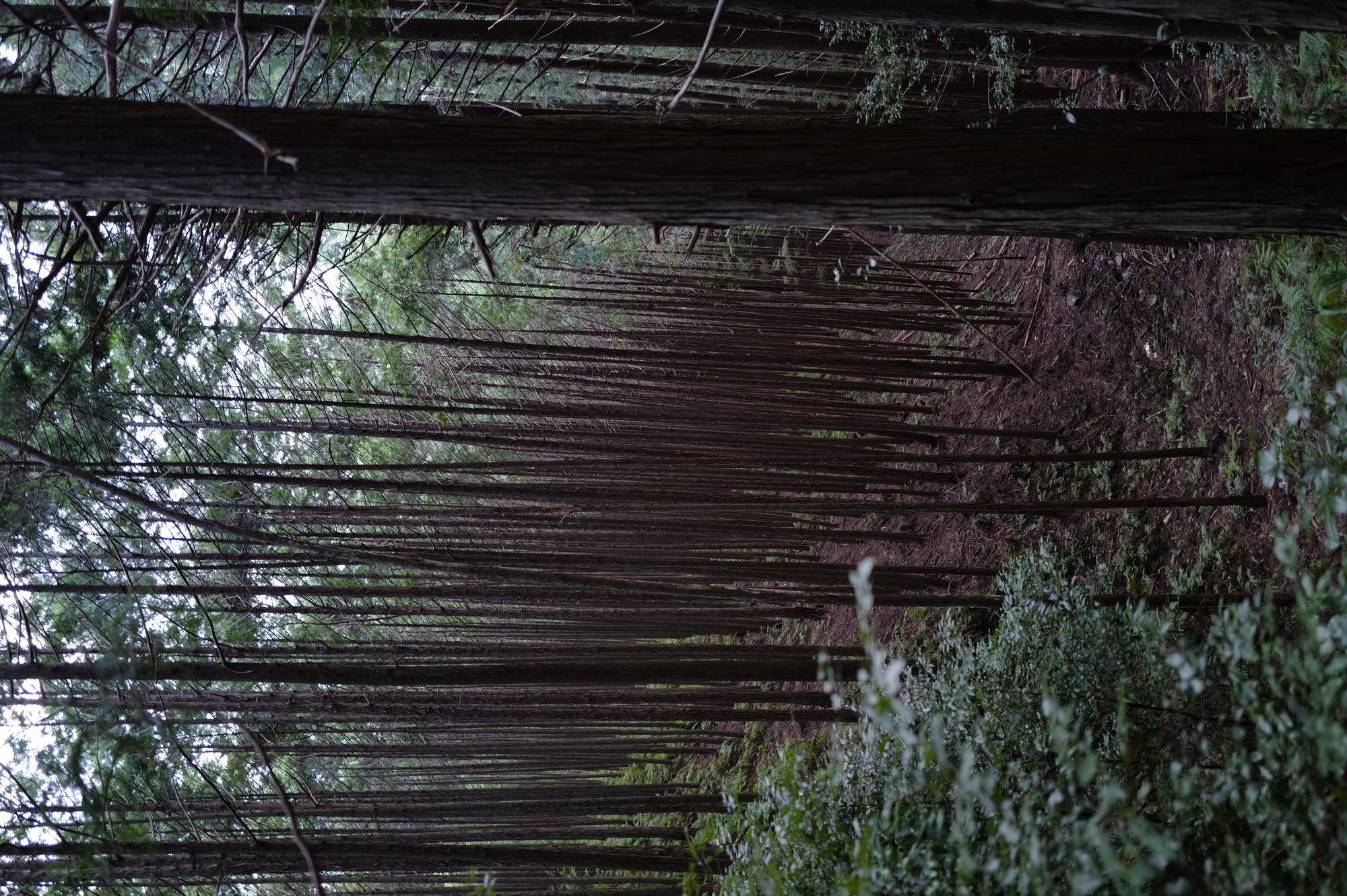
The middle of today’s trail gets challenging, like a game of Tetris, except it’s your feet trying to fit the right spots. The staircases aren’t built for regular steps. Their geometry is all over the place. I feel a sense of alertness and mild discomfort while walking. “Preserve the ankles, preserve the ankles”, I repeat as mantra. It’s quite easy to get hurt if you’re not careful.
There are passages where my whole mental energy is focusing on where my feet are landing. Just that and nothing else for several minutes. And then, at certain points, I pause and admire the beauty around me.
I have seen ancient tree roots serving as a long stair up and down. I have seen stairs made of rocks naturally. I have seen stairs with uneven steps. I have seen them all mixed, roots, rocks, sand.
The most impressive, however, are the ones that were crafted by the feet of the thousands and thousands of people who have, a step at a time, helped shape these trails.
In between the woods, we spot what appears to be the outskirts of Hongu. Our expectation to see the tall torii gate grows exponentially. When planning, this portal was an important milestone of the journey. It represents the reinvention of oneself, a transition, an end and a new beginning. We are almost there.
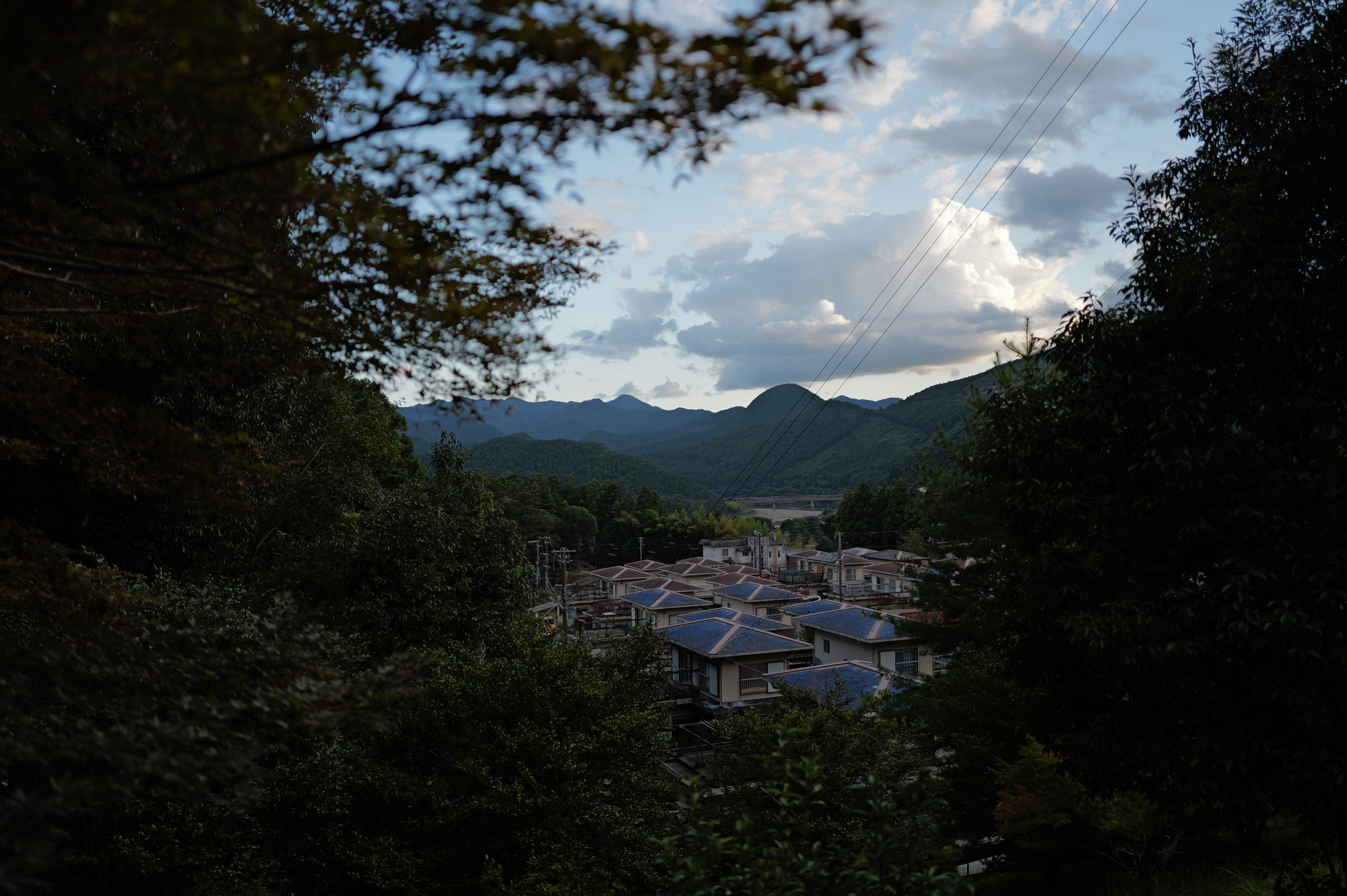
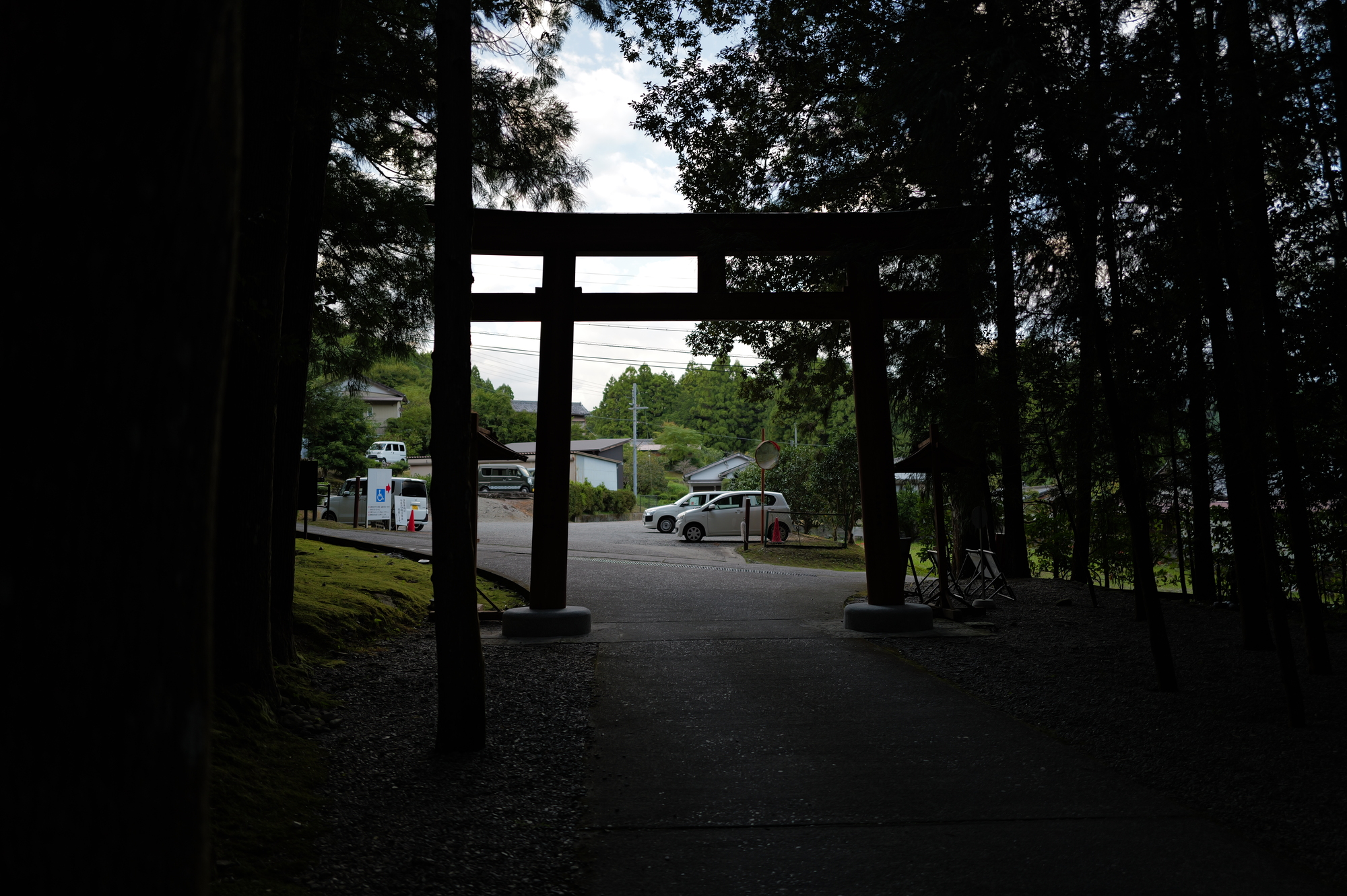
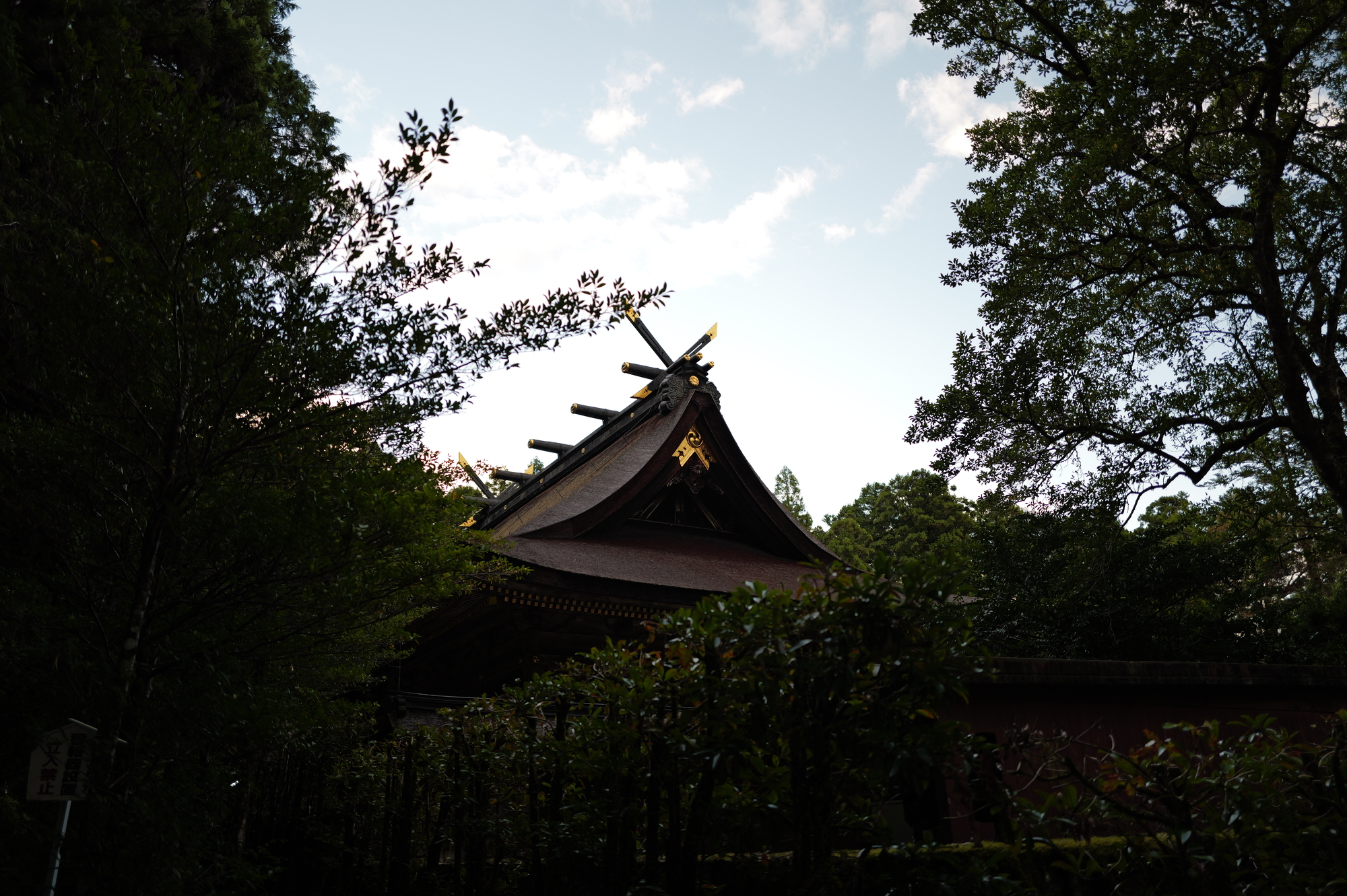
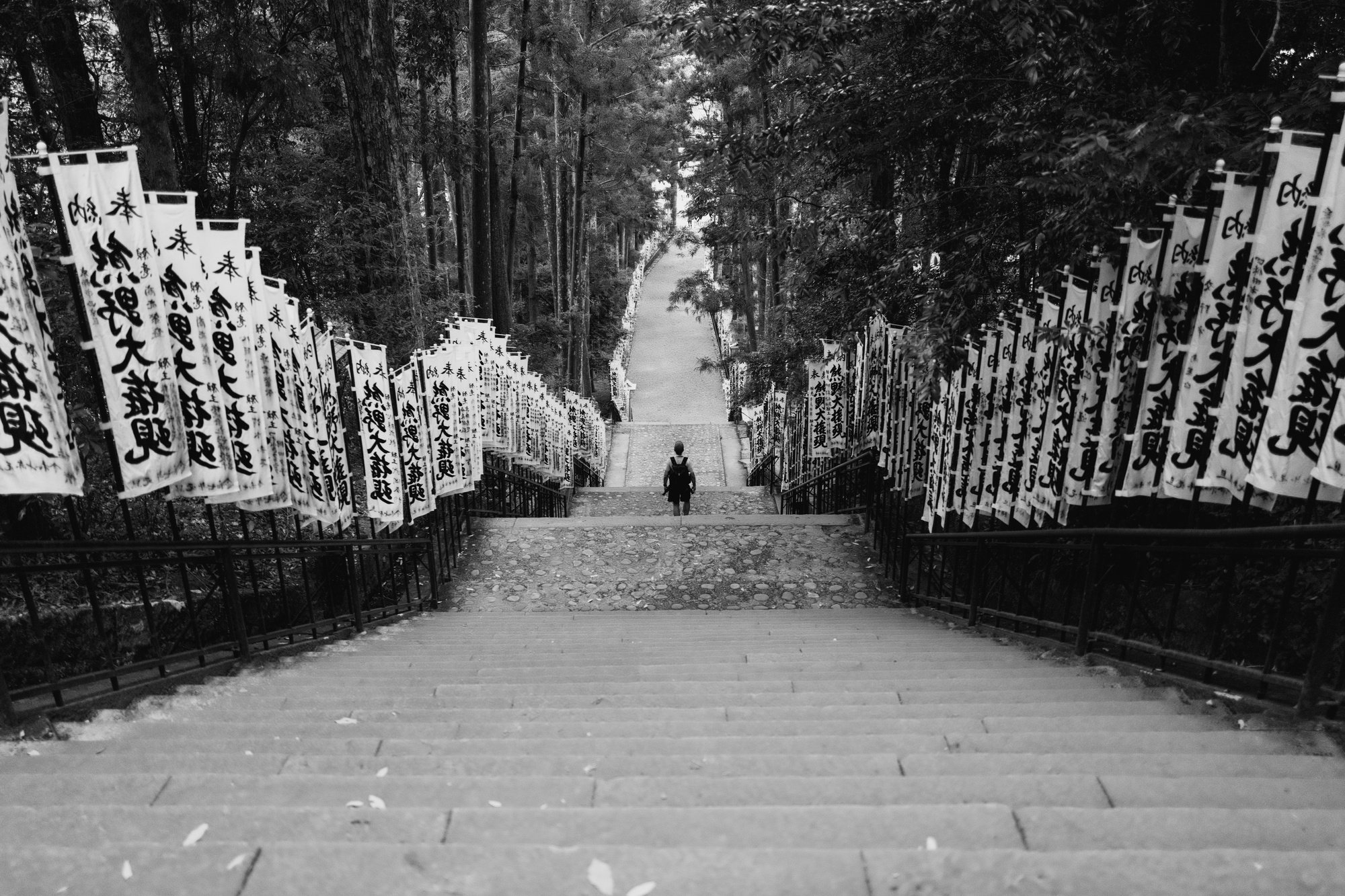
We arrive at the Hongu Taisha area, respectfully appreciating the view of the shrine, and taking some time to admire banners, the architecture, the gold and silver. We continue down the stairs leading to Hongu.
Crossing the village into the fields, we arrive at a special place we’ve been anticipating for months: the imposing Oyunohara (大斎原) torii, a tall 111 ft gate (33.9 meters) that represents craftsmanship and transcendence. This is it, the gate I’ve wanted to visit for so long, finally in front of my eyes.
Portals
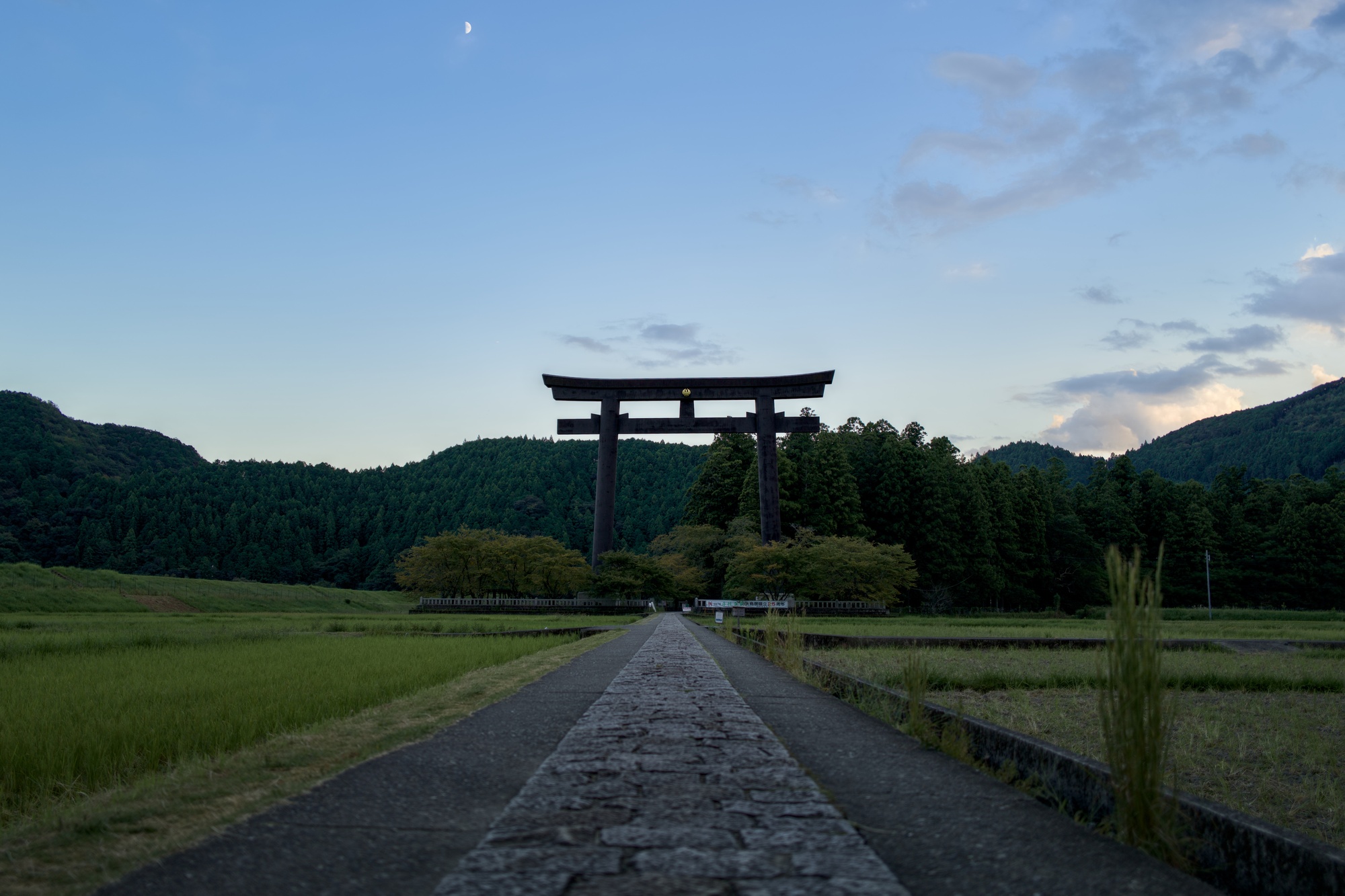
I feel like a tiny ant standing in front of this torii gate due both to its height and personal significance.
Have you ever noticed how portals are everywhere in our culture? In Alice in Wonderland, the main character needs to go through a tiny portal to get to the other side of her reality. In Narnia, a hidden portal inside a wardrobe leads the characters to another world. The Matrix, Stargate, Interstellar’s wormholes are other examples.
Some portals are conceptual, like event checkpoints. When Einstein discovered Relativity, the human race went through a portal after which life wouldn’t ever be the same. Penicillin, vaccines, combustion engines, the printing press. They’re all around us.
However, portals are hard to be found. When you find them, you must make an intentional decision to go through because it takes effort. Once you do, your life changes forever, and you can’t fathom returning through it to your old reality. It’d be like death. Often times, you will come back to try and tell others where the portal is, but they downplay it, or laugh at you. You might try to tell them how it is like beyond the portal, the colors, the smell, the magnificence, but they won’t understand because they haven’t seen it for themselves.
In 2011, I crossed one such portal. Living in a 5,000 inhabitants rural village in south of Brazil and with a 250Kbps bare internet connection, somehow I managed to get a tech job in the US. On the other side of this portal, my life had changed forever. I learned new ways of thinking, how to be productive, successful examples that challenged my education thus far, and how value is generated. For years, however, people thought I was a lunatic. You know, small town chatter. I tried to help others come through the portal, but they either couldn’t find it, weren’t willing to make the hard decision, or found it impossible.
Shinto torii gates captivate me because they represent a transition from mundane to a new reality, like the hidden portals around us. They are a celebration of the many passages distributed throughout space and time, yet hard to be found. They reward those who make the required decision to go through them, with a willingness to leave the past behind.
Being here has a special meaning this evening. This torii represents our quest for hidden portals. Quite possibly, having done this pilgrimage could mean I crossed another portal and my life will never be the same. Maybe I will finish this journey a different man than how I started it.
Too early to say, and it’s getting late. It’s time to go get some rest. Tonight we sleep in an Airbnb in Hongu.
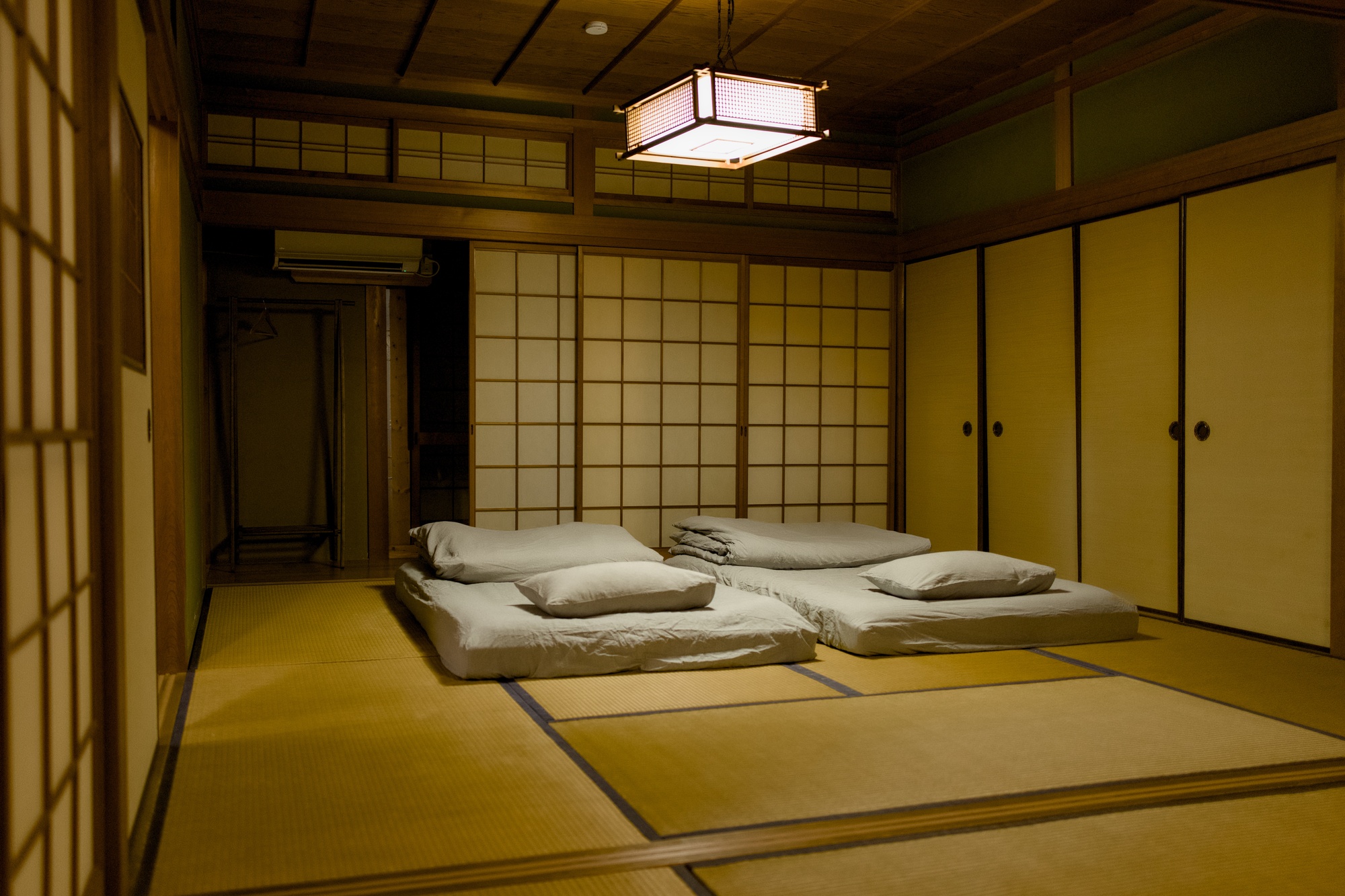
Day 3: resting in Yunomine
Steam, river stones, and slowness
We wake up to a chaotic morning, rushed and on empty stomachs. Google Maps had told us cafés and restaurants would be open today, but guess what, they were closed. Walking through streets on an empty stomach to find closed doors isn’t fun. Fortunately, we stumble upon a small grocery store and throw together the quickest breakfast before check-out.
Today we’ll head over to Yunomine (湯の峰), a small hot springs village. Tsuboyu (つぼ湯) is renowned as Japan’s oldest onsen and a UNESCO World Heritage site. If things go according to plan, we’ll chill, soak in hot water, and sit on a bench until our butts go numb. We’ll watch the flights of birds, kids playing and trees dancing.
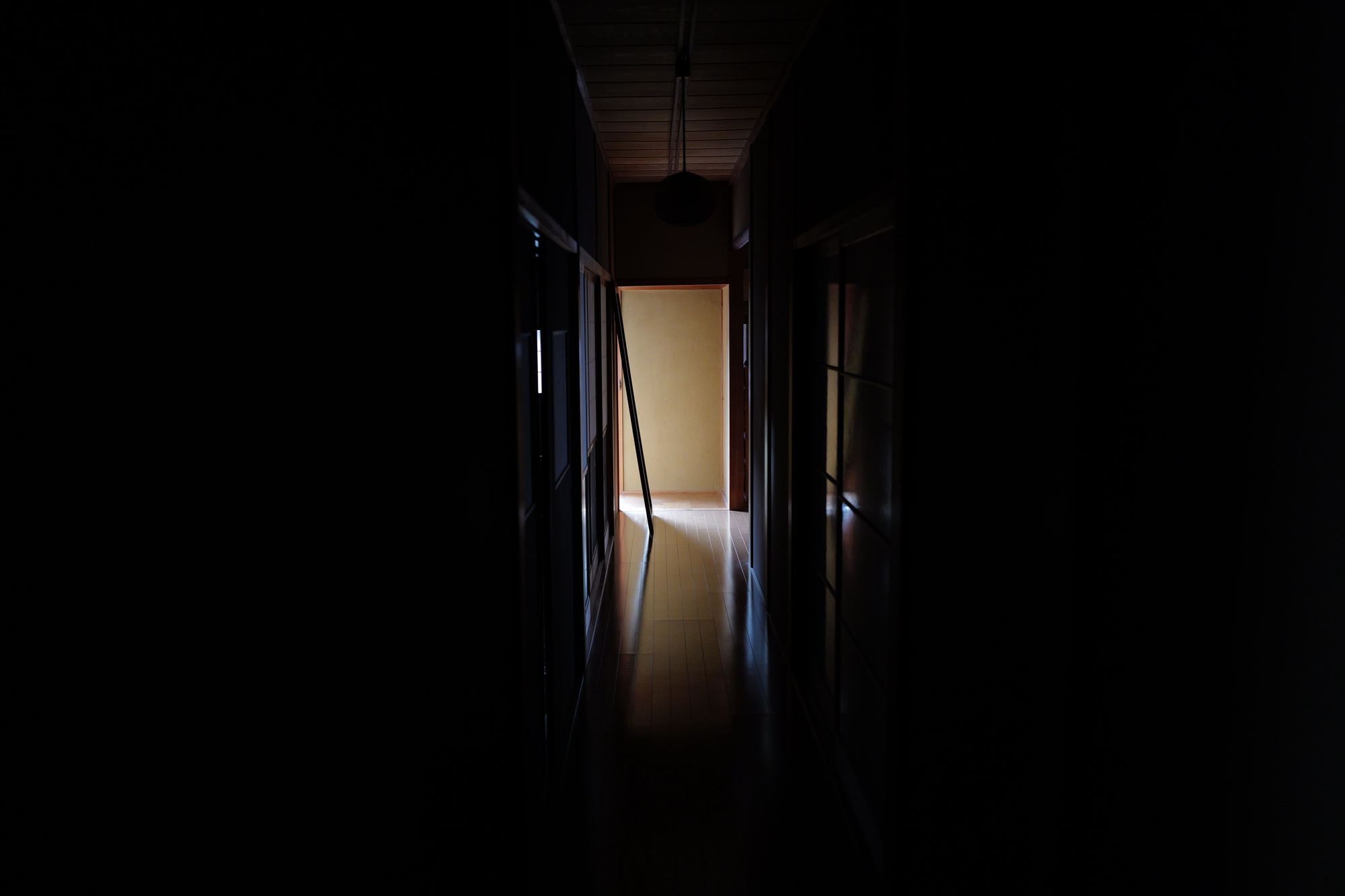
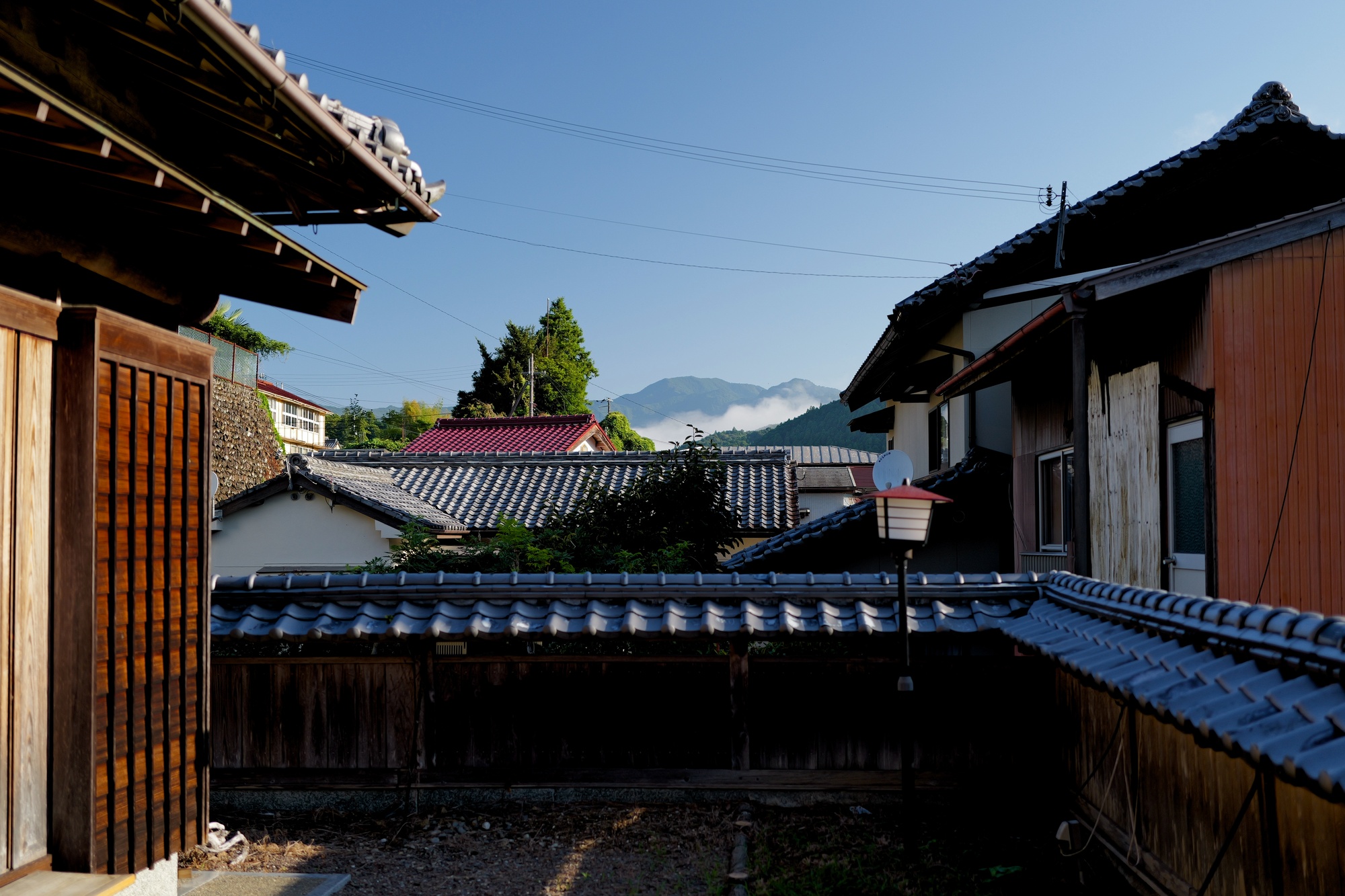
We are the only passengers in the mini-bus. We are dropped 40 minutes away from Yunomine.
We walk uphill on a hot and bright asphalt. The lack of shades on the road makes us stop a few times to cool down our body. It’s 90F (32C). Who said this was going to be a rest day?
Half an hour, a relatively short walk, but my back already hurts nonetheless. This background discomfort is a recurring theme since the beginning of the journey. Two weeks ago in San Jose, back in the US, I turned to AI to help me diagnose the symptom. “Alex, what you’re describing (tired, achy mid-back muscles next to the spine, not sharp or injury pain) sounds like muscular fatigue from postural stabilizers, the muscles that keep your torso upright”. The knowledge that it’s likely fatigue has given me confidence to continue the walk everyday, with the proper, systematic resting cadence. Still, it seems to get a little bit worse every single day.
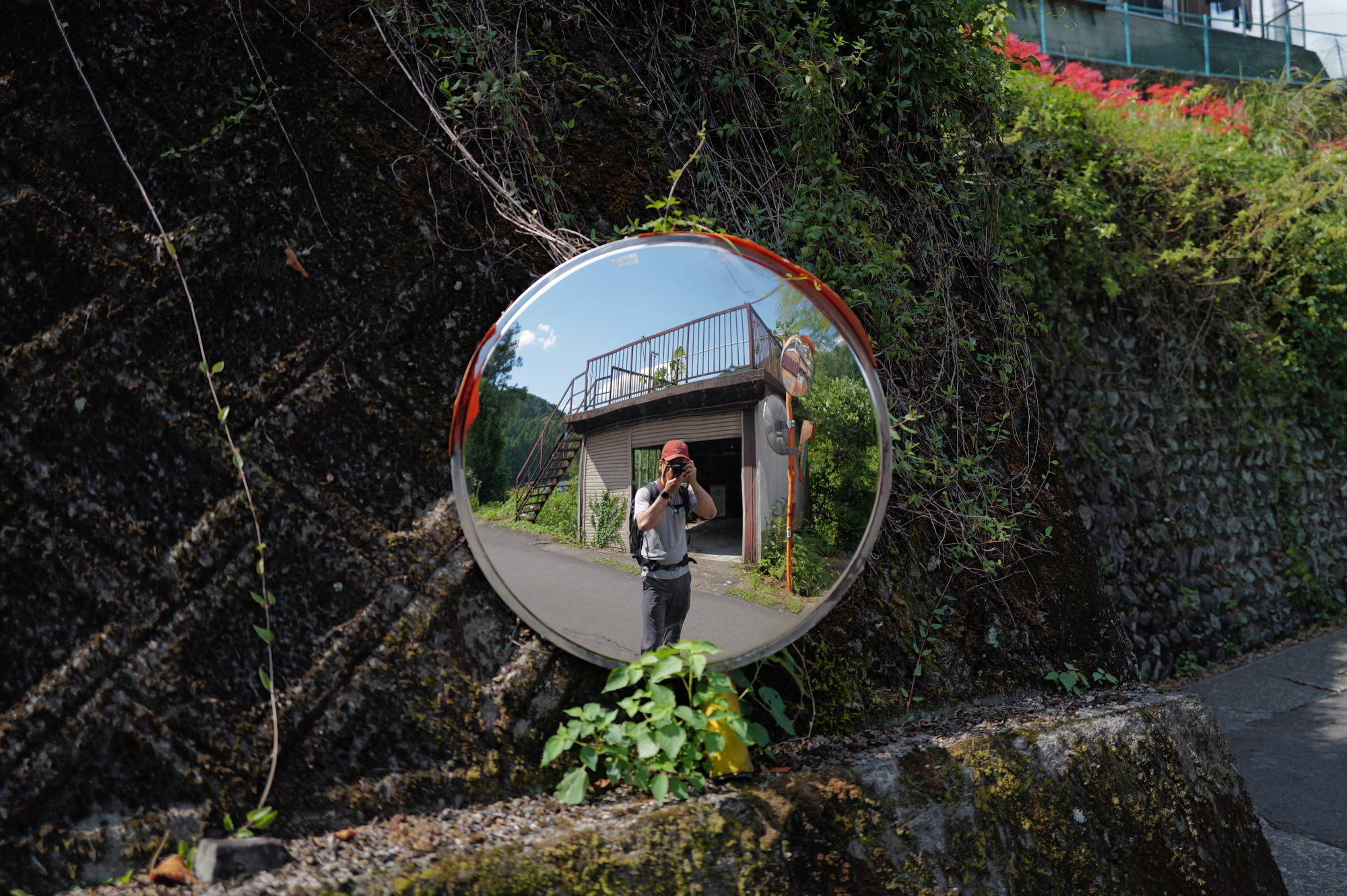
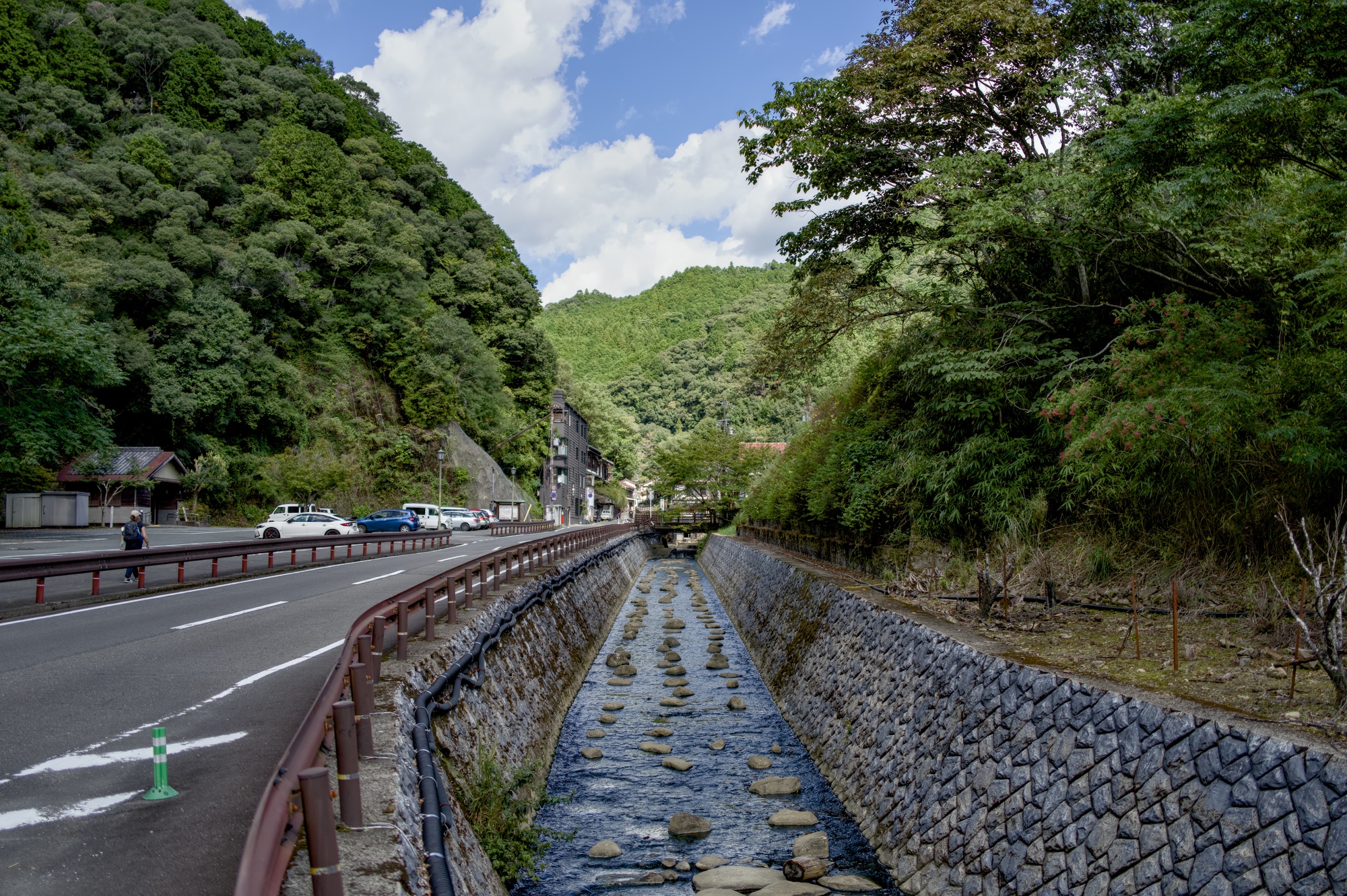
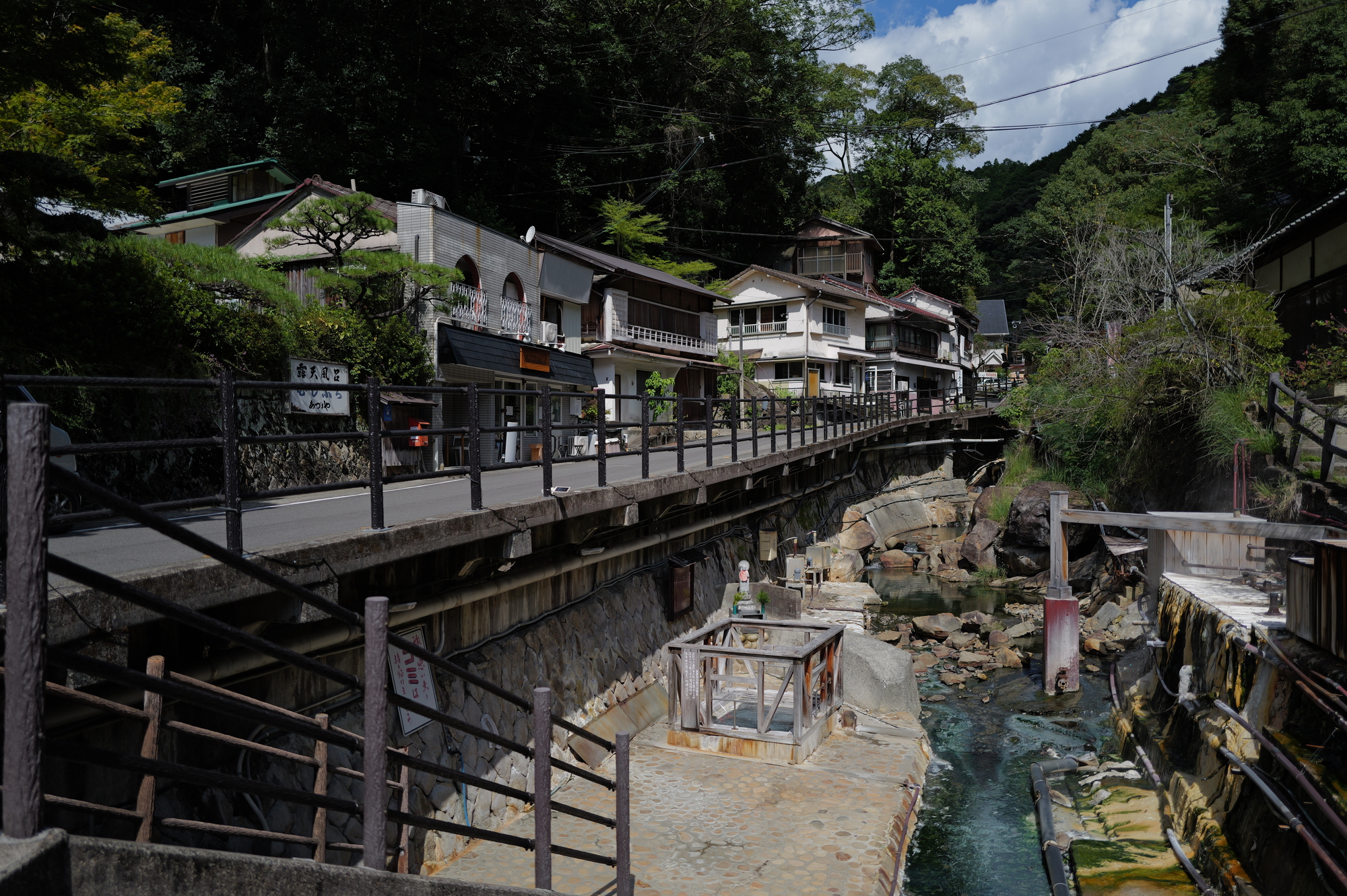
We arrive at the small village and find empty streets. The central canal releases steam.
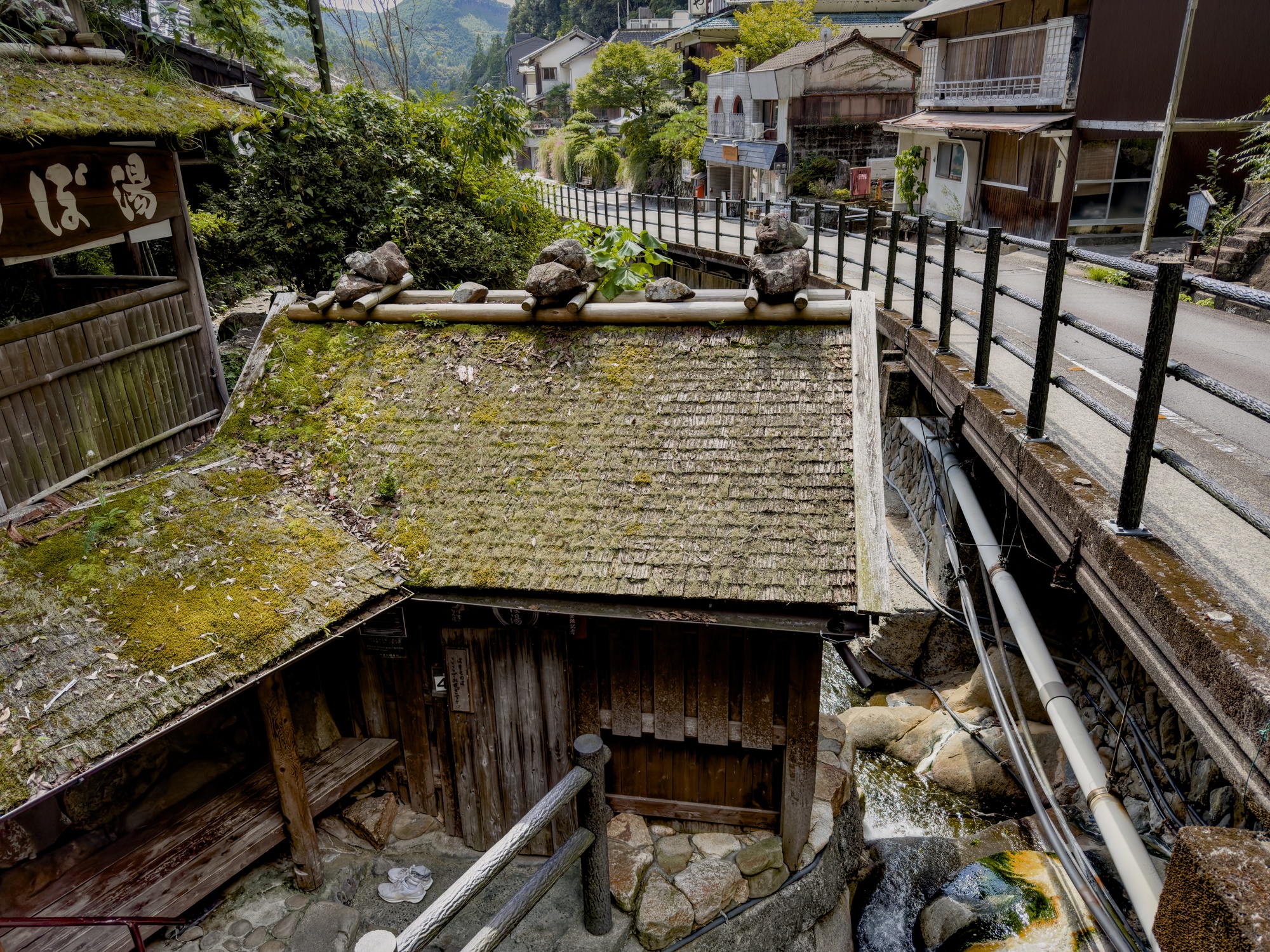
We drop our backpacks at a random spot and wander around to get to know the place. This is Japan, no one’s going to steal your stuff. We roam around a nice, cute little village, then head to buy tickets to Tsuboyu, the famous, UNESCO onsen.
Honestly, I’m mildly reluctant to dip into almost-boiling water, given how hot the sun is. The Tsuboyu hut lets steam escape through its wall gaps, like a toaster made of wood. It’s a mild sauna inside and the water is freaking hot. After several failed attempts to dive my toes, we finally soak, like two potatoes in the pan.
Before leaving the steaming hut, I finish with cold water, which leaves a lasting freshness. My skin stays cold for a good hour or two afterwards during lunch. A small, wet towel wrapped strategically around my neck makes me feel like a relaxing capybara.
Our lunch involves doing the traditional Onsen Tamago, where you hard boil eggs by dipping them in an open hot spring for 11 minutes.
After lunch, we find ourselves a wooden bench. As my legs touch the wood and I sit, it feels like Rest Day has finally began.
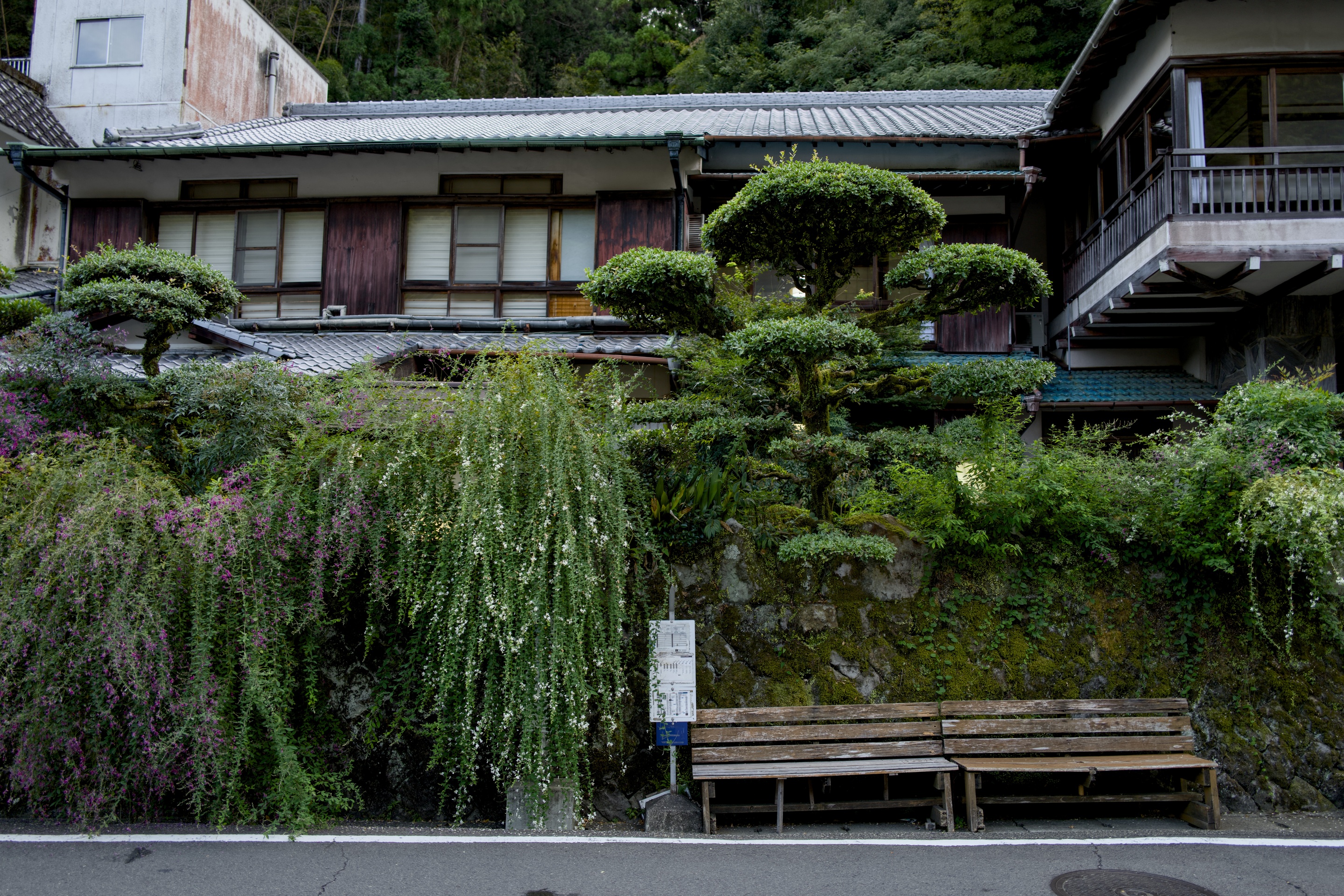
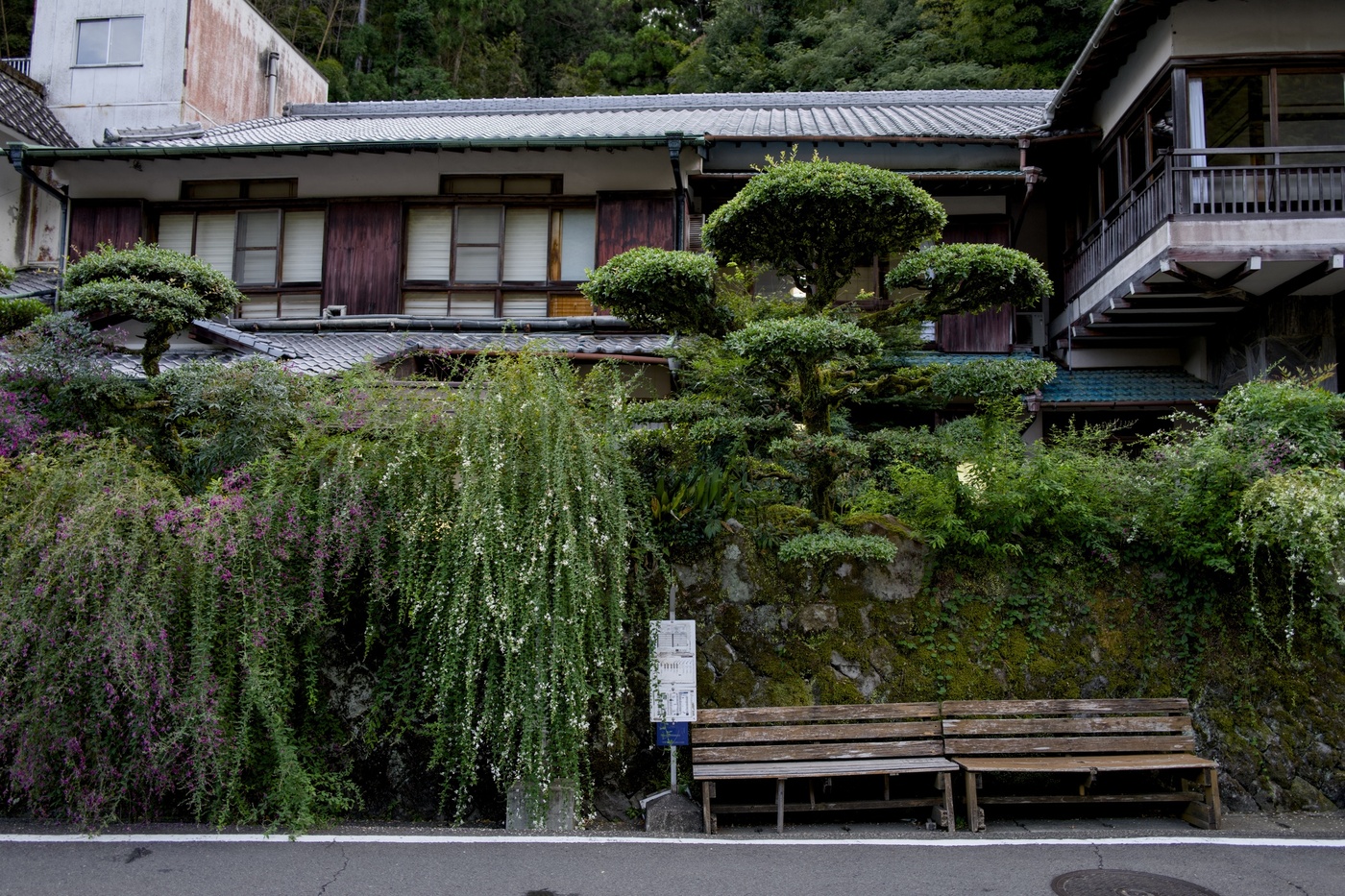
The tranquility invites us to play a little game to enhance our perception: Five things we see, four things we hear, three things we feel, two things we smell, one taste.
Treetops, children, traditional houses, flags, flowers. A breeze, a conversation in Chinese, children, birds chirping. Peace, privilege, sore muscles. Hot spring scent and flowers. Eggs.
We are hyper-focused on the present. A while ago I was preoccupied about making good use of the time, now my mind has calmed down. I’m just enjoying the wind blowing my skin.
Ice cream wouldn’t be a bad idea.
We hop on a bus towards Kawayu (川湯), a tiny village where hot springs flow into the river, and arrive during sunset. We borrow traditional robes from our guesthouse and wander, shy, towards the natural spa. You can use a shovel to dig your own bath spot in the river, but we decide to use an existing spot made of stones. Under a sky full of stars, we soak, mixing and contrasting hot and cold water. A perfect ending to our night before dinner and bed.
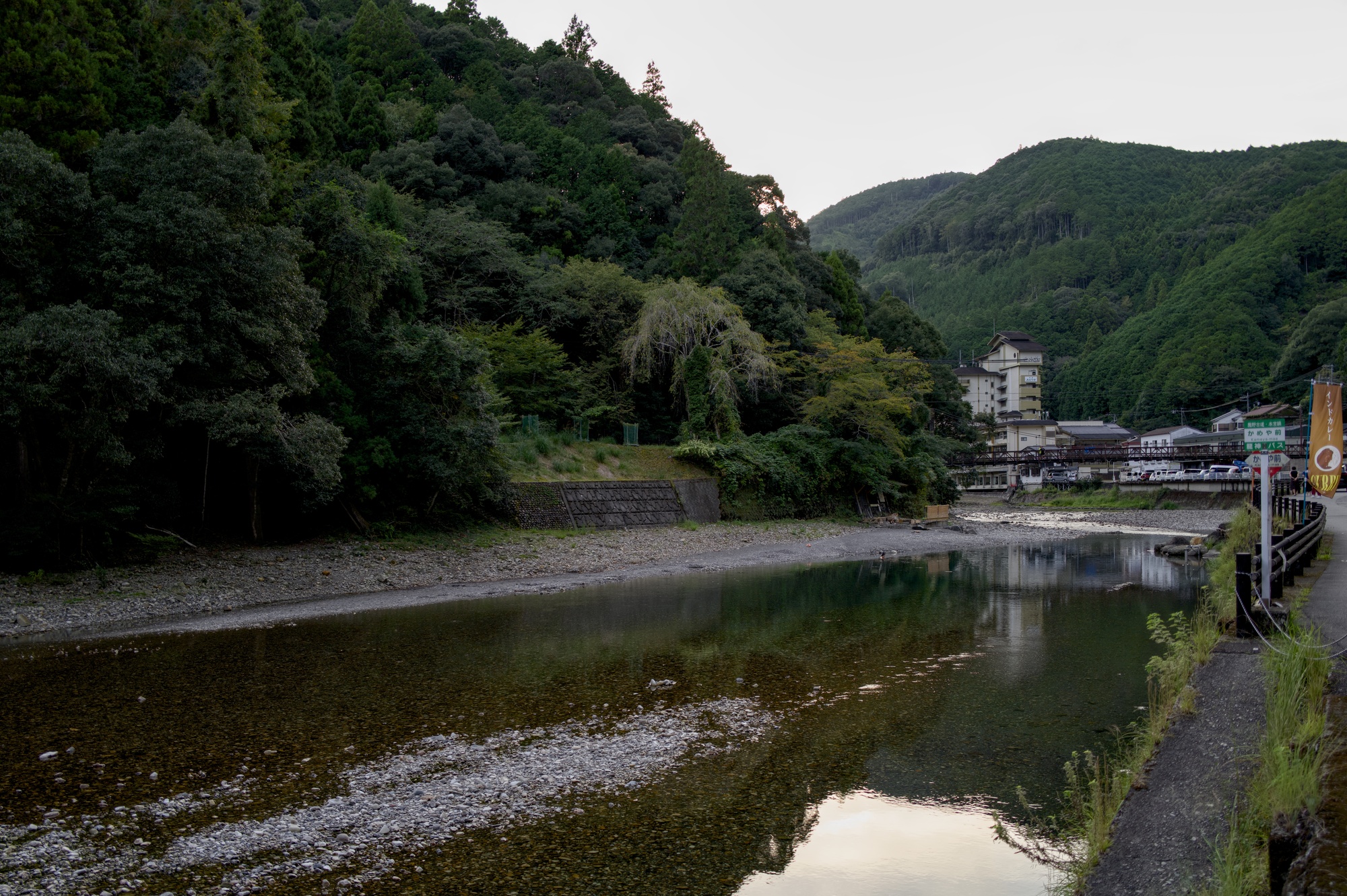
Day 4: Kogumotori-goe to Koguchi
Long ridges and thoughts
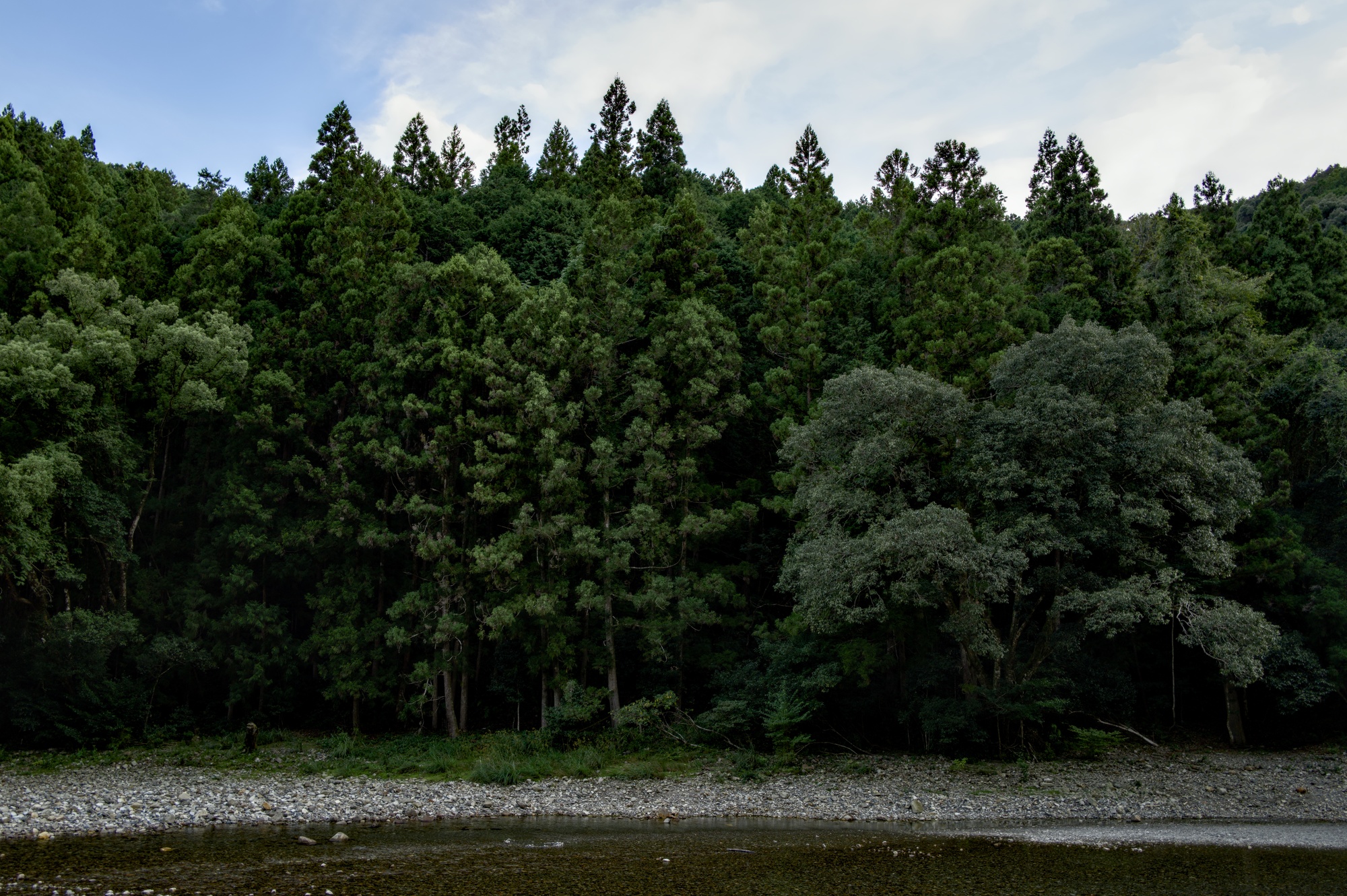
We woke up to a gut punch before coffee. Both my wife’s knees and mine are hurting, and my back is doing a serious complaining, while today’s trail is the toughest.
The 13km Kogumotori-goe (小雲取越) trail’s first third scores 4 out of 5 in difficulty. It’s a gradual 1,542 feet climb (470 meters) to Hyakken-gura, harder than Day One, which was already quite taxing. More pressing is the fact that Koguchi (小口) has no lodging available today, so we must arrive before 5pm to catch the last bus to Shingu (新宮). The trail estimates say 6-8 hours.
At 7:45am, we’ve spent an hour working the problem. The heavy backpacks aren’t helping our knees or backs, so we conclude it’s irresponsible to walk with this much pain. The options are doing a boat tour today (I didn’t come here to sit down); finding another trail (frustrating after months of planning); my wife taking a bus to Shingu while I walk (I’d feel bad for her); walking a third of the trail and returning (sounds off-putting but better than nothing).
Shipping weight
“If only we weren’t carrying our heavy backpacks”, a lightbulb pops over ours heads. “What if we could leave our bags here and return”? That would be an inconvenient 16km return after a tired day of walking. “What if we could ship more weight to Kyoto”? That’s not impossible. We would need a container and right now we only have two backpacks. I ask ChatGPT for ideas, “why don’t you check with the guesthouse’s owner if he have a cardboard box you can use?”, the AI asks. That’s a good idea. I run downstairs to check with him, and after a couple minutes, he comes back with a finds one in the trash, the perfect size. I assemble it in a square
We pack into the box everything we can find in our bags. The camera stabilizer stick, a camera, moisturizers, eyedrops. The lightweight laptop I’m carrying for writing. We tape it carefully, and there it goes to Kyoto.
We feel a little bit more optimistic, as if a ton had been lifted from our backs and our minds. The frustration is replaced with hope, we decide to keep the expectations low and set a simpler goal: walk 5 long kilometers to Hyakken-gura, the highest point, and re-evaluate. The peak is a third of the way, so it’s presumably easy to get back if have to.
Once there, we will figure what to do next.
Kohei-san, the host, after solving our shipping and preparing a delicious breakfast, kindly offers to give us a ride to the trailhead with a smile from ear to ear.
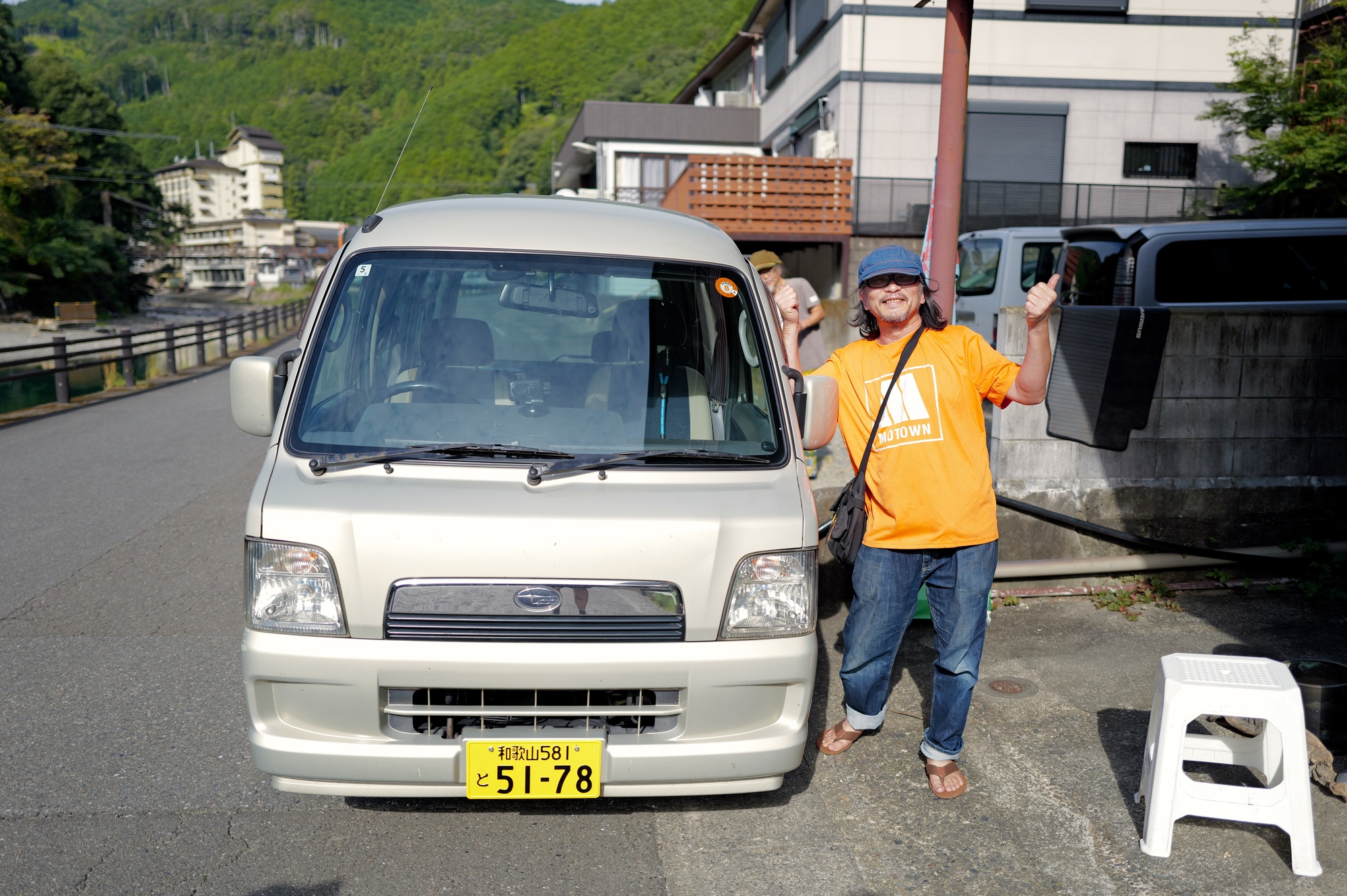
Back on trail
Twenty minutes into the walk, adrenaline triumphs over any logical reasoning and makes us both say, “Fuck it, let’s just keep going until the end of the trail”. Ah, the overthinking! At least it served us in shipped weight, but did we need the drama? We laugh. “It would be too frustrating to return once we’re on the move”.
It’s 9:17am. We see humans beings on the trail, everybody faster than us. Our goal is reaching the peak of the trail in 2-3 hours, hoping we’re left with plenty of time to continue on a slower pace.
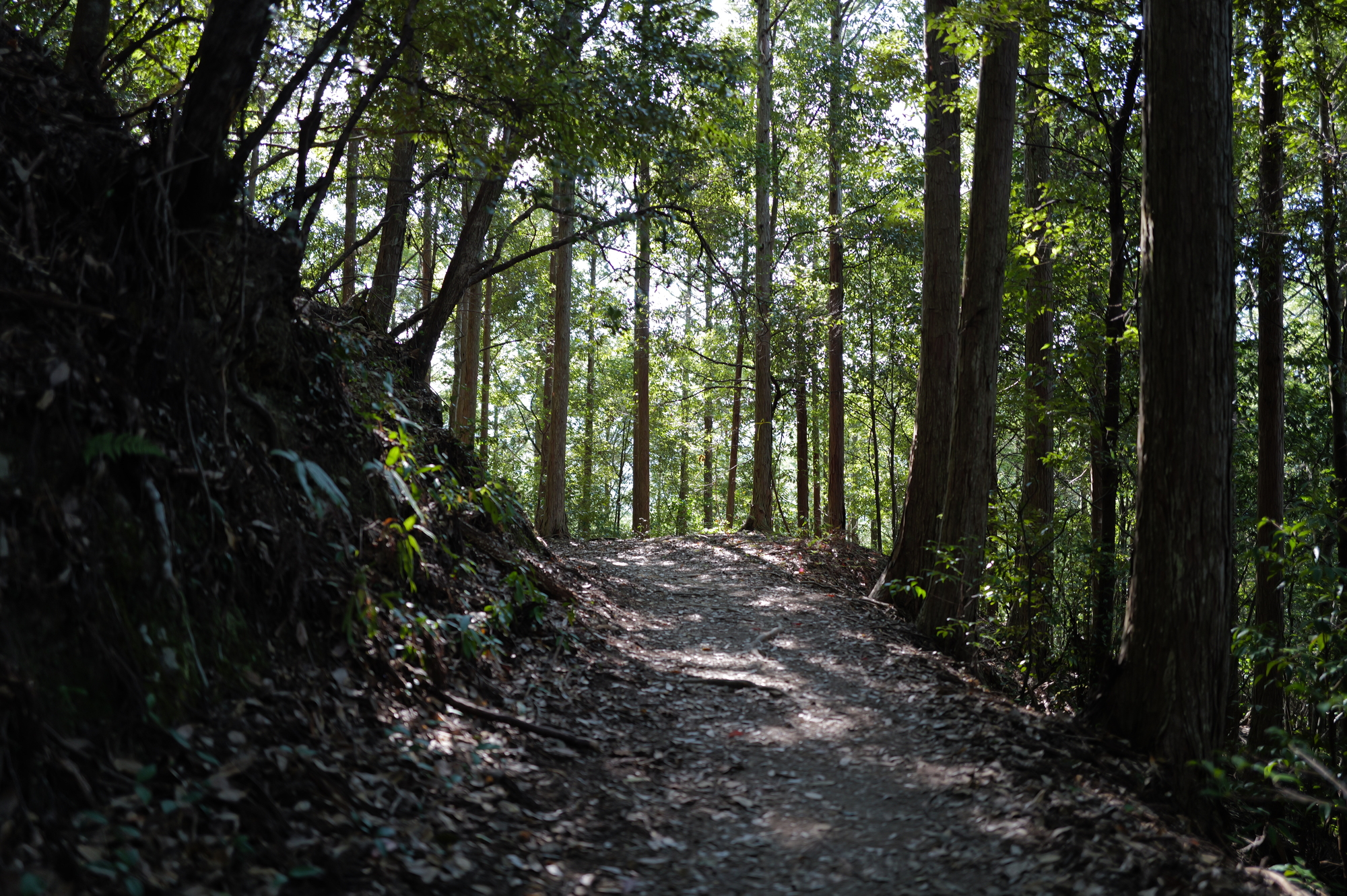
I keep asking myself, “Are we behind”? I look at the offline map and I still have no idea where we are. We’re walking fast and steady, like runners in a marathon chasing a gold medal. We feel like arriving at any moment. It feels also like the hardest trail so far. By a mile, figuratively and literally.
Five kilometers on a straight line would take me roughly an hour to walk, so the whole 6-8 hours the Tanabe Prefecture stipulates never made sense to me.
And if we get there ahead of time, say, before 11:45am, then we’re gonna make a decision about going all the way. In theory, a third done in 2:45 hours means a total trail roughly 8 hours. The last two thirds would be downhill, which is presumably easier, but also terrible for knees like ours.
If we got injured, could you imagine the inconvenience it would be? Waiting for someone to bring help? Nah, that’s virtually impossible. A worst-case scenario looks like a slow zombie walking on a trail back to civilization. The scary is getting dark, no lights, nowhere to sleep, and then maybe I have my first ever homeless simulation. I mean, it wouldn’t be the end of the world, but definitely not something I want to experience today.
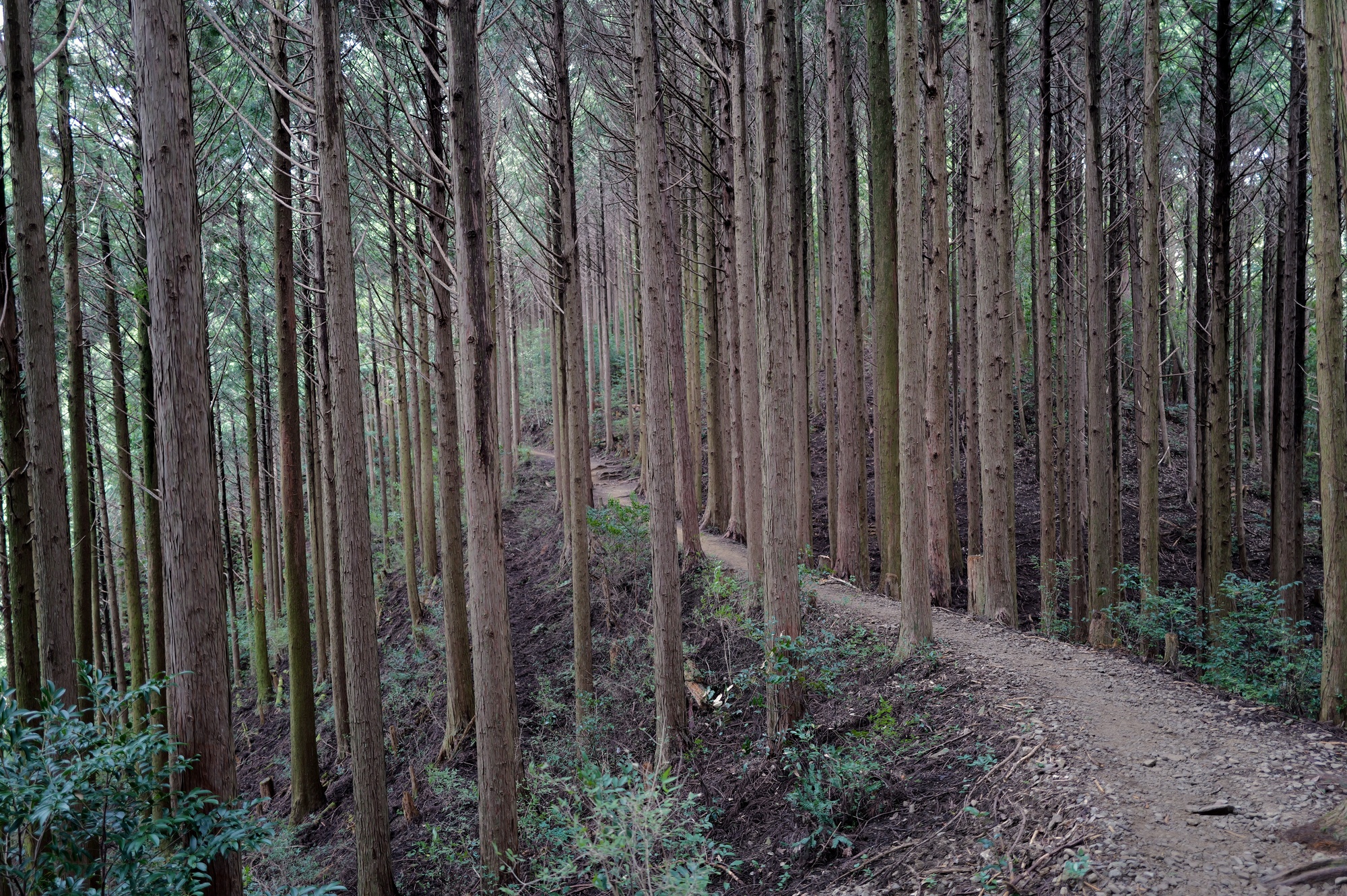
A new friend
Our conversation breaks off when we see someone walking backwards, moving slowly. I signal my wife to stay behind and go check out.
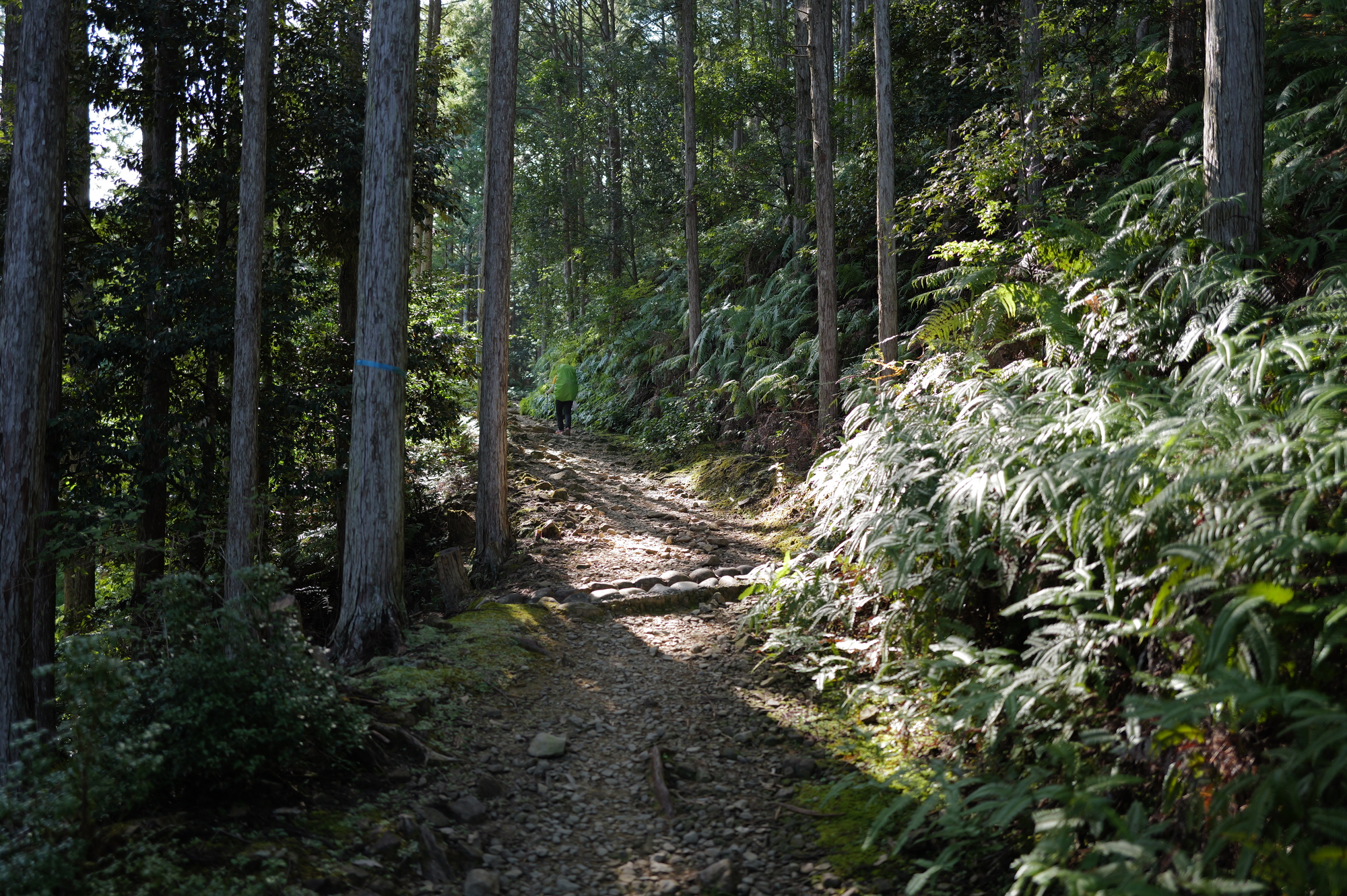
“Hello? What’s up?” The woman looks at me. “Uh… snake. A snake up there”, she says, gesturing up the trail. “Let me go take a look”, I say, and move forward.
I scan the endless grass and leaf litter along the trail, but see nothing. Then, as I approach, the reptile glides down from the embankment above us onto the path, as if it wants to join our walk. As I close the distance, the snake angles across the ridgeline and disappears downhill. “Clear!”, I announce.
“Would you like us to walk in front of you, just in case”, I ask. “Yeah, sure”. We restart the march and I present myself and my wife. “I’m Fey”. My wife lags behind with her while I lead the group.
Over the next hour, a cultural exchange flows non-stop. We learn she’s a Chinese kindergarten teacher on vacation, skipping the Chinese hiking trails this time to walk the Japanese ones. Yesterday, she walked up until late at night. “It’s common in China for people to hike in the middle of the night”, she says. “Aren’t you scared of the dark or animals?”, we ask. “Yes, but we do it anyway. I use my cellphone lights”.
Brave woman.
The peak
Overcoming the struggle, we arrive at our checkpoint, the Hyakken-gura. I wonder if the clock is broken, it’s 10:20am and nothing makes sense. “How did we arrive in one and a half hours?” We rushed, sure, but the terrain was the hardest we’ve experienced and our most optimistic plan expected at least two to three hours. Yet, we managed to get to our goal in half the time!
None of that matters now because the mesmerizing Kumano mountains fill my eyes. The green horizon casts a hypnotic spell, putting everything secondary.
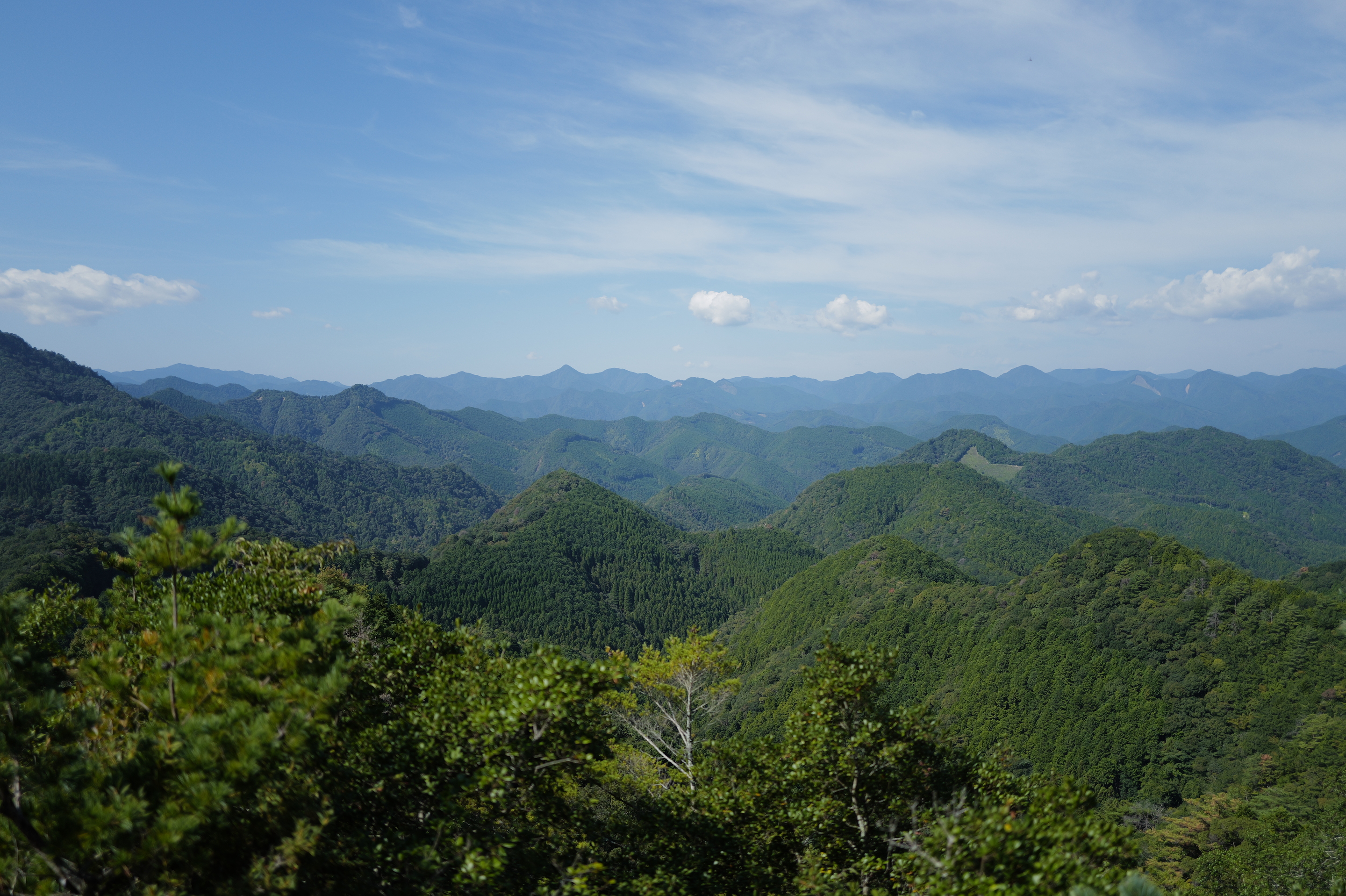
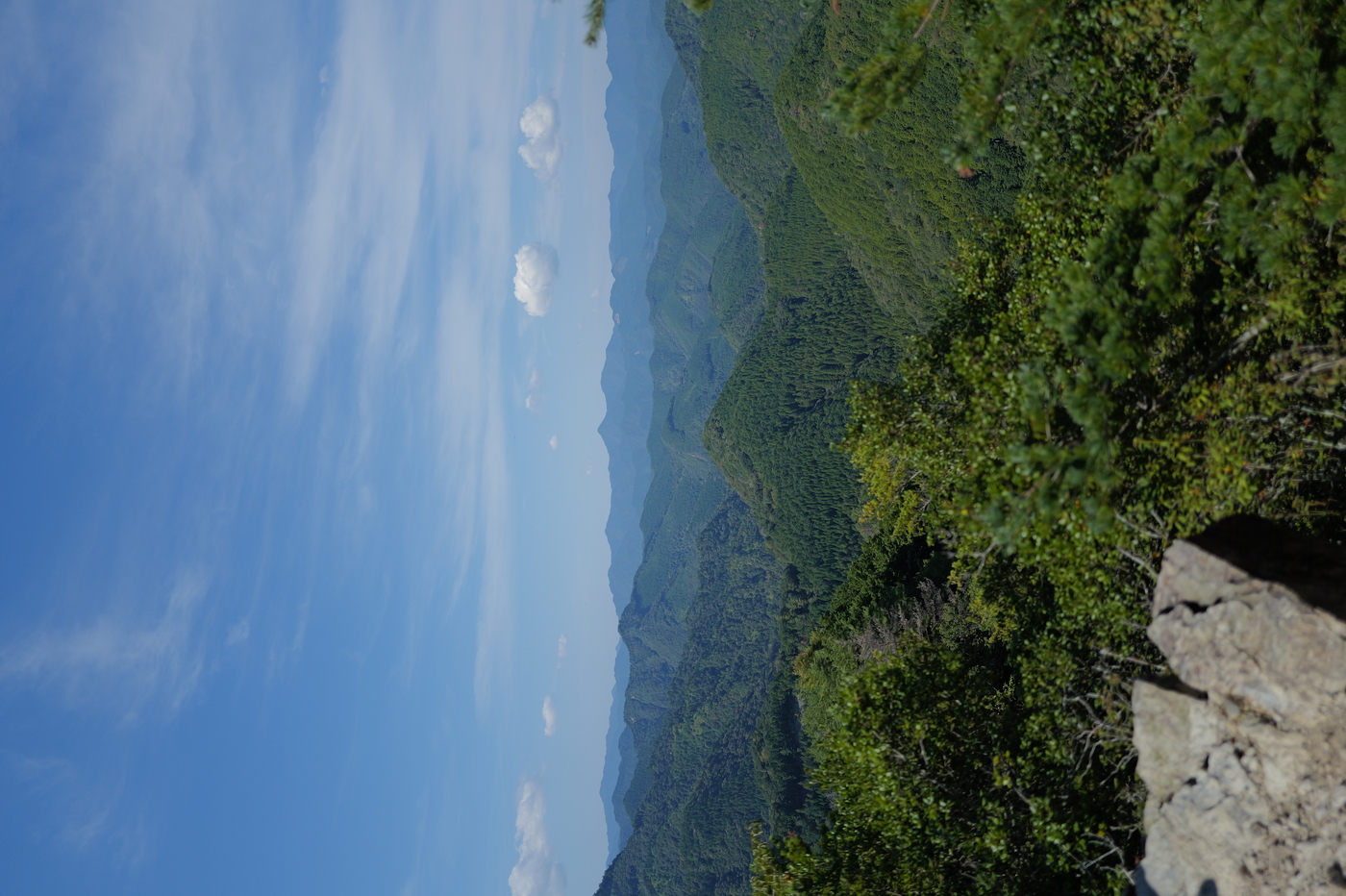
What a view.
We decide to continue on our way to Koguchi. We take a few more pictures, turn left towards the trail and… restart the march, as if any other option is inconceivable. At some point an hour ago we thought, “Yeah, I just wouldn’t feel good returning”, and so we just kept going. After all said and done, the decision comes in seconds, based on gut and feeling.
And that’s fine.
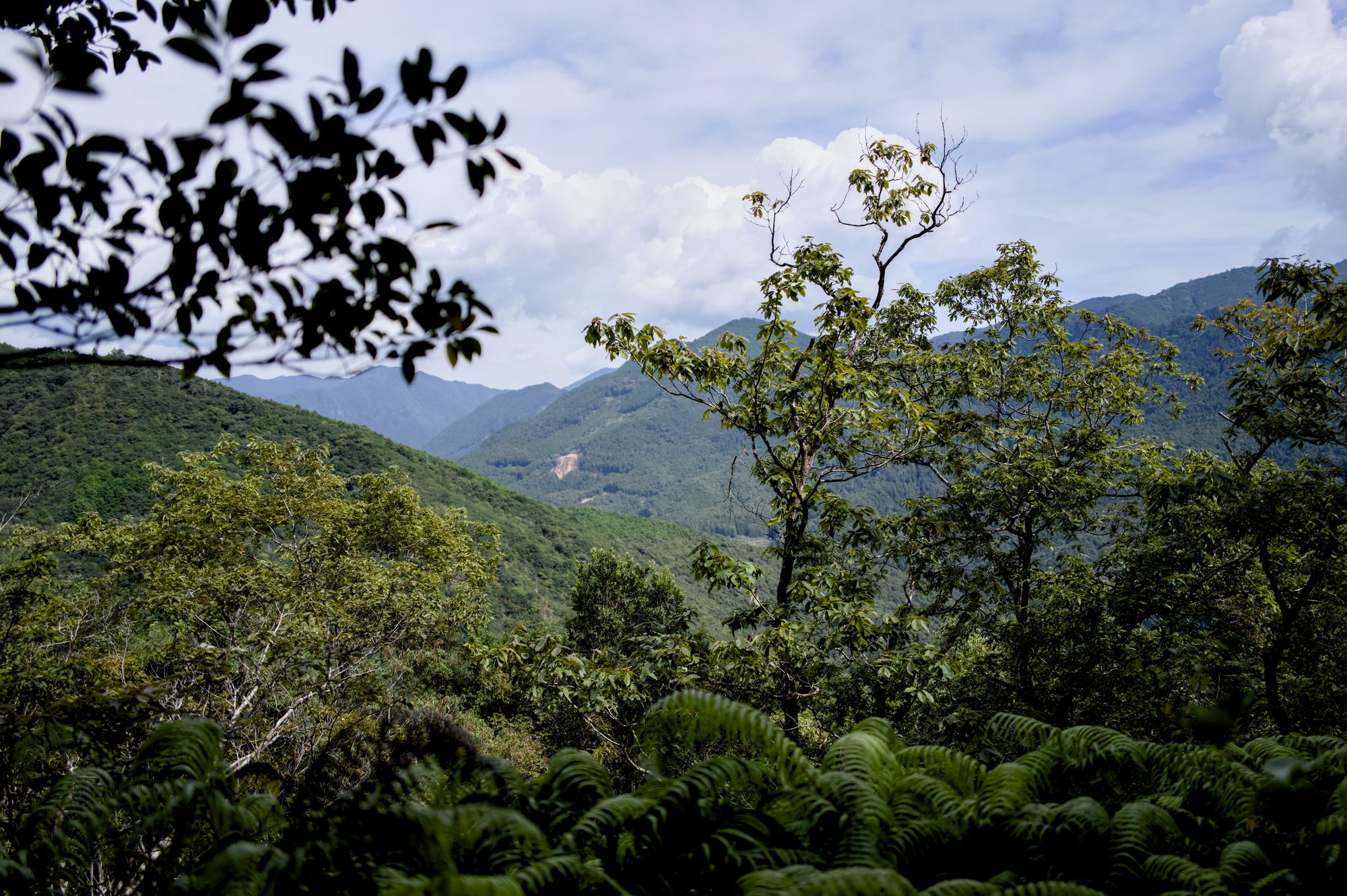
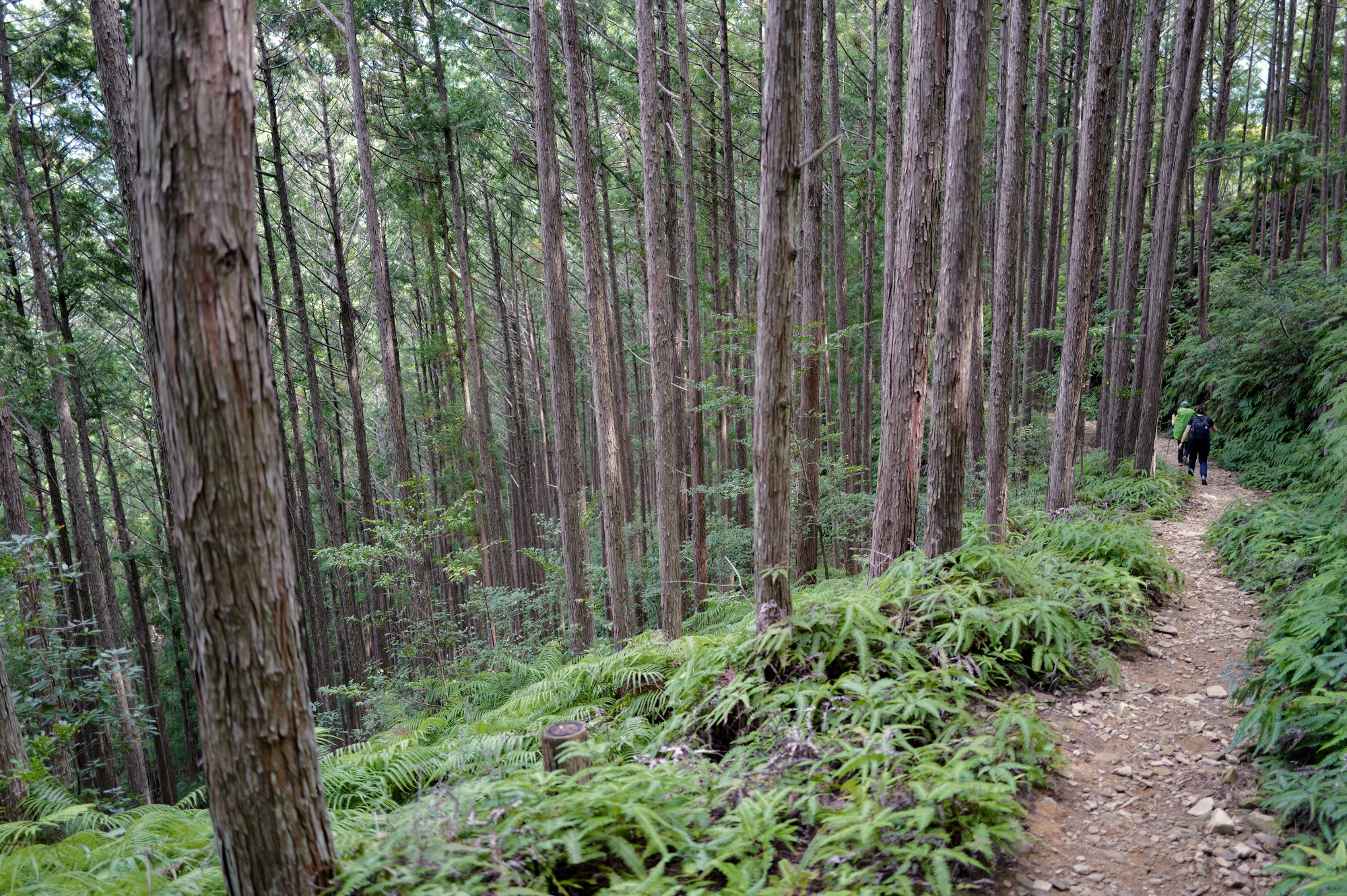
Koguchi
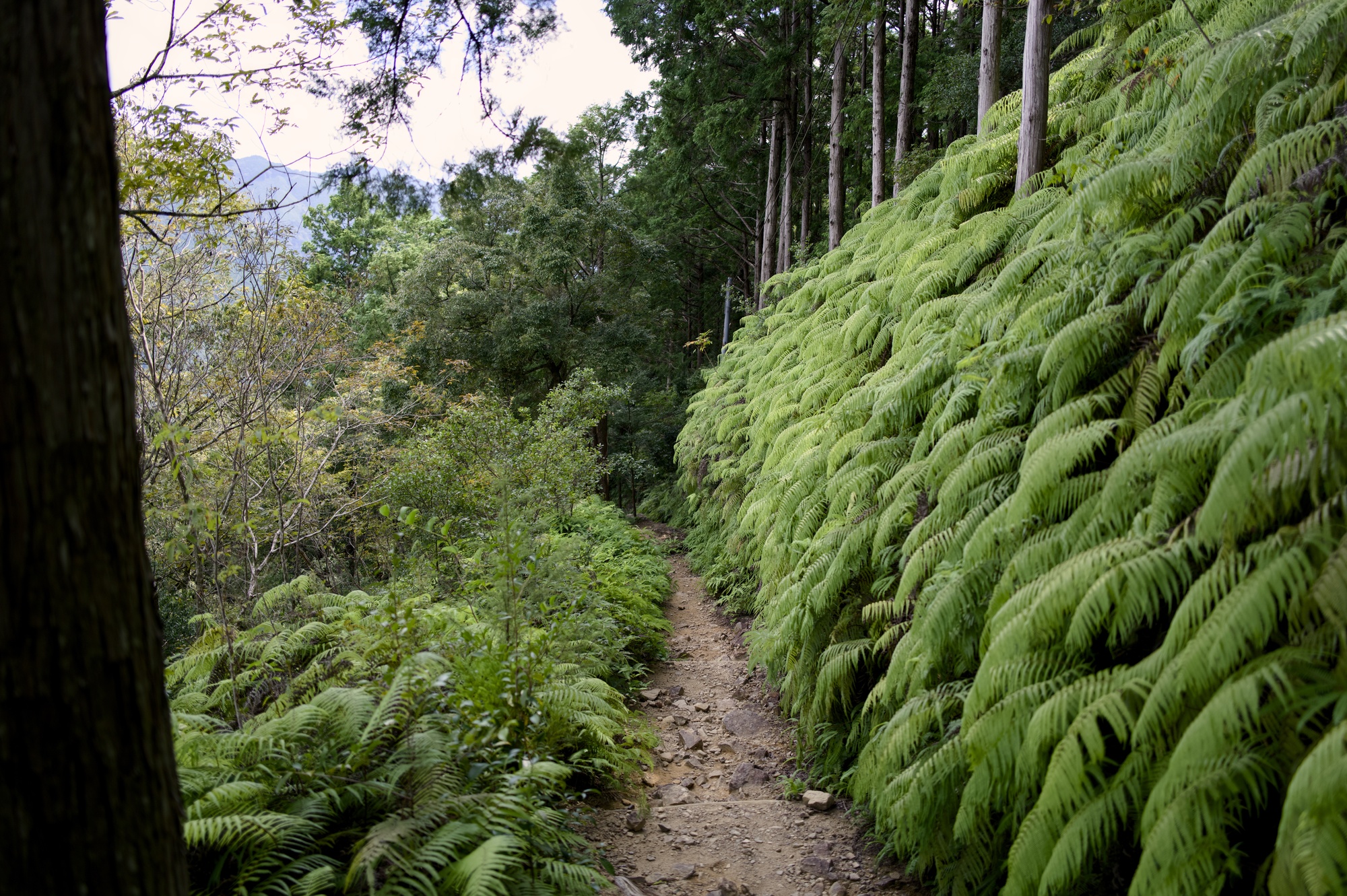
The final descent is brutal on our knees, a continuous and relentless 2,260 ft (690 meters) drop. The steady rhythm of 3,750 steps pounds our joints like a pickaxe. The endless staircase forces frequent pauses, alternating pain with brief relief over an elevation loss equivalent to 225 flights of stairs.
My right knee shakes back and forth when I stand upright, like a column in an earthquake. We see a gradual increase in brightness among the trees.
The end of the trail is near.
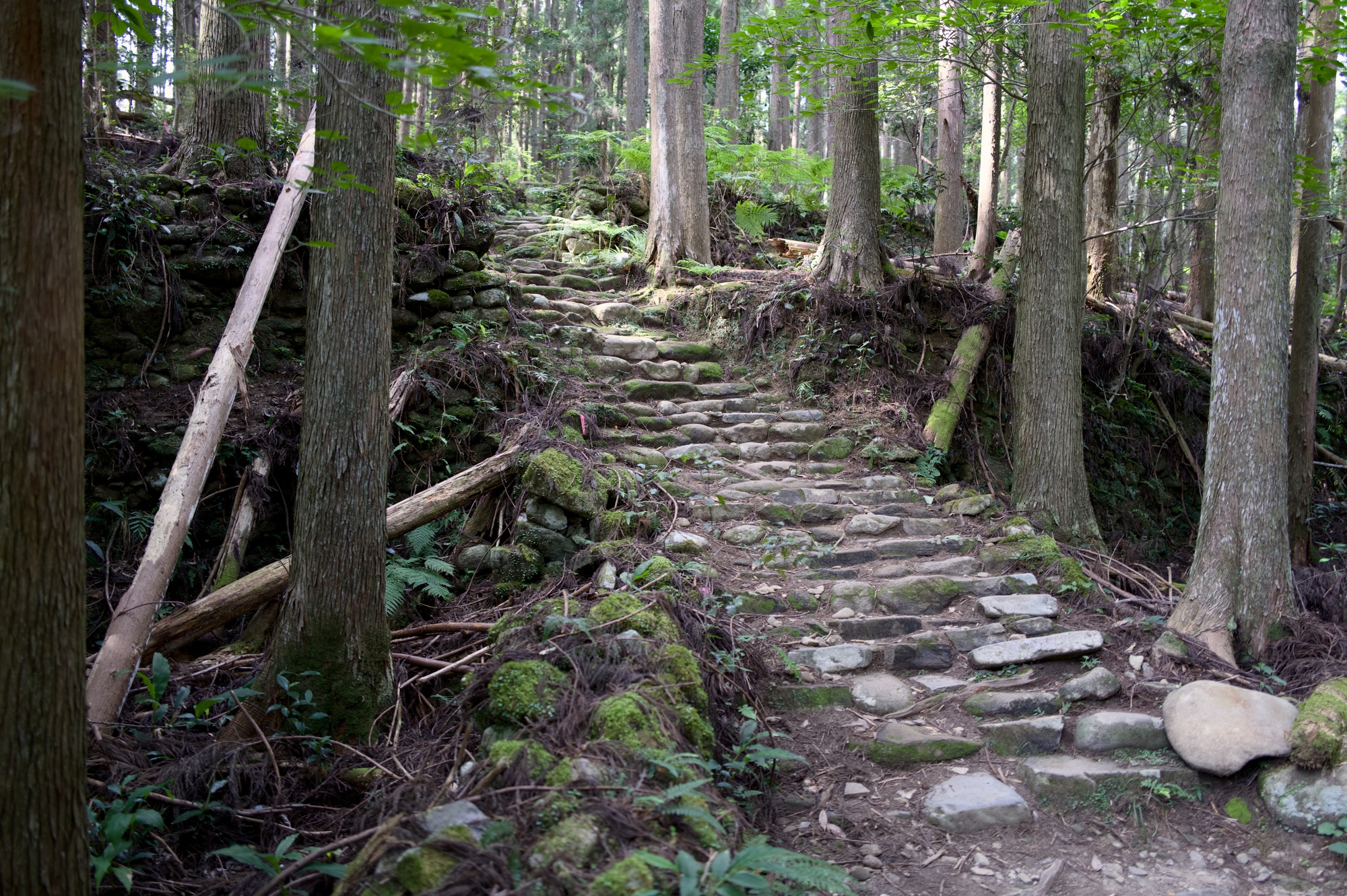
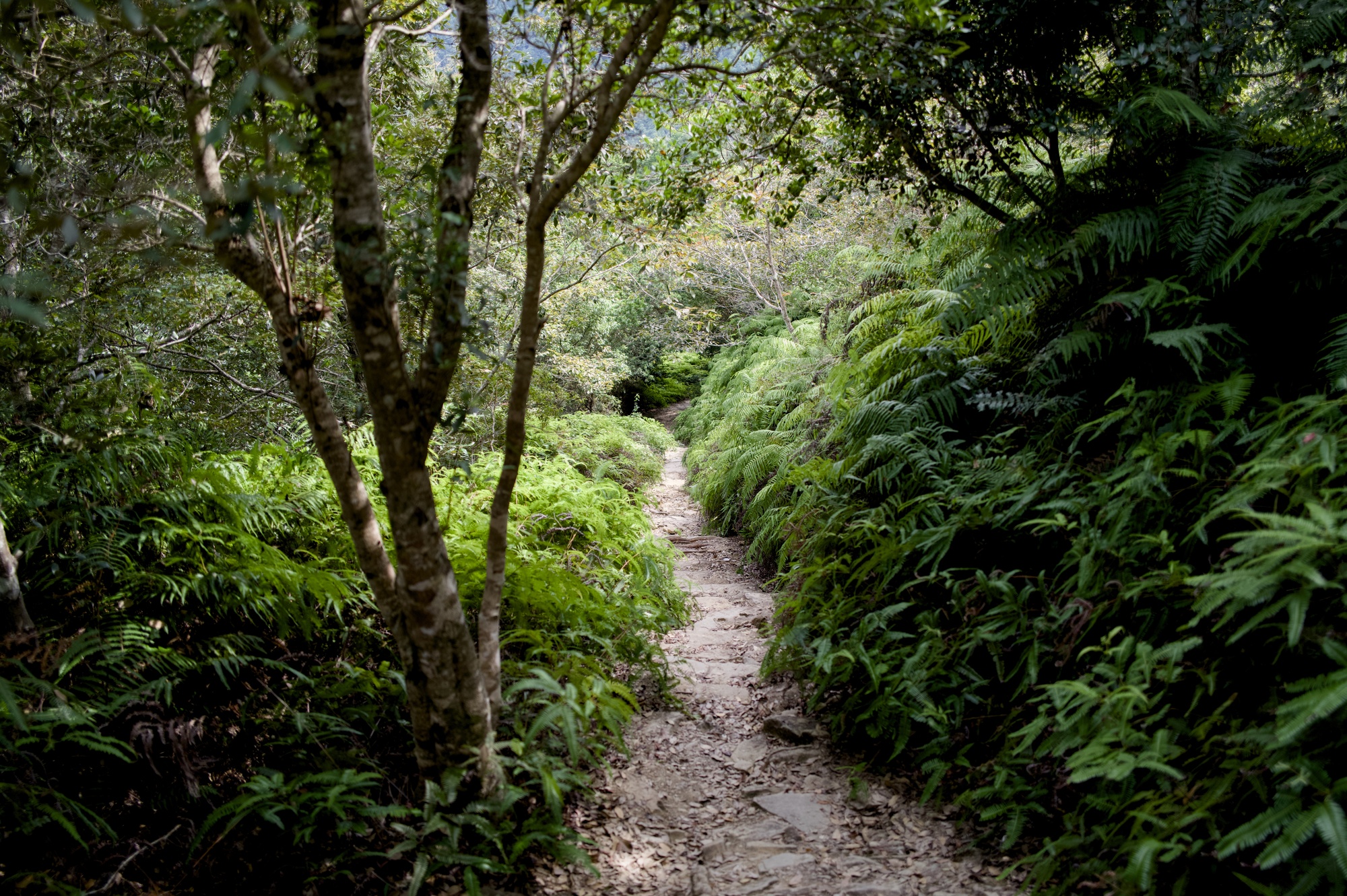
Exhausted, we reach the end of the trail at 12:10pm, thankful for having arrived. We continue to Koguchi to find food.
“I wonder whether we would have the energy to do the next trail right after, the Ogumotori-goe (大雲取越)?”, the fleeting thought crosses my mind. In ancient times, it was known as Dogiri-zaka (胴切坂), or “body-breaking slope”. It’s nothing less than a sudden 2,625 feet ascent (800 meters) in the first 5 kilometers.
Do I have the energy to do the second trail? Probably yes. Can my knees sustain a body-breaking slope? Certainly not. Everything hurts. I am destroyed, I’m tired, but I’m happy.
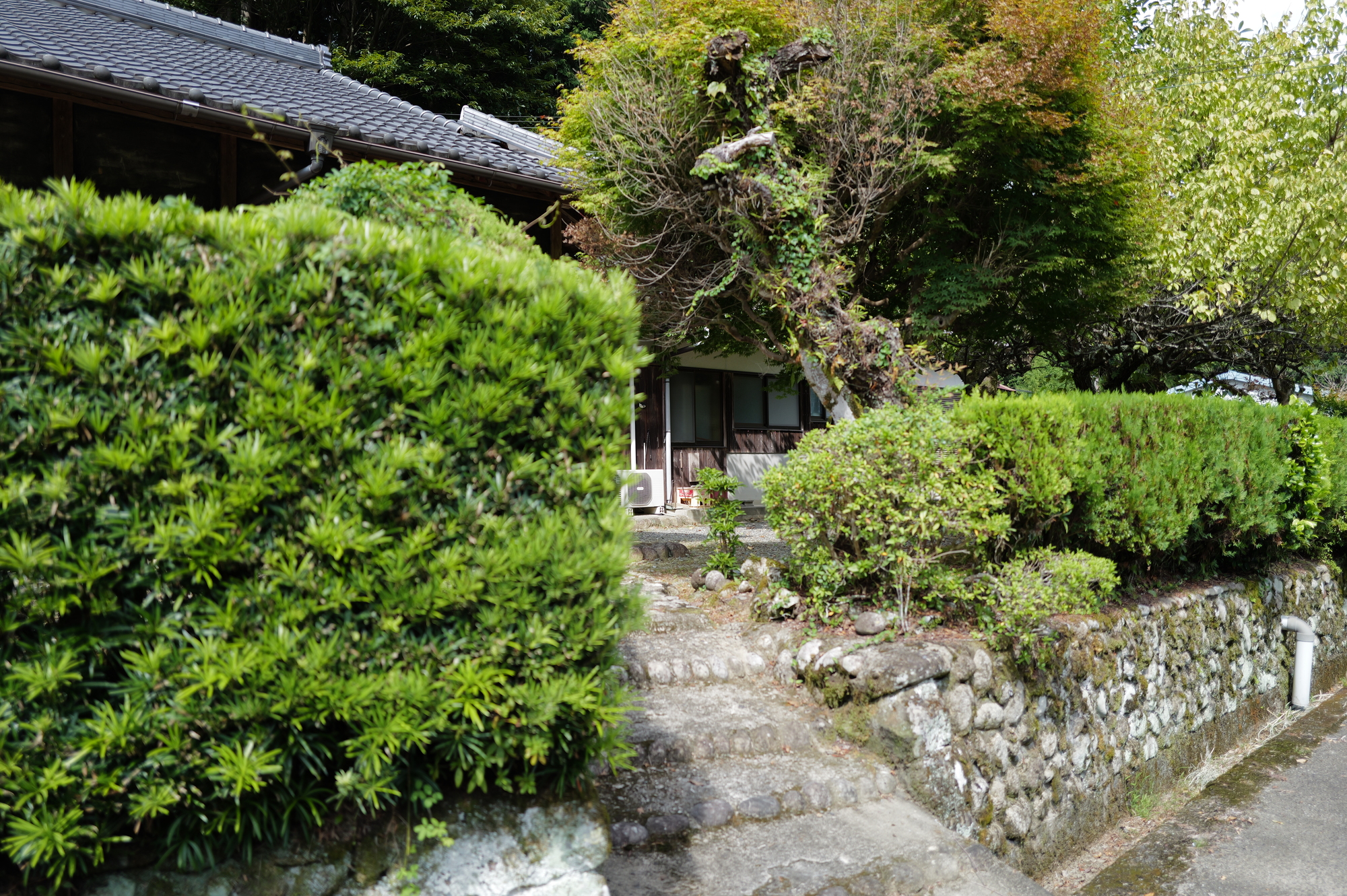
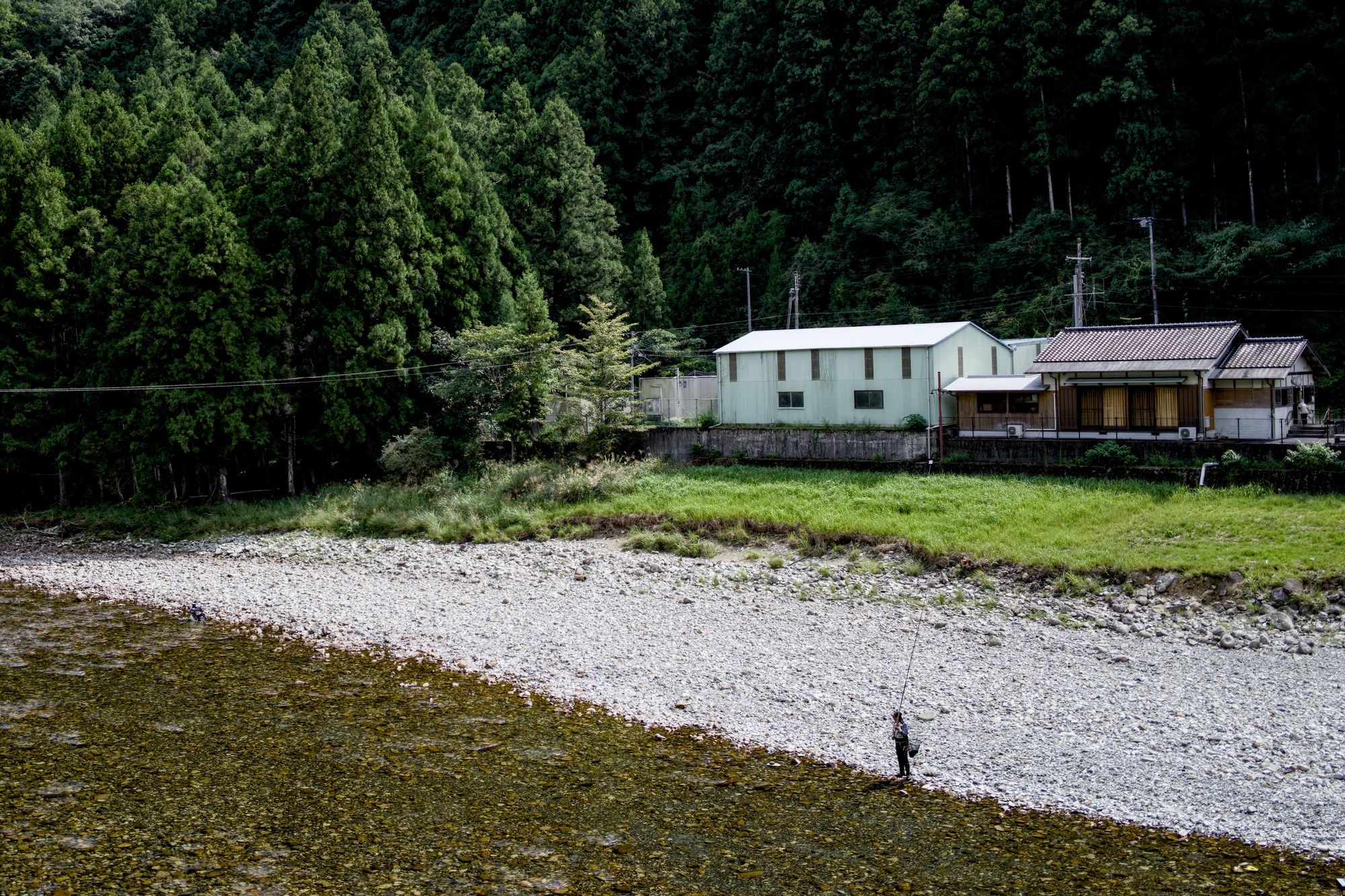
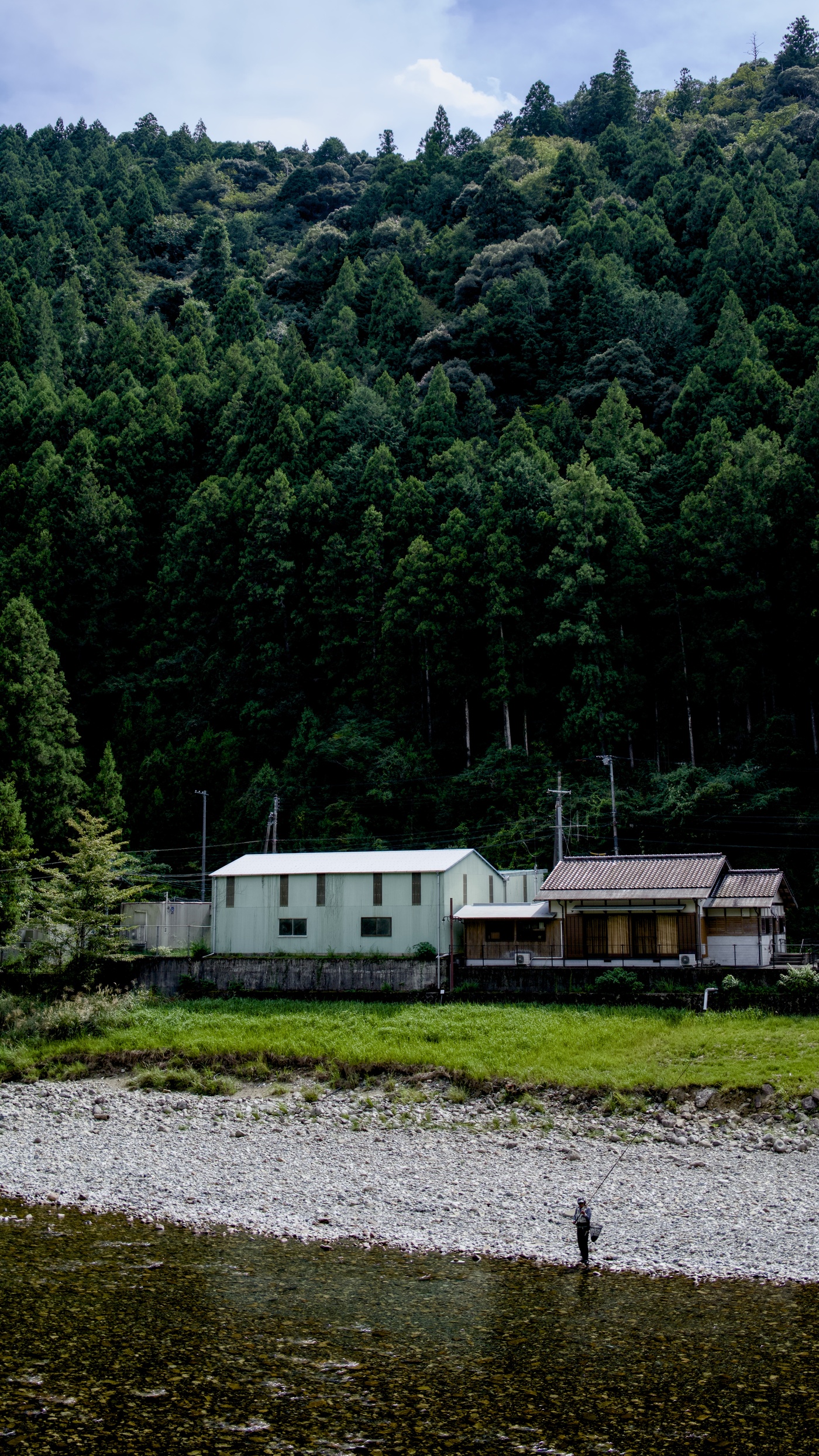
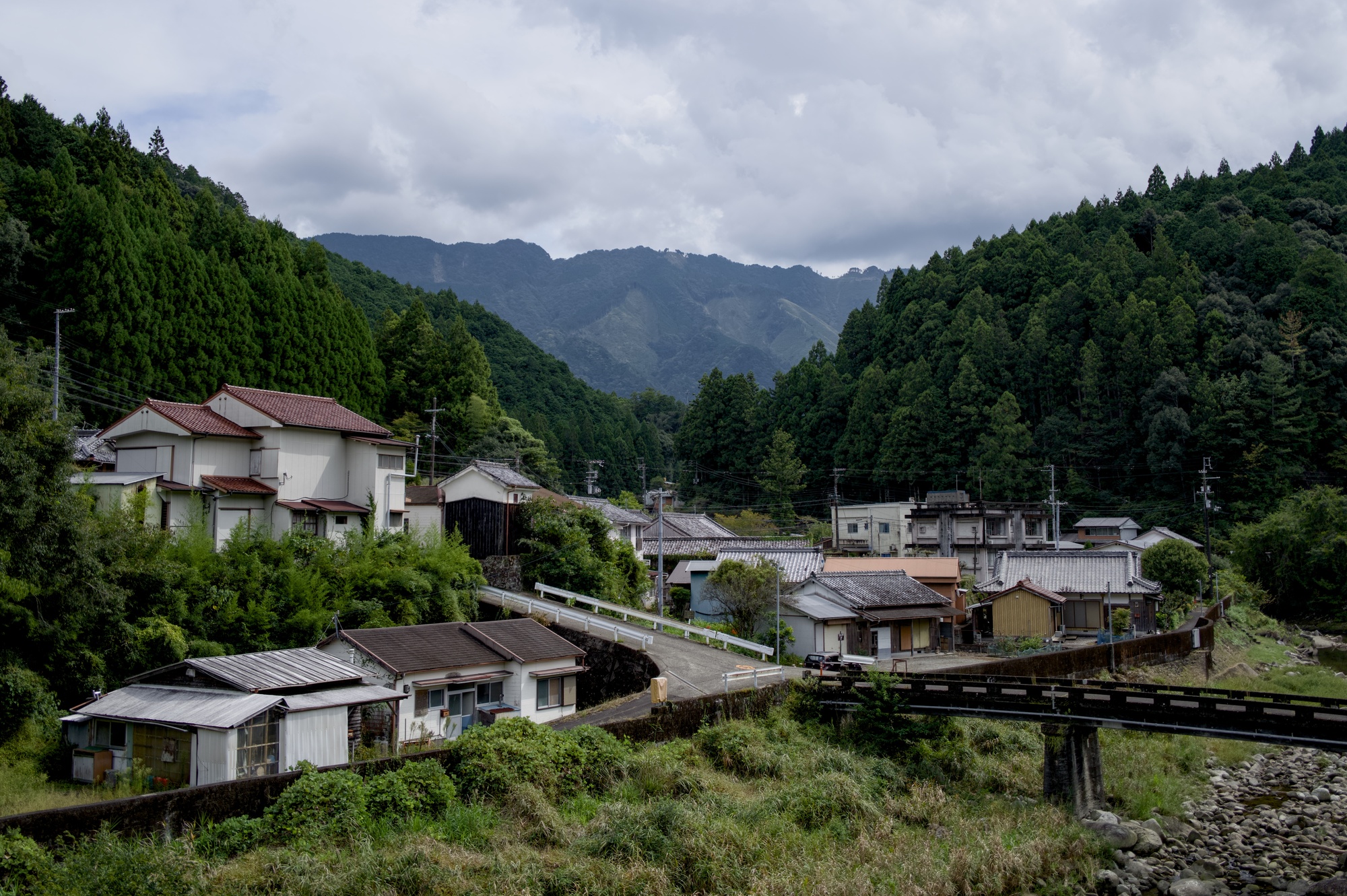
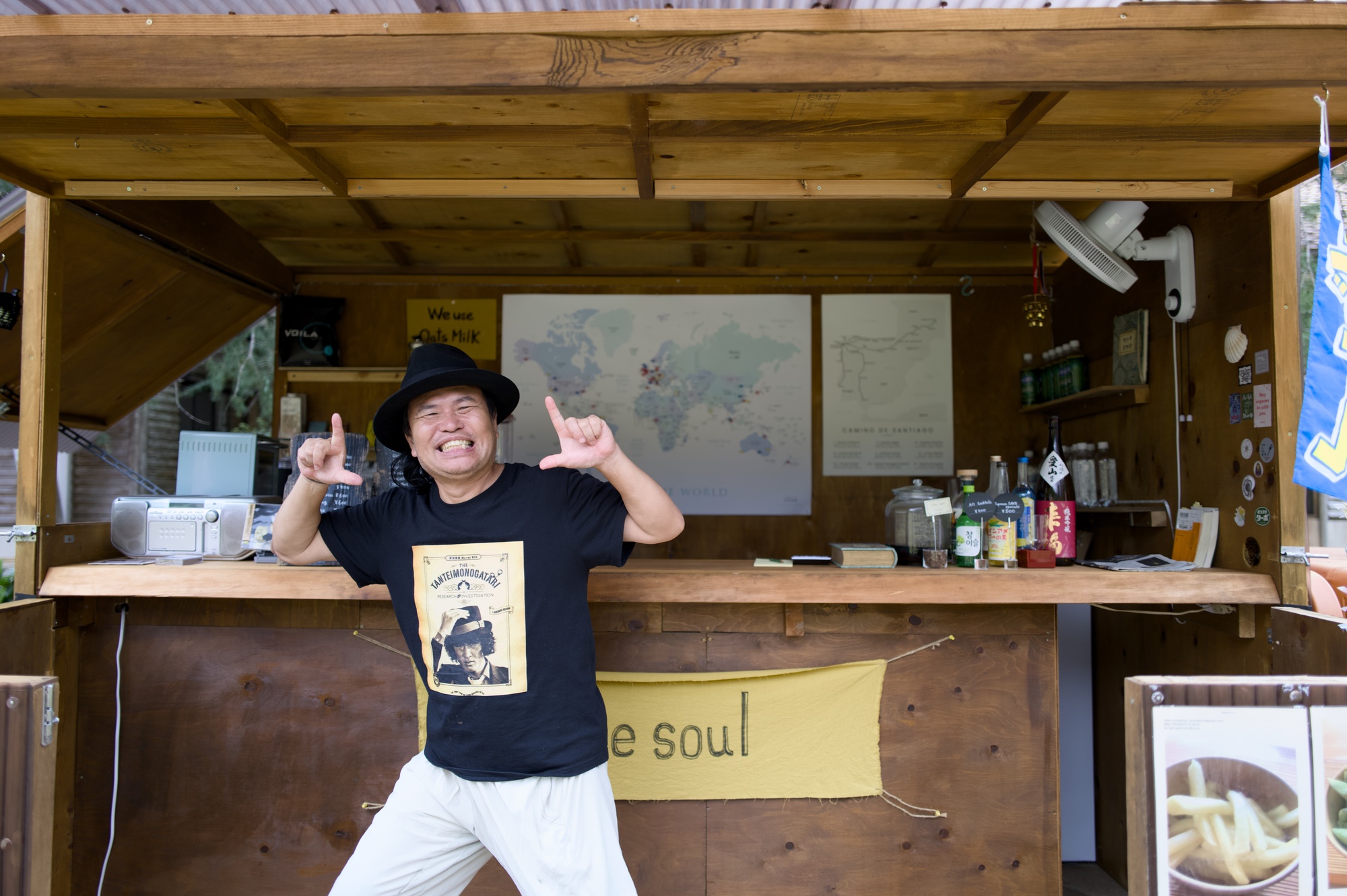
We arrive at a camping area that has a single food truck, called Bar Free Soul. The owner serves us gyoza (餃子), and asks us to pin our country on a large map behind the counter. I raise an eyebrow the moment I see pins everywhere, except Brazil, before adding my pin. We’ll chill here until the next bus to Shingu stops by at 4:30pm. It’s a long wait.
Fey, our new friend, rests for an hour before finally deciding to start the next trail toward Nachi, the Ogumotori-goe. We clap at this brave woman as she departs with her green backpack.
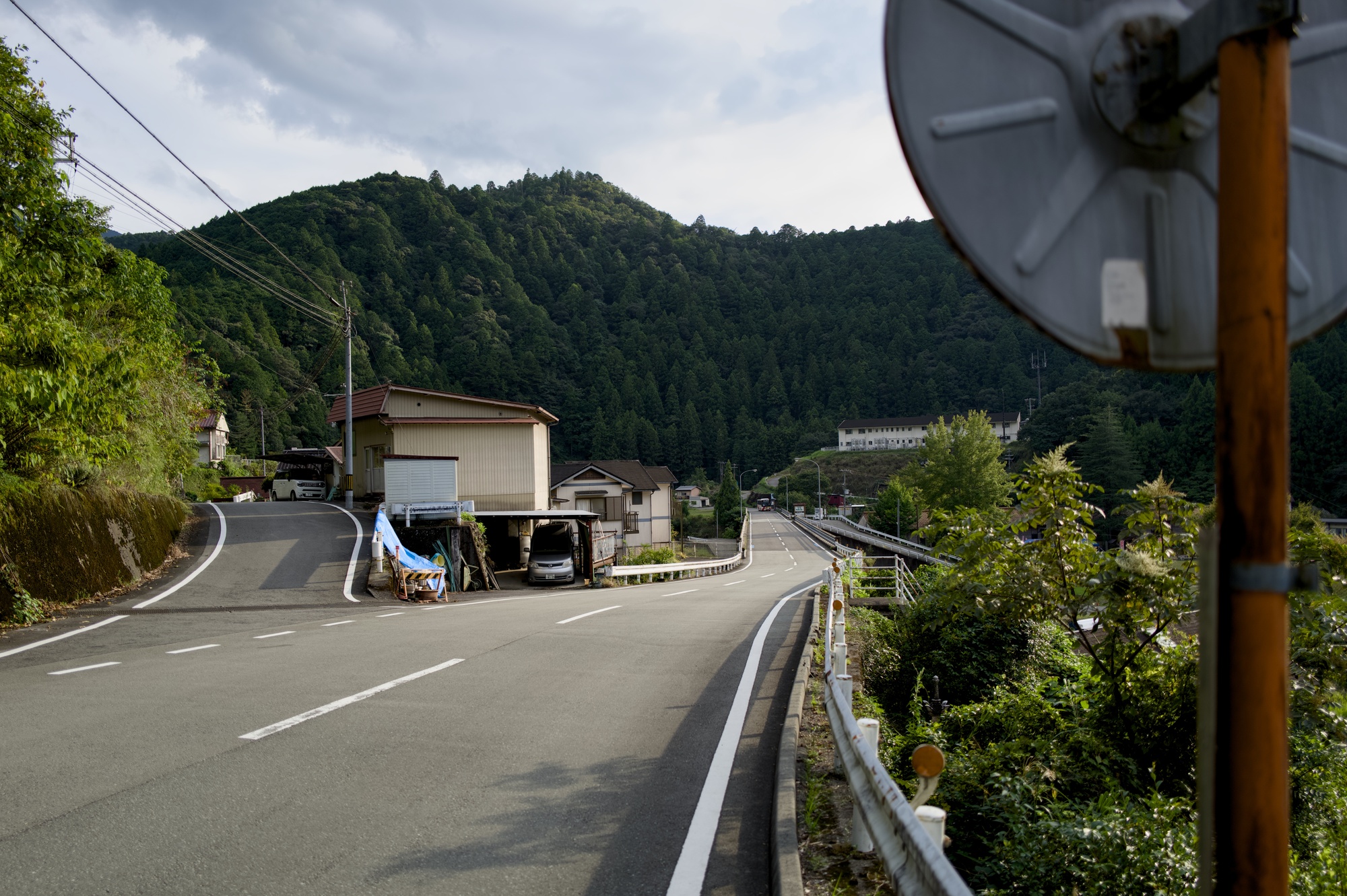
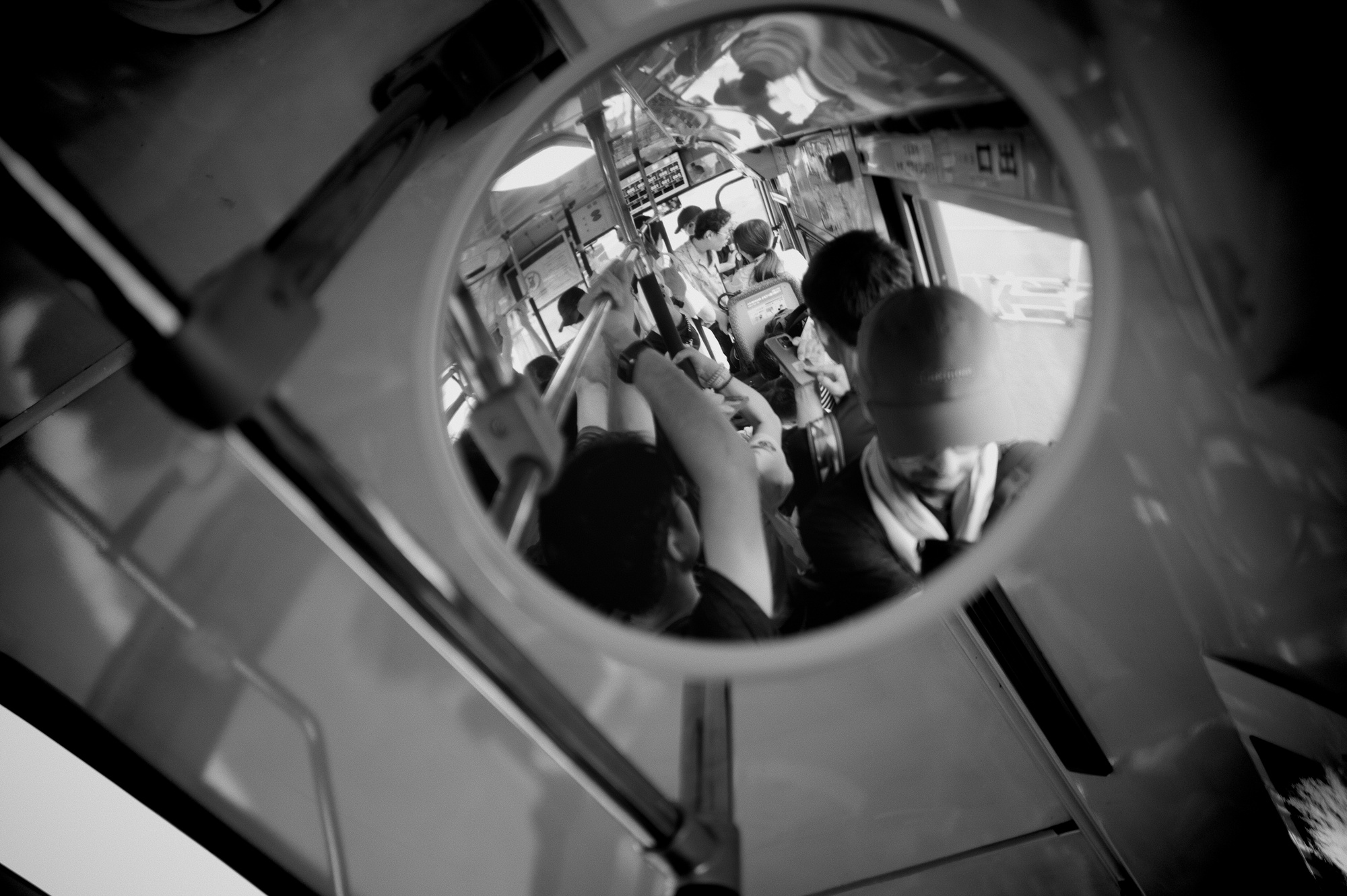
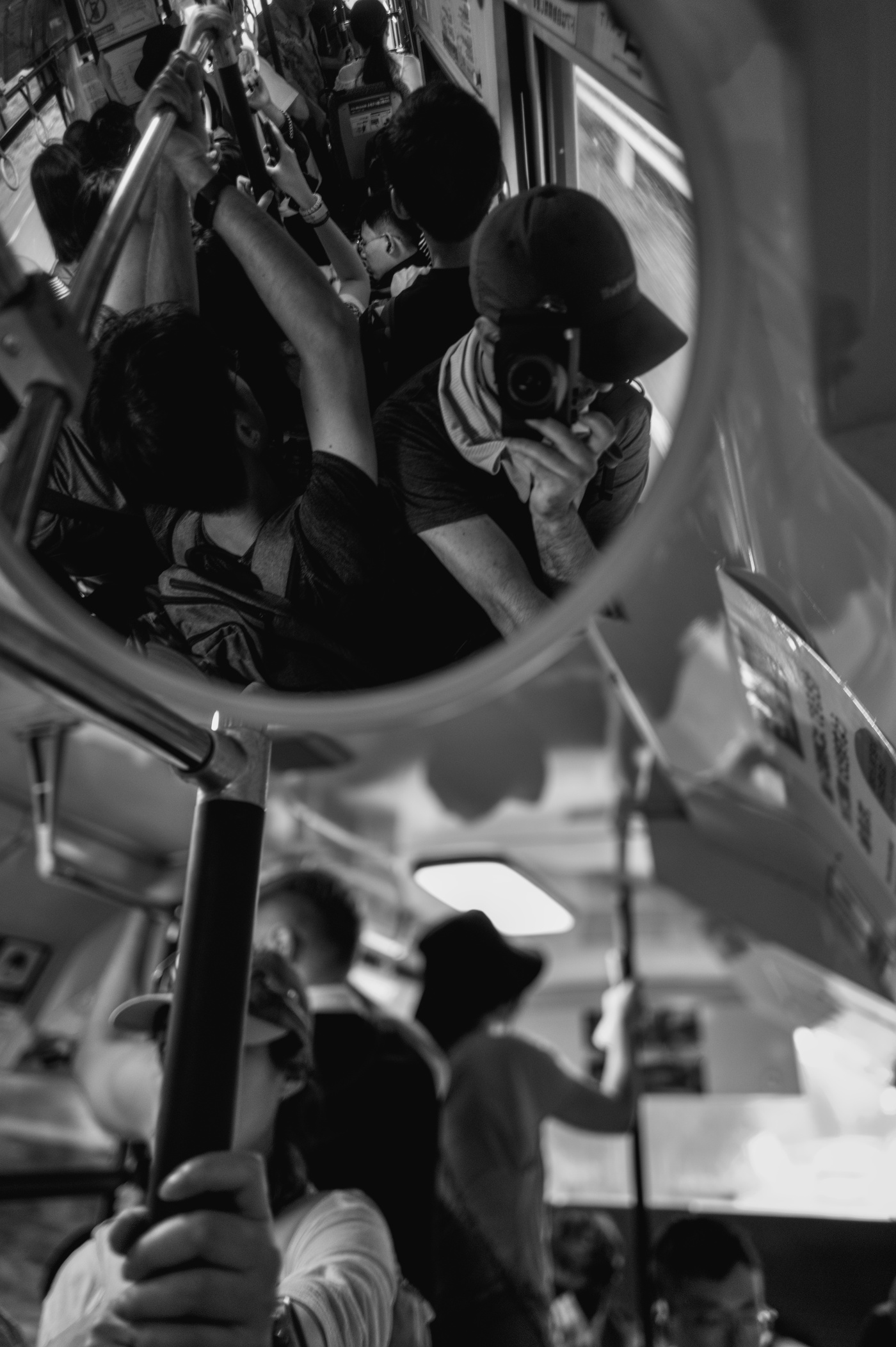
When it’s time to leave, we hop on a bus to Shingu. The vehicle is packed and we travel standing up for a good hour. After arriving, I’ll need to figure out how to dispose of my unused bear spray.
Bear spray disposal
The disposal of a bear spray is one big challenge when it’s your first time disposing of it, you are in a foreign land, and you want to do just the right thing. Think of a pepper spray, but on steroids. It shoots nearly 60ft (about 20 meters). It’s an explosive red goo that you clip to your belt. You can’t toss it in a regular trash bin, and you cannot fly back home with it either.
According to ChatGPT, Claude, Grok and Reddit (I quadruple-checked), the general guidance is to take it to a police station (kōban, 交番) and ask for help. Not exactly easy when you don’t speak the language, and you’d rather not look like a lunatic with a canister in your bag.
Arriving in Shingu, I walk to the police station. Through the large glass door, I see no one inside. “Out on patrol. Return later”, the sign says. So I sit on a park bench nearby and wait an hour.
Then, two policemen appear down the street. I pack my things, ready the bear spray its bag and head toward the station. Just as I’m about the reach the door, the two officers sprint past me, jump into their car, flip on the siren, and race off to deal with something clearly more urgent than a confused foreigner holding a can of bear spray.
In Japan, manufacturers recommend discharging contents either outdoors, or underwater in a bucket if that’s not possible. Not really feasible from a hotel room. A problem for another day1.
Day 5: Shingu to Nachisan
The final ascent, and a timeless fall
Our schedule is tight today because we’re sleeping in Kyoto tonight. We need to catch 7:00am bus toward Kii-Katsuura (紀伊勝浦) and Nachisan (那智山). That gives us 8:51am to 10:32am to explore the temple and falls before five or six hours of trains to Kyoto. We cannot miss that bus.
But we wake up late. Empty stomachs, bags on our backs, and only 10 minutes to walk a 20-minute distance, we kick start our rushed walk towards the nearest bus stop north of us, which is impossible. Giving up, however, isn’t an option. I pull up the map and spot a chance: the bus line curves through the city, so if we cut west, threading narrow streets like a needle, we might intercept it fourth stop. We hope the bus is slow, crowded even.
We walk the fastest 15 minutes of our lives and make it. The bus is coming on the horizon and the day is saved.
We arrive at Nachi station on an empty stomach, and depart to Nachisan. We head straight to Nachi-no-Taki-mae because we have no time to climb the Daimon-zaka (大門坂) stairs today.
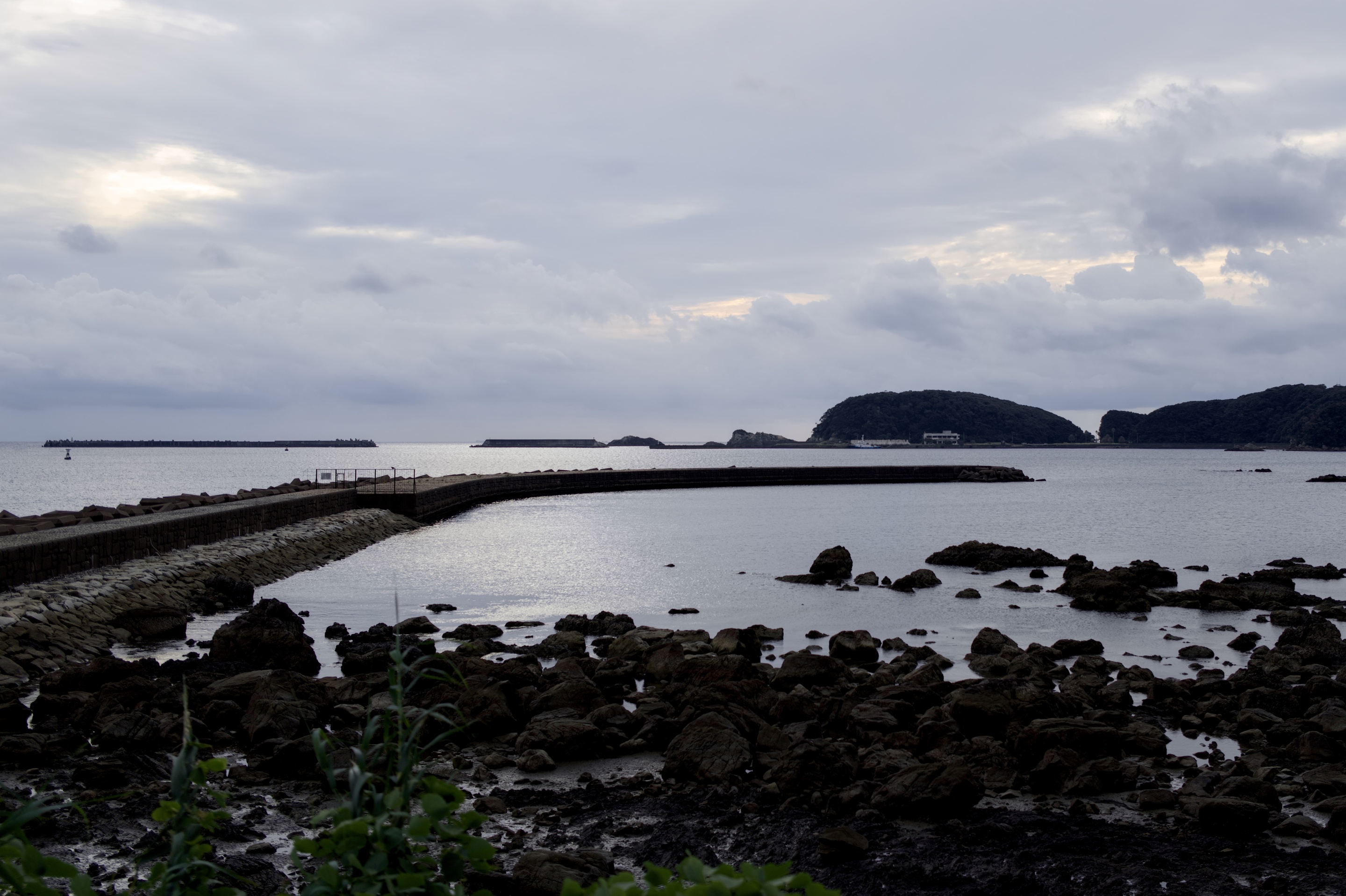
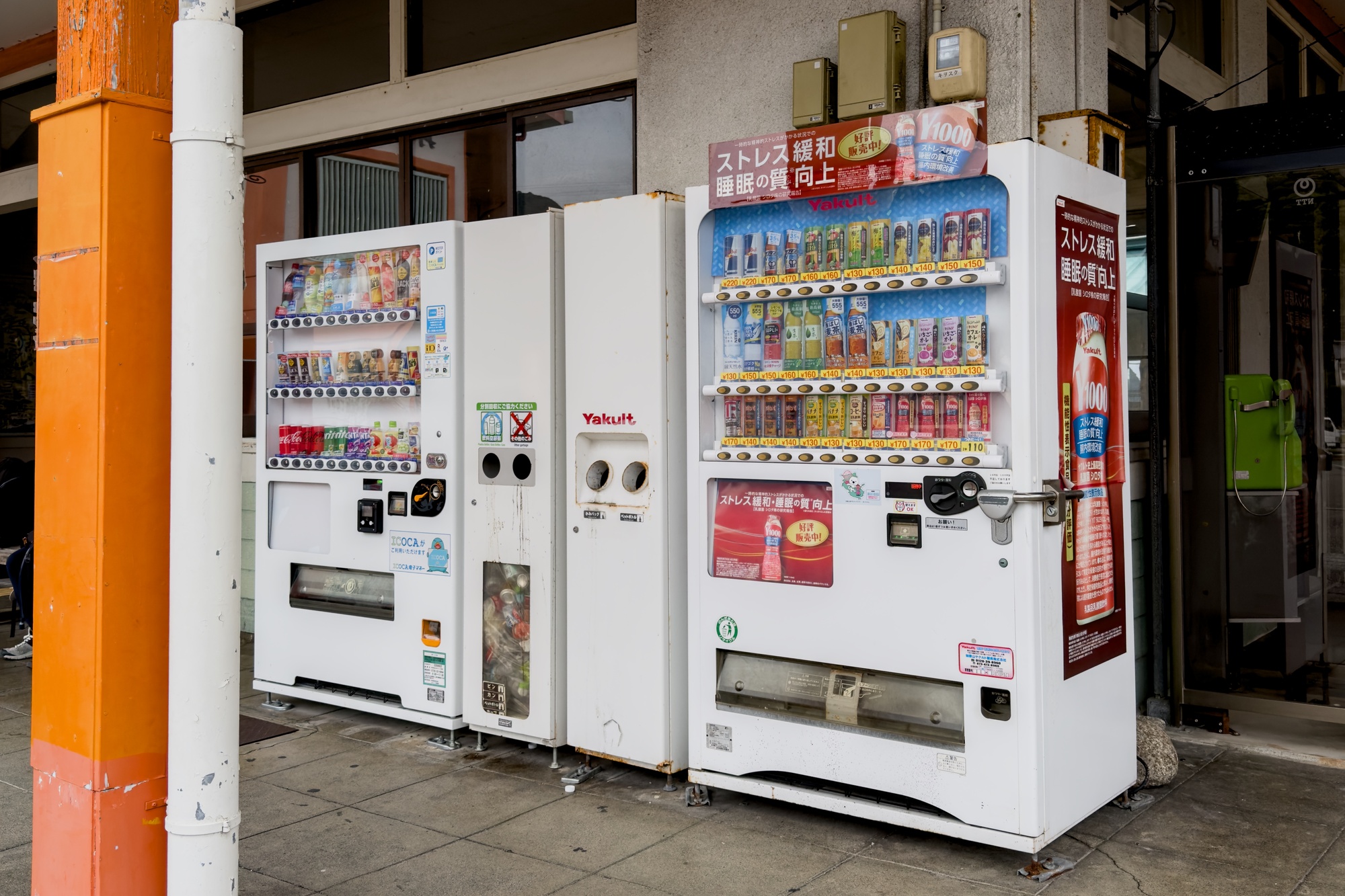
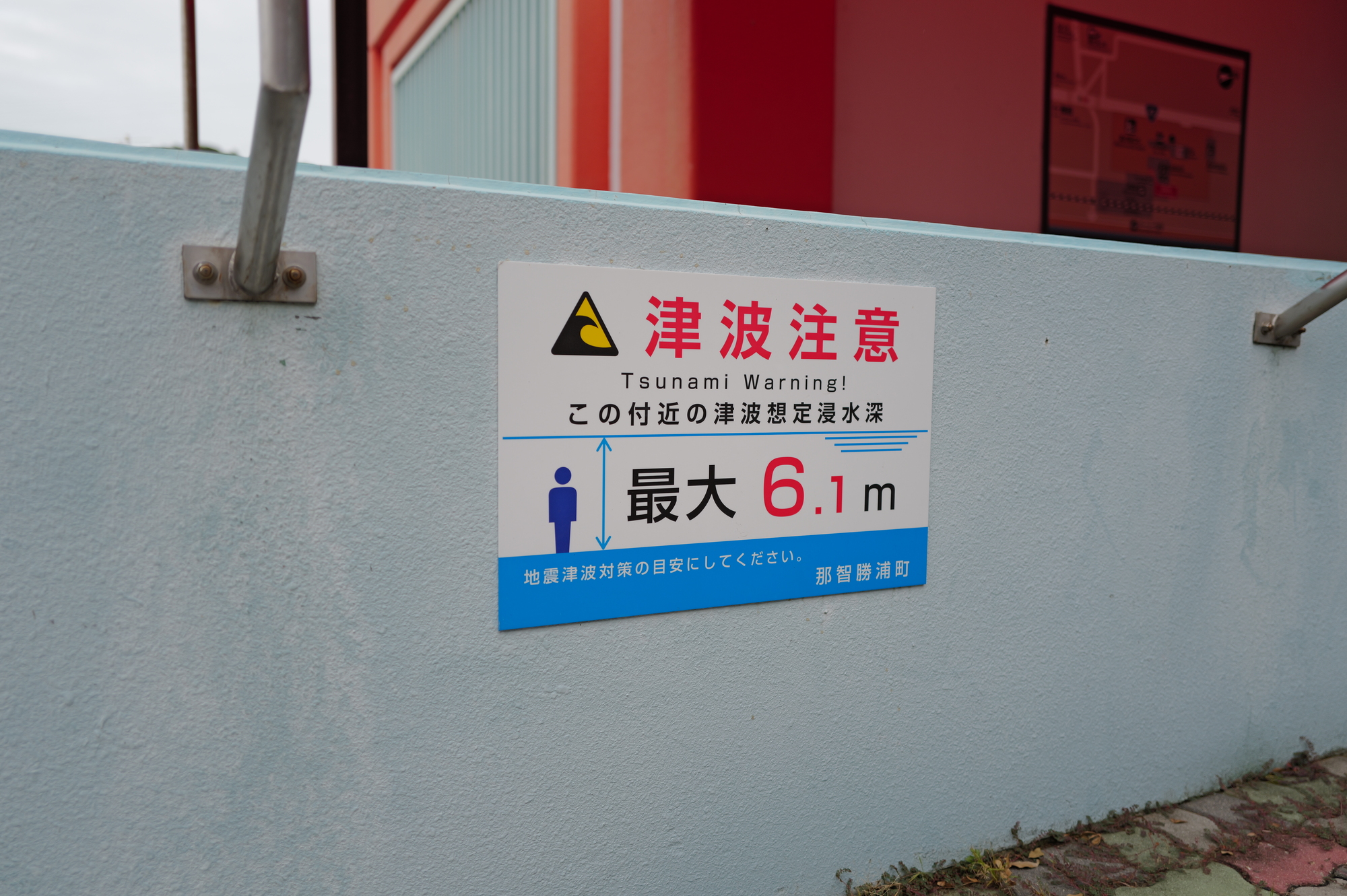
I look at the clock when the bus arrives. It’s 8:57am. As we step out, we reorient ourselves, among a crowd of visitors. Looking right, there’s a torii gate leading to the Nachi Falls. Turning my head left, a staircase that leads to the Nachi shrine.
Nachi-no-Taki-mae is a bend in the road that feels compressed by traffic and guardrails. A small parking lot sits in the corner, a clutch of souvenir shops lines the curb, and a signed path leads towards the falls. Buses sigh, people reshuffle bags, and the crowd moves on. It works as a waystation more than a place to linger, a stop where you wait to get somewhere better. A liminal space.
As we stroll towards the falls, can you guess who we spotted, out of the blue? Yes, Fey. We hug and rush to ask about her adventure yesterday, when she kept going after we stopped in Koguchi. “It was hard! I kept walking until darkness, arriving around 10pm”, she told us. Without a lodging reservation, she roamed around and was lucky to find an available room in a random guesthouse. “Scary”, she says with a nervous laugh about walking at night. “I found a mother and her son in the trail, and we finished the route as a group together with our phone light. Then I knocked a few doors and found a spare room to stay.”
Brave woman.
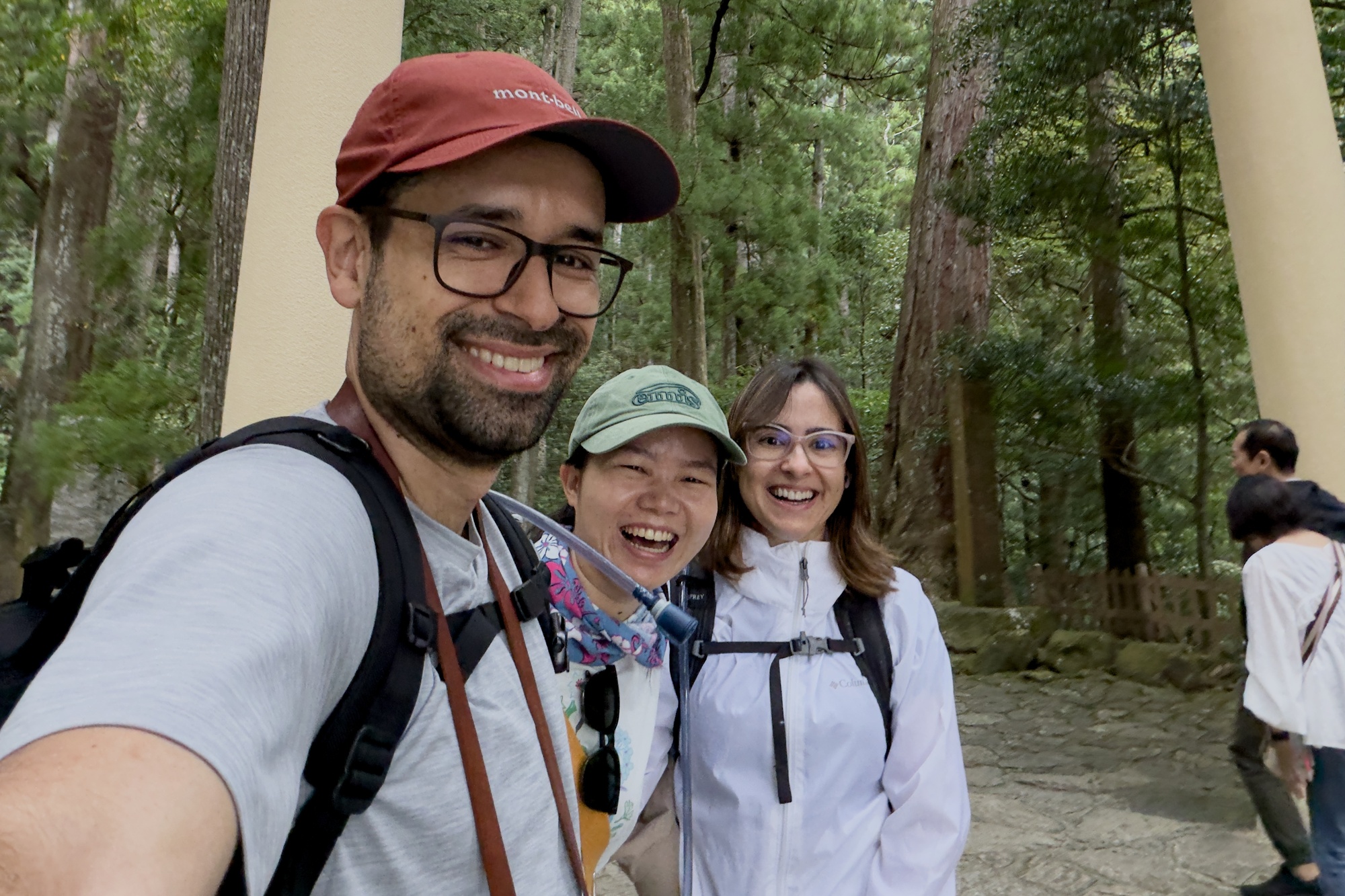
The clock is ticking and we have to run. We say our goodbyes and rush to the stairs up to the temple. The first step feels like the hundredth and my thighs burn on the push. I reach for a handrail, but there’s none. However, when I remember it’s not an endless staircase, my shoulders loosen and I let out a breath. Today is short, we ought to make the most of it.
The stairs are made of rounded stones that seem to stretch beyond the horizon. It curves left and right. We stop to catch our breath and see the ocean in the distance fading into the cloudy sky, cradled by green hills. The village keeps getting smaller.
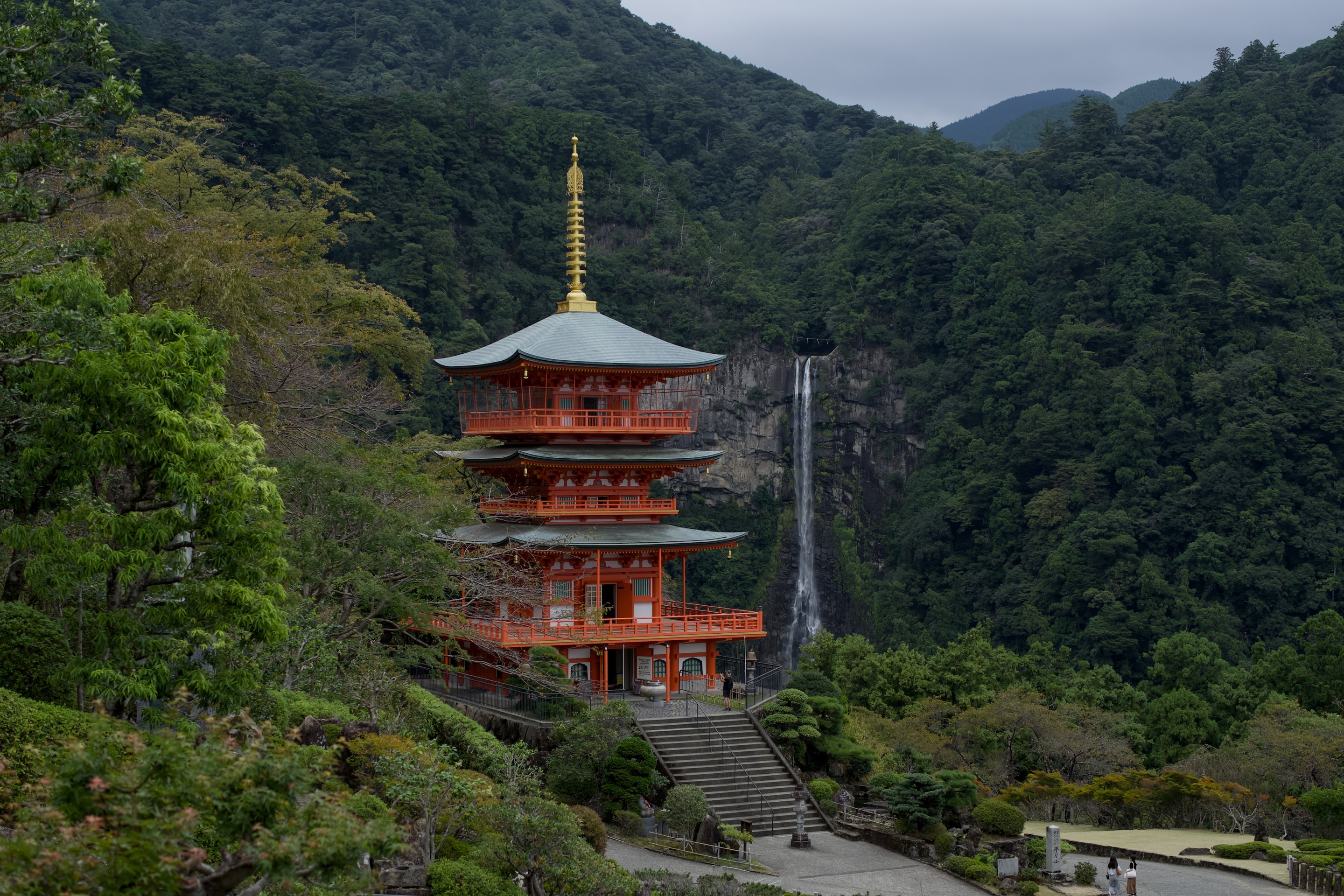
A few flights later, we lift our heads to the sky and glimpse vermilion in between the green leaves. Still faint, it imposes itself from above. Our destination draws near.
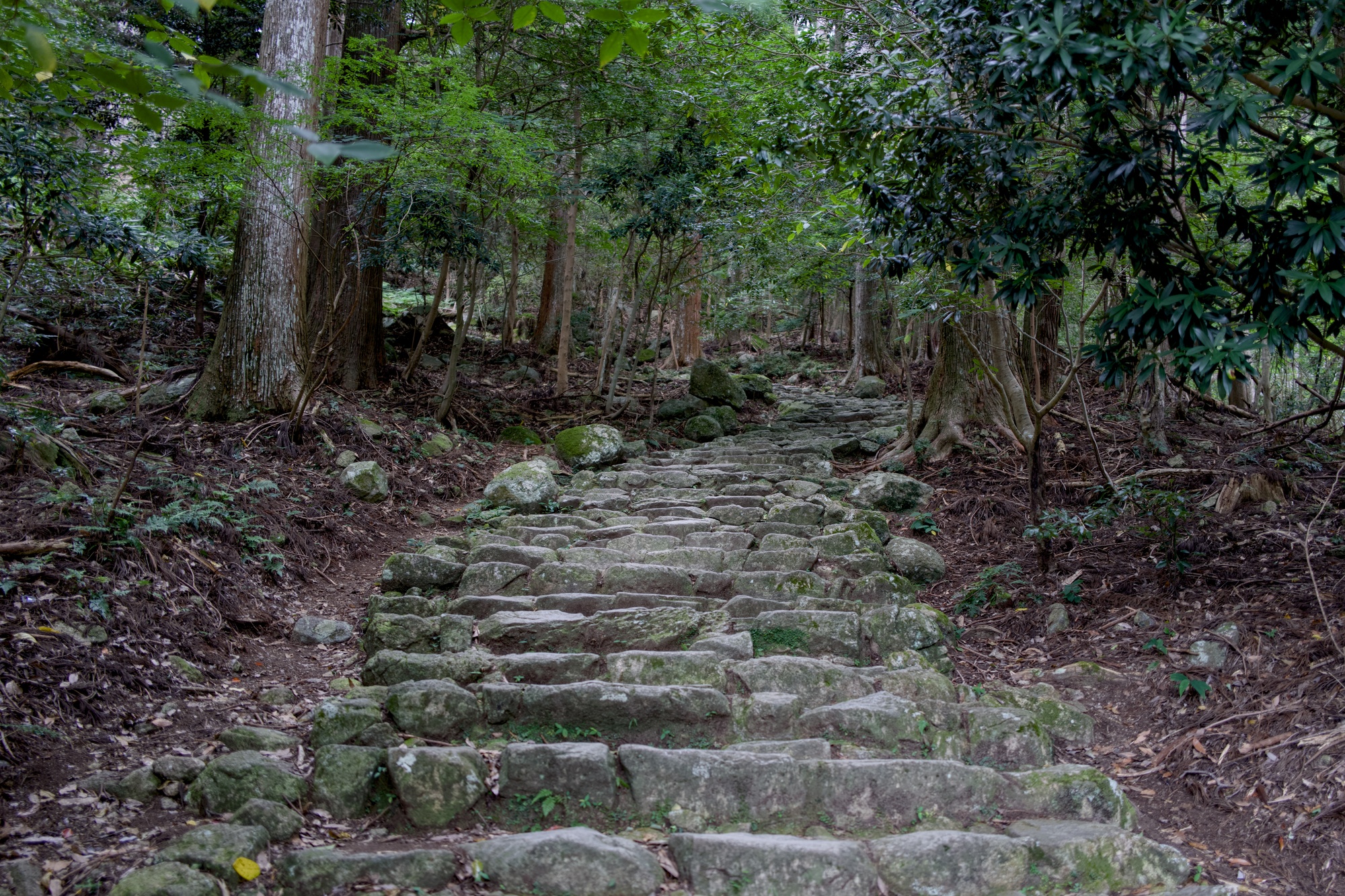

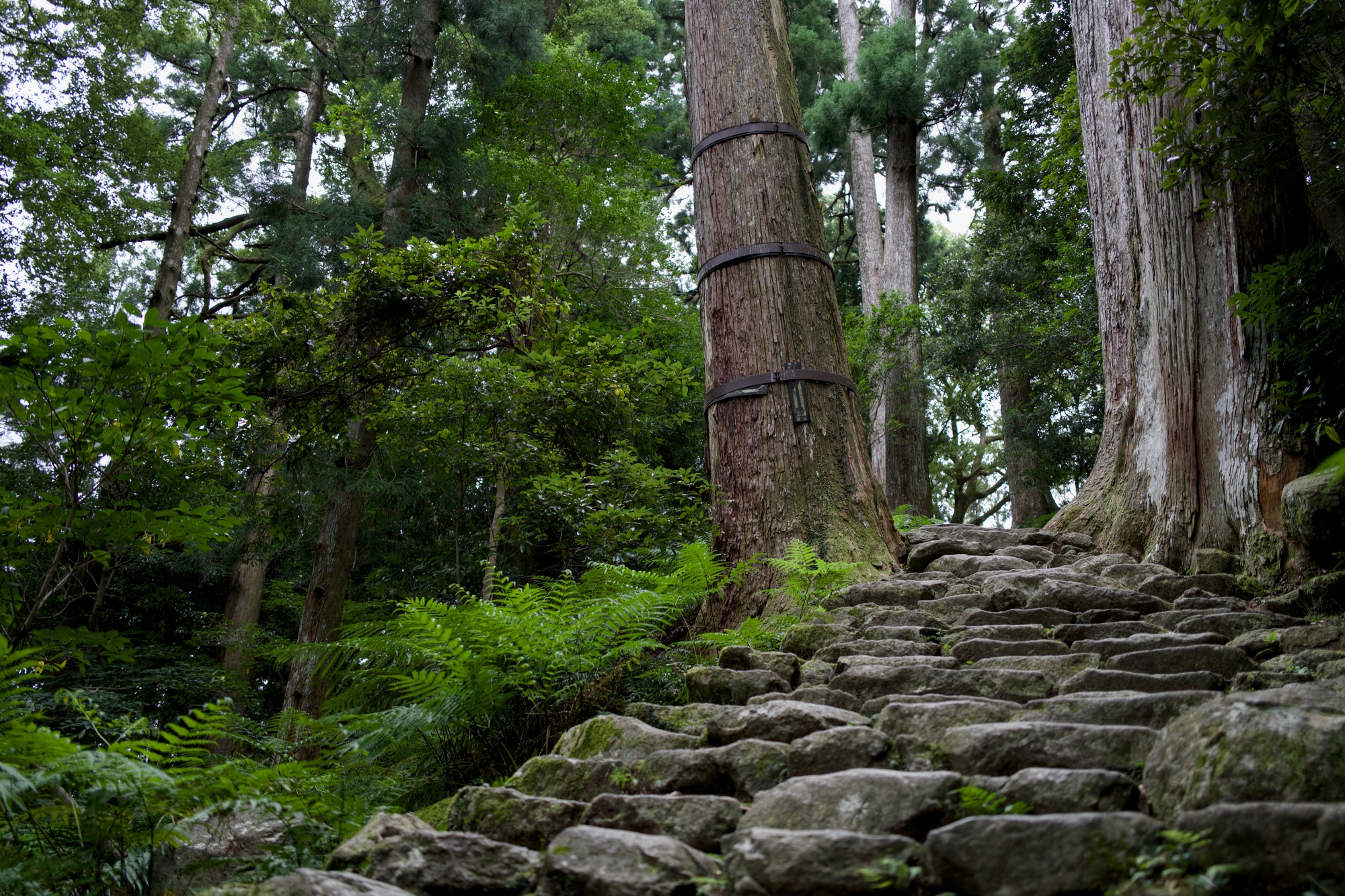
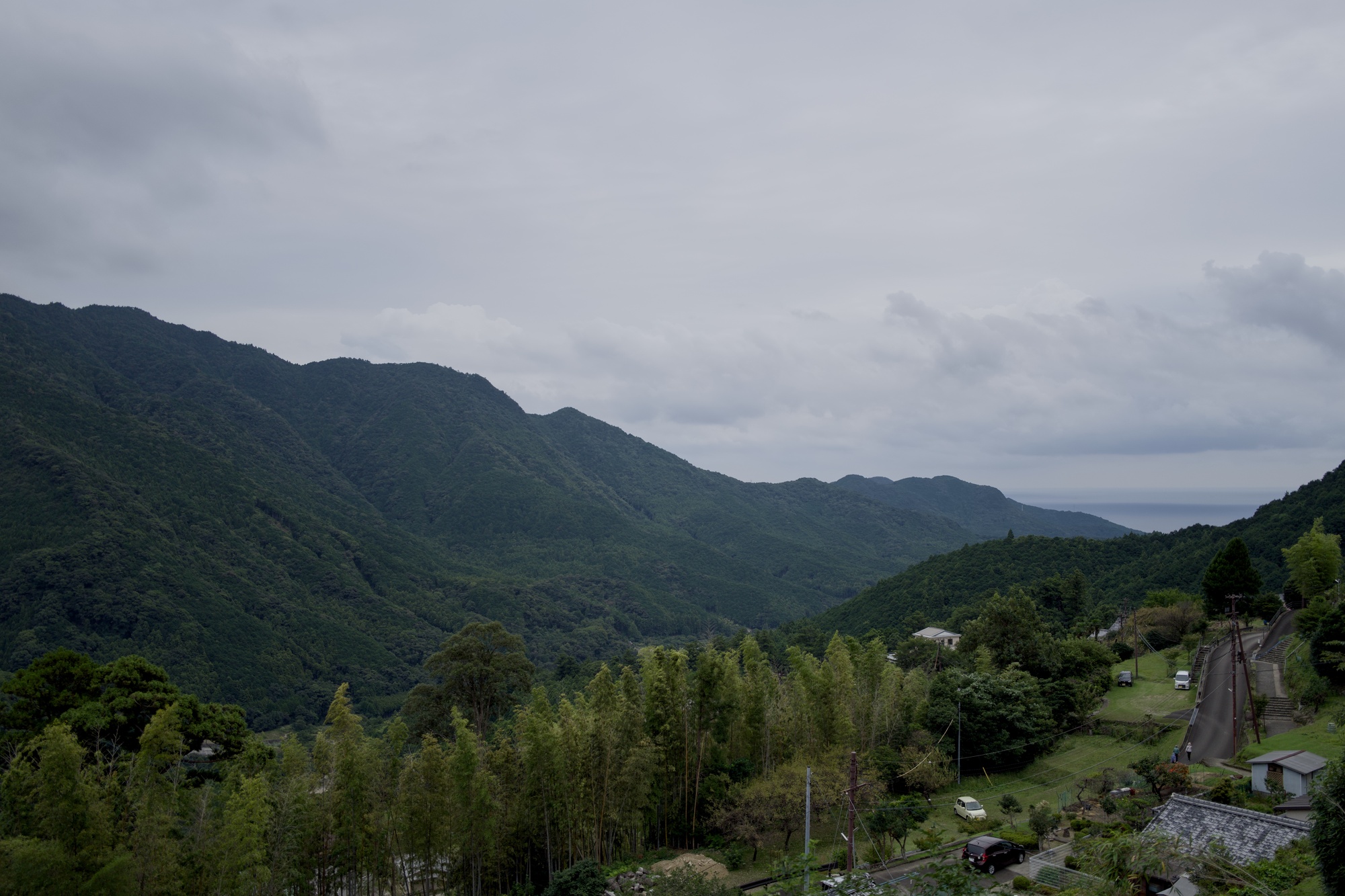
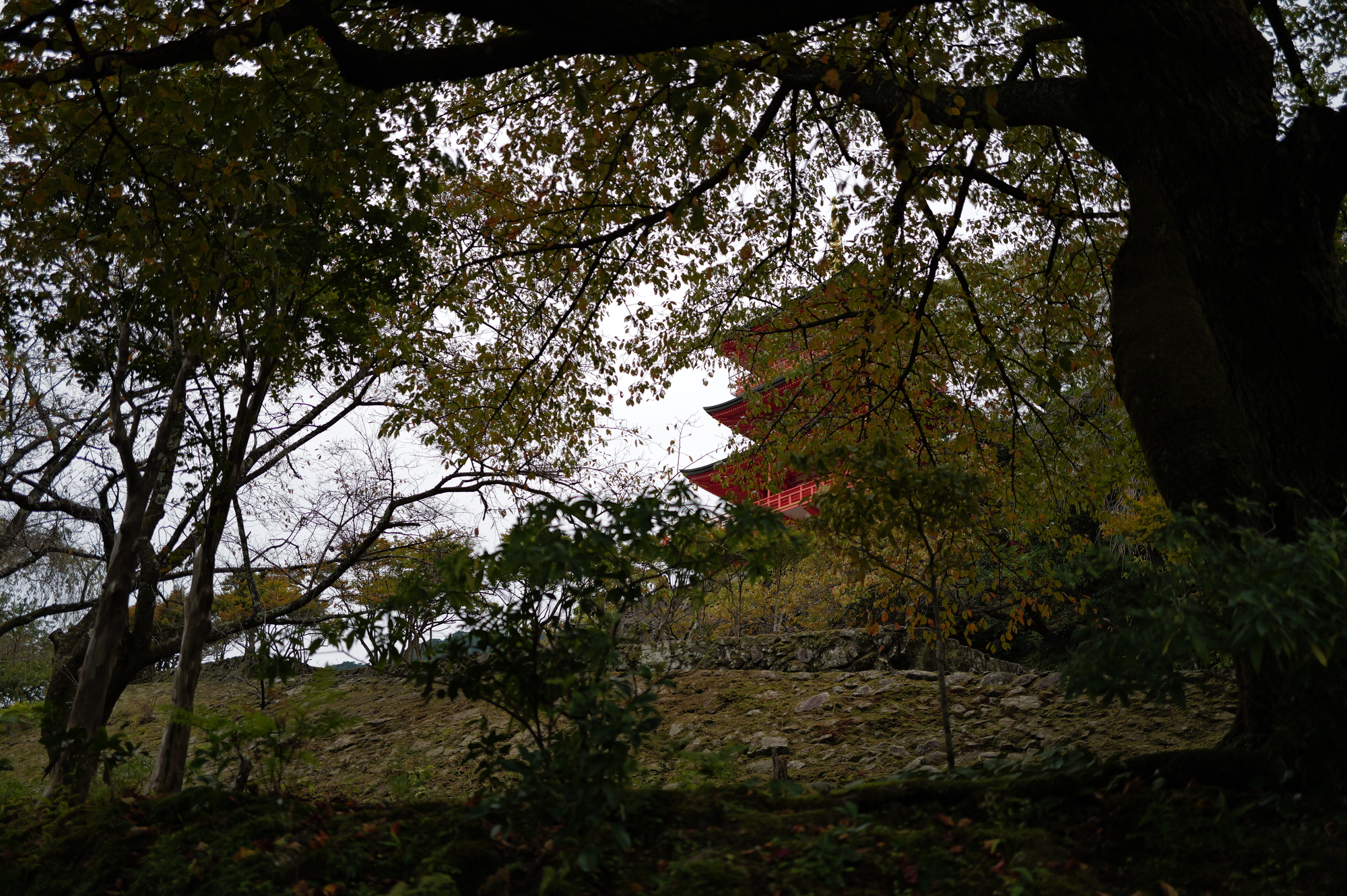
“We’re here, pinch me please”, I ask my partner. We have arrived. The shrine’s red, once only pixels on a screen, now fills my eyes. The water that ran behind this place a thousand years ago still runs, stitching past to present.
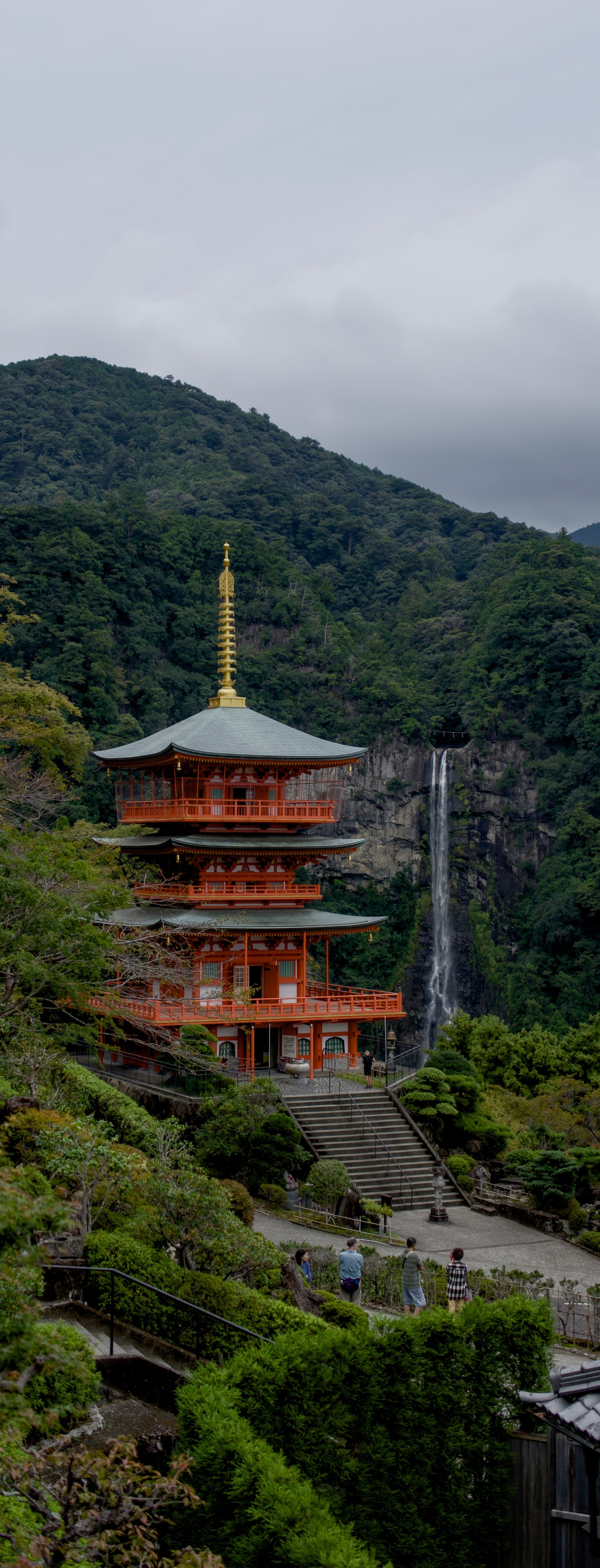
I finally let go of a breath I didn’t know I’d been holding for years. My shoulders are lighter, free from the weight from everyday life. My chest feels full while I contemplate the satisfaction of achieving something bigger than myself.
The man who’s stepping on the train back to Kyoto is not the same man who stepped on the trails five days ago. I found the reset I had been looking for.
After walking the Kumano Kodo, I learned that the walk was the destination, and each step was an arrival. This journey has come to an end, but the pilgrimage continues. The trail has become a metaphor for life.
I crossed a portal, and now everything looks different.
Tomorrow
New paths
After finishing the Kumano in the 12th century, the poet Saigyō Hōshi (西行 法師) wrote the poem,
|
吉野山 こぞのしをりの 道かへて まだ見ぬかたの 花をたづねん |
Mount Yoshino I’ll leave last year’s marked path, take a different way, and search for blossoms in places I’ve not yet seen. |
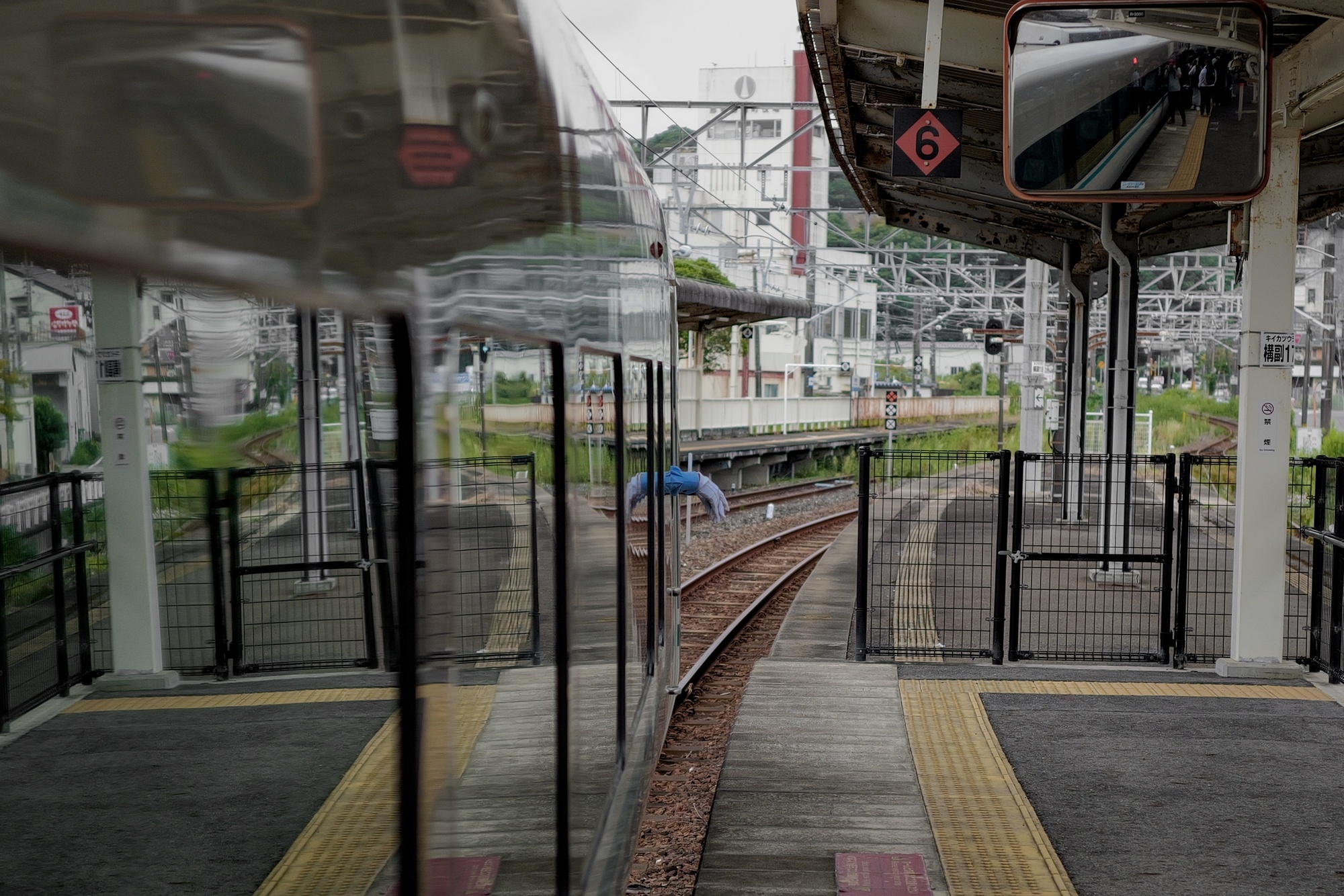
The poet’s vow to change the road resonates with me. It’s an invitation to honor what was just walked, but to pivot and keep seeking “blossoms”, insights, and wonders on new paths. It’s an invitation to carry the pilgrimage mindset onward, as a new person.
That’s what I’ll do.
- On the journey from Nachisan to Kyoto, I made a brief stop in Tanabe and returned the bear spray to Stock Outdoors, where I'd purchased it. The owner graciously gave us a discount on the return.