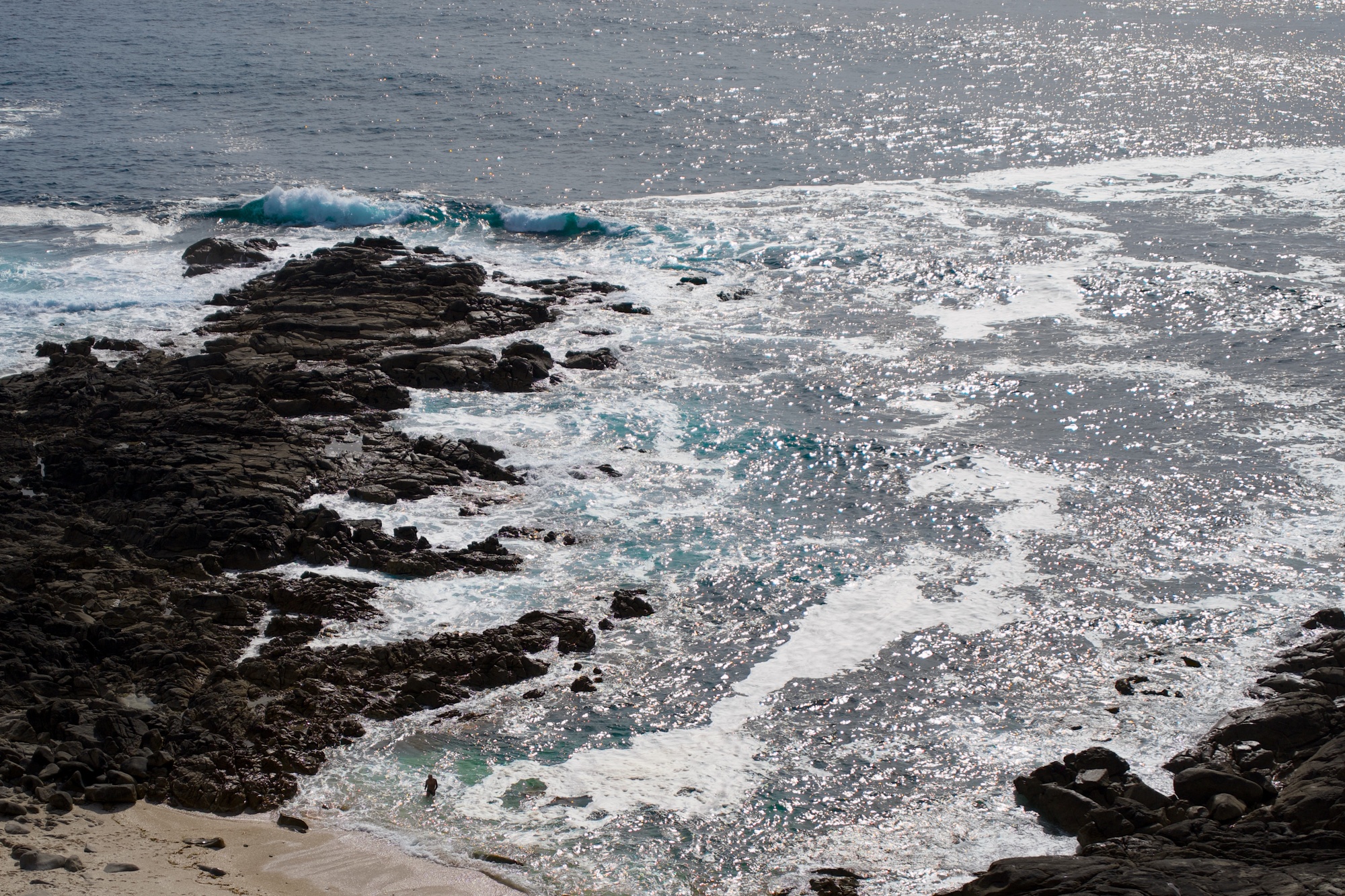
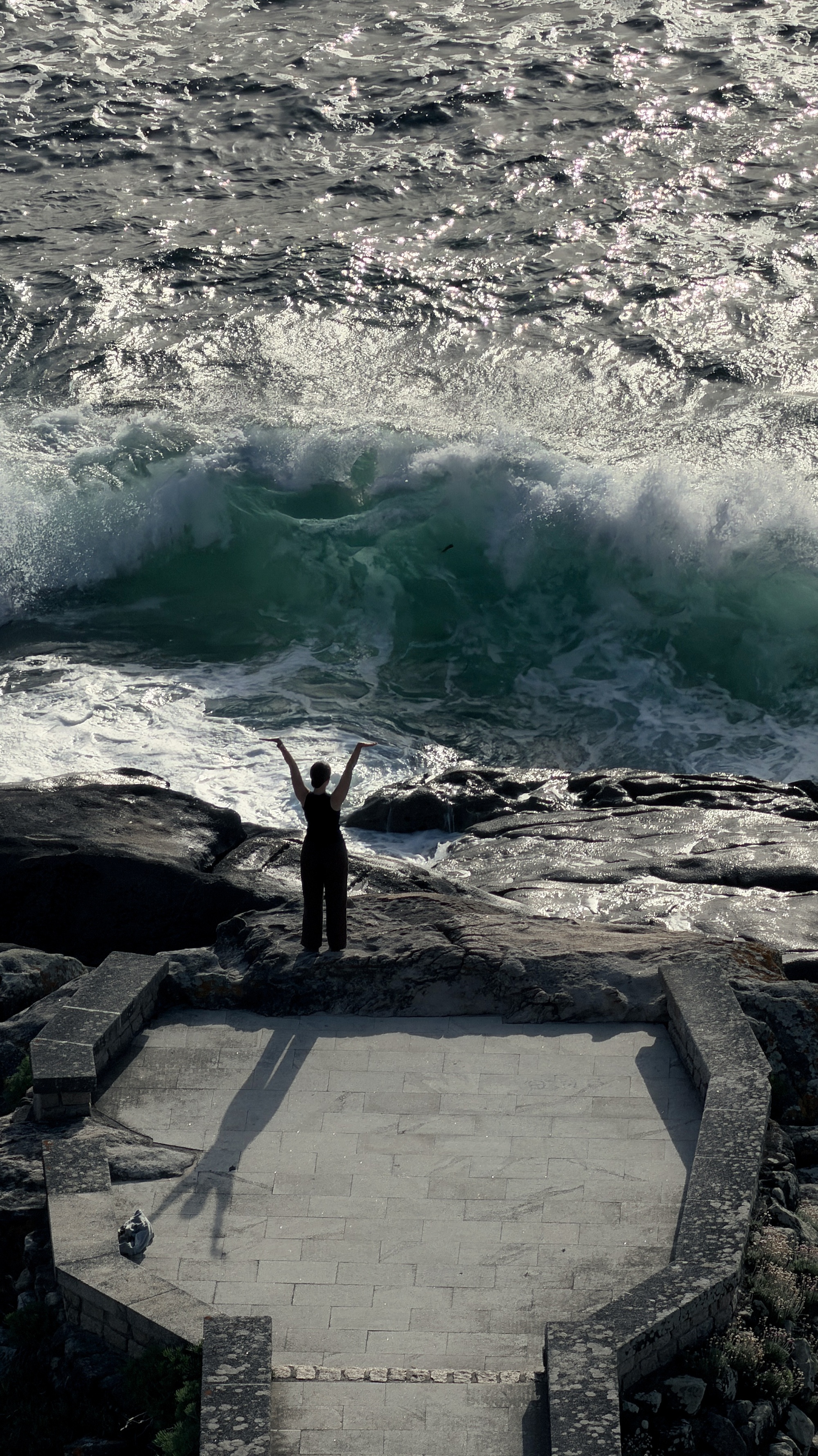
Morning of May 22 in Baiona, Spain. I open the window and the room is invaded with a loud but peaceful sound of ocean splashing into rocks. The whooshing of water hypnotizes me, a white noise louder than my thoughts. It feels like time paused for a moment, separating what happened before from what is coming.
I don’t know yet at this point how much pain we will endure over the next six days; what the satisfaction from arriving will be like; or what lessons the next 144km will teach me. Whatever’s ahead, I can’t wait to start.
Walk
When I walked the Kumano Kodo in Japan, my objective was stepping back, metaphorically speaking, and reconnecting the primitive self with nature. Search for some meaning. You know, what one does when they’re on the verge of turning forty.
My objective for these six days in the Camino was different. I wasn’t looking for anything other than to disconnect and work on my mental health with meditation. A walk is perfect for that because it serves as a gravitational force that pulls thoughts into a steady and slower pace matching the scenery passing by. Each step becomes a beat in the music of the mind.
The rules remain the same as my Kumano Kodo walk: no social media, music, podcast or anything robbing me from the present.
With me are my wife and a friend, Marcos, on a walk that will traverse Vigo (27km away), Redondela (16km), Pontevedra (24km), Caldas de Reis (26km), Padron (23km), and finally 28km to Santiago de Compostela.
Day 1: Baiona to Vigo
27km. Beaches, sun, breeze. Cars, concrete, pain.
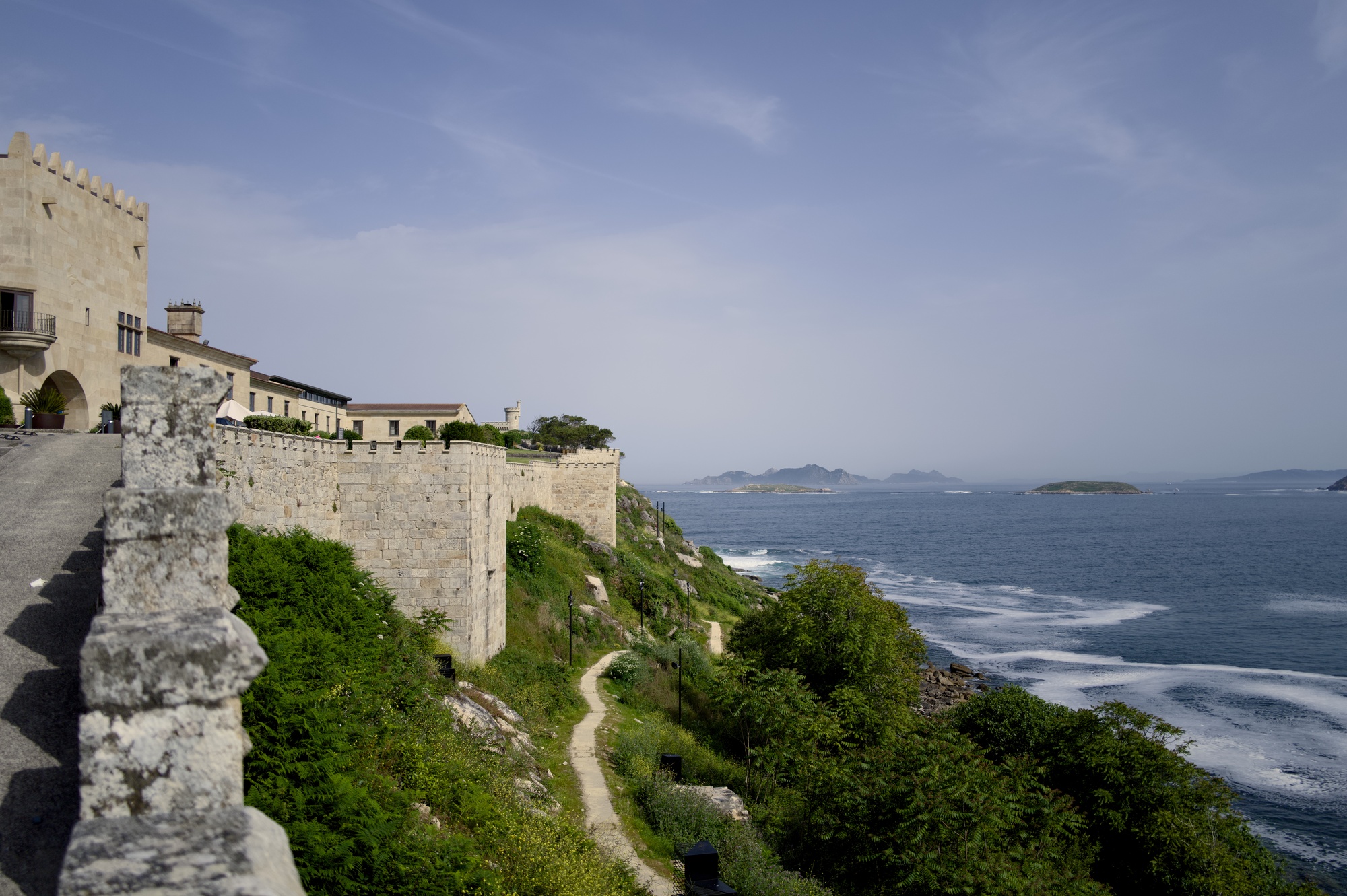
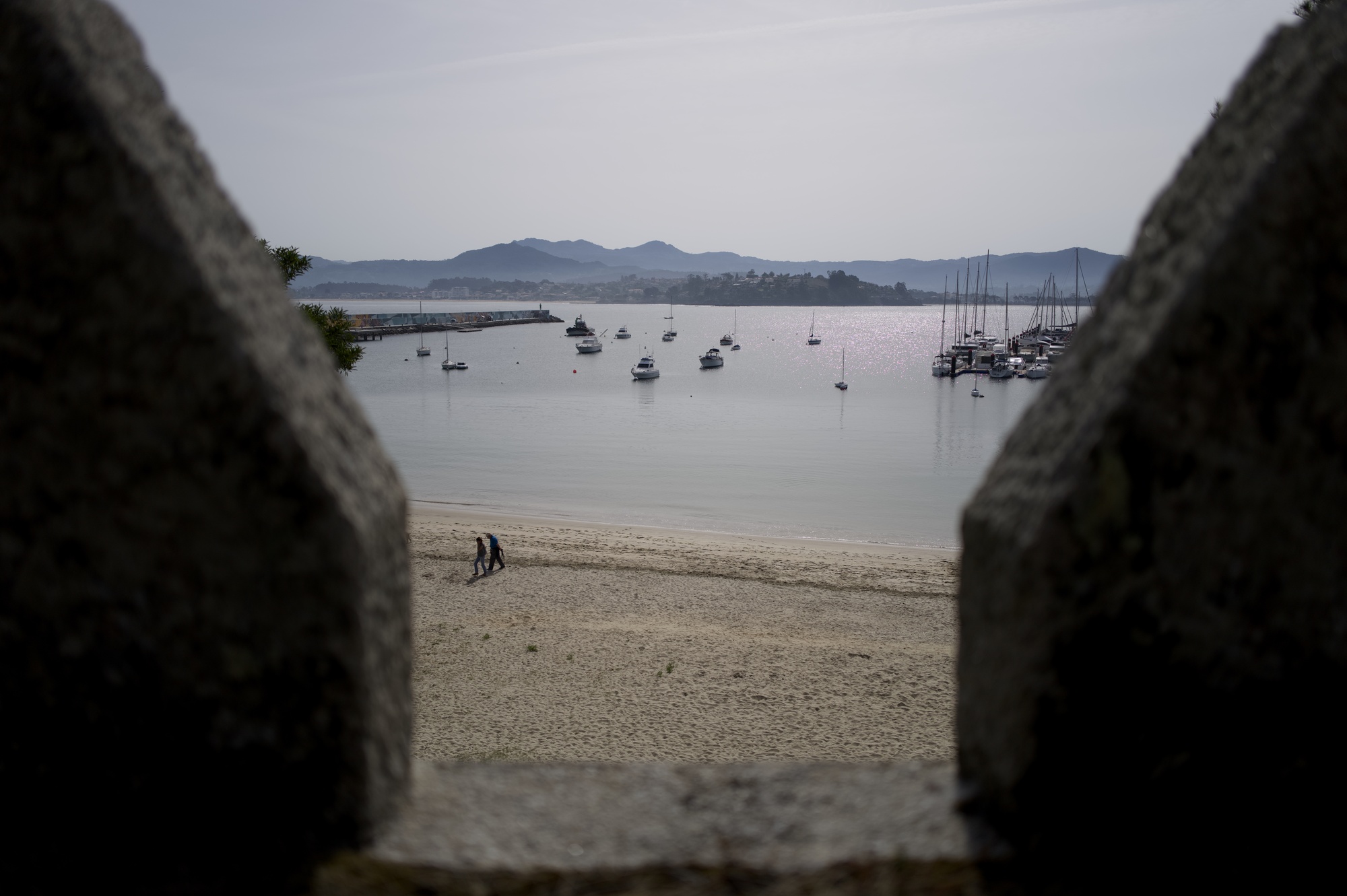
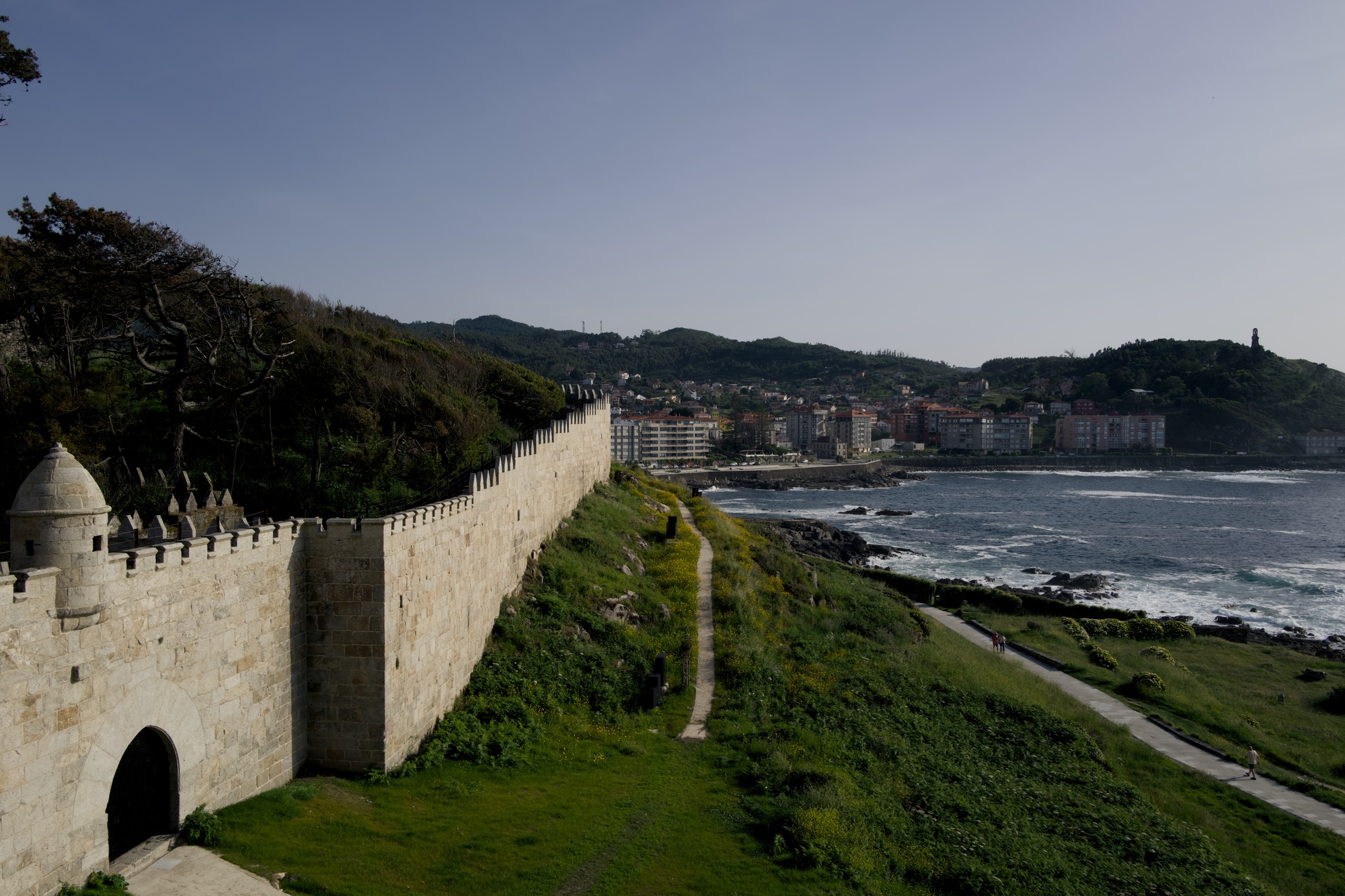
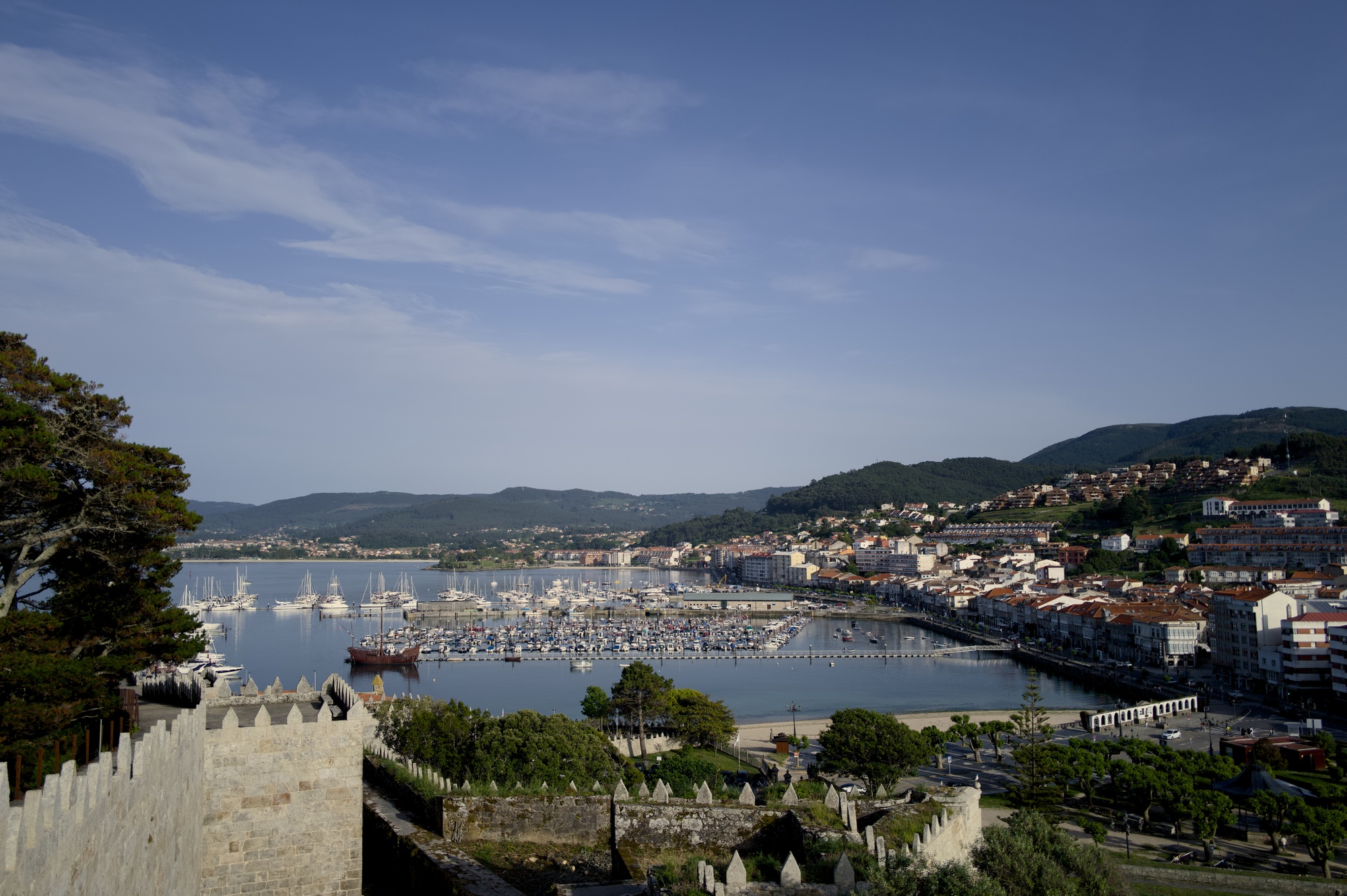
Our pilgrimage starts around a calm bay dotted with boats, floating in history. From our hotel, a Spanish Parador, we step on the camino heading east towards Santiago de Compostela.
Baiona made sense as starting point. Our walk had to fit in 6 days, be longer than 100km, and include the ocean. Porto didn’t fit the timeline; Tui didn’t expose the Atlantic enough; Oia required special logistics; starting from Vigo wouldn’t expose us to a full day of water extending to the horizon. Baiona felt like the perfect choice at 127km from Santiago.
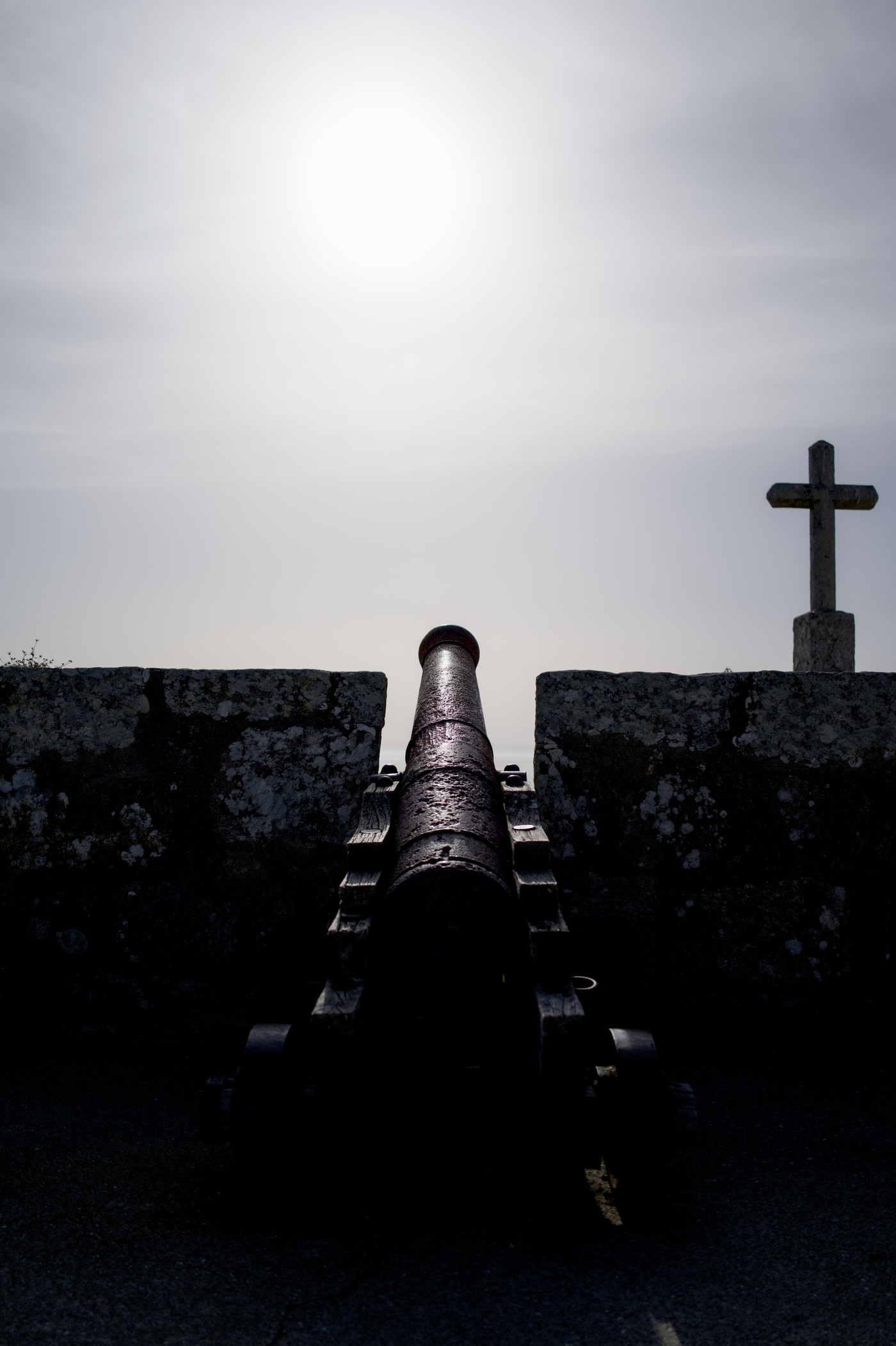
Baiona’s history was yet another reason. News of the discovery of America reached it first, but the peninsula had been strategic long before that: the Romans established themselves here around 2,000 years ago to control maritime routes. In the Middle Ages, Galician nobles expanded its fortifications, and by the 16th century, the Spanish Empire had further reinforced its stone walls. The Parador de Baiona, where we slept before the walk, is itself an old fortress sitting on a peninsula protecting the bay.
I first heard about Paradores when Paul Graham put it side by side with brands like Aman, Rimowa, Porsche and Lego. From 1928 onward, the Spanish government converted castles, palaces, monasteries and fortresses into luxurious hotels, while keeping prices more affordable. It felt fitting to book it, and it did not disappoint.
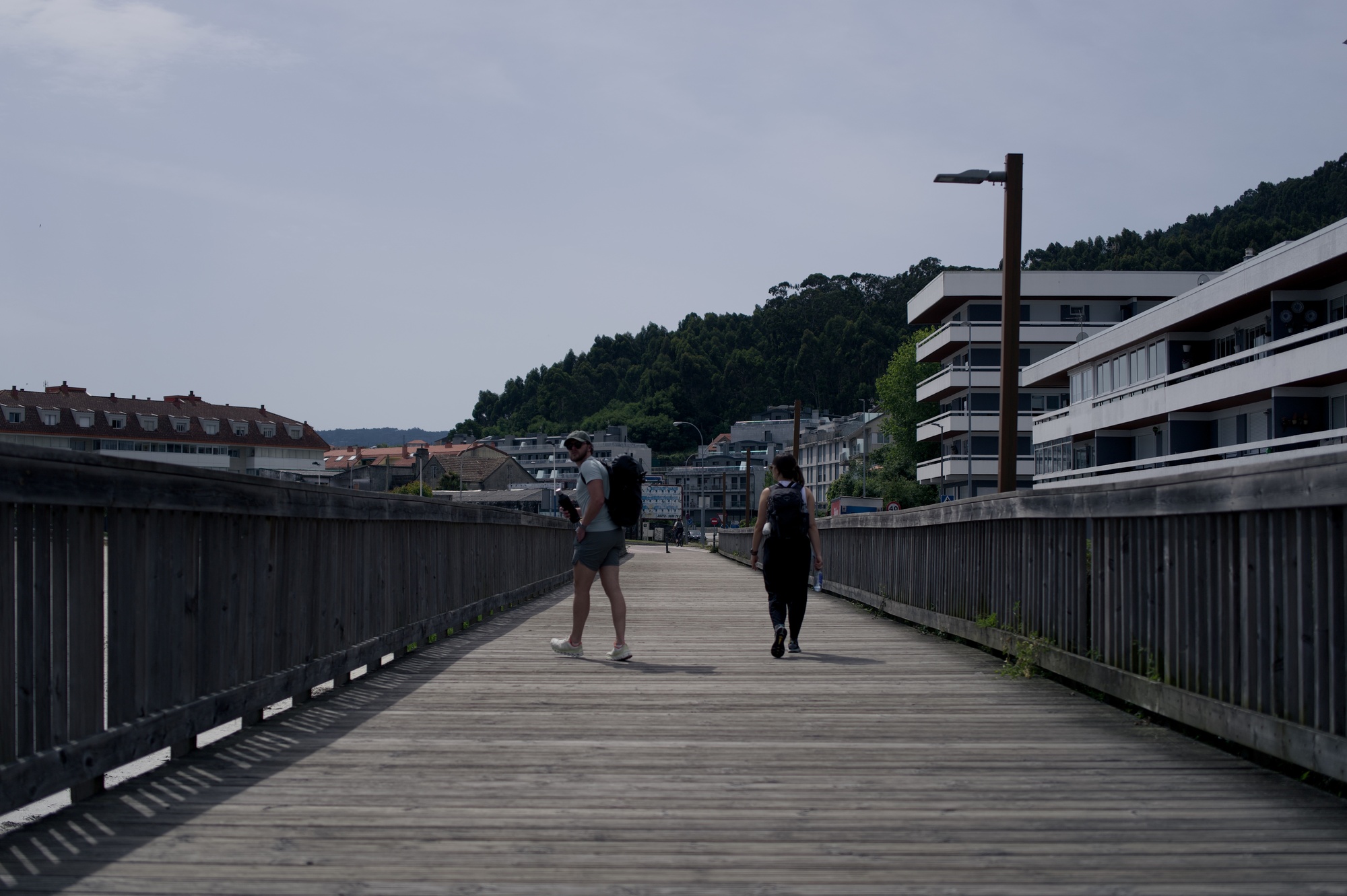
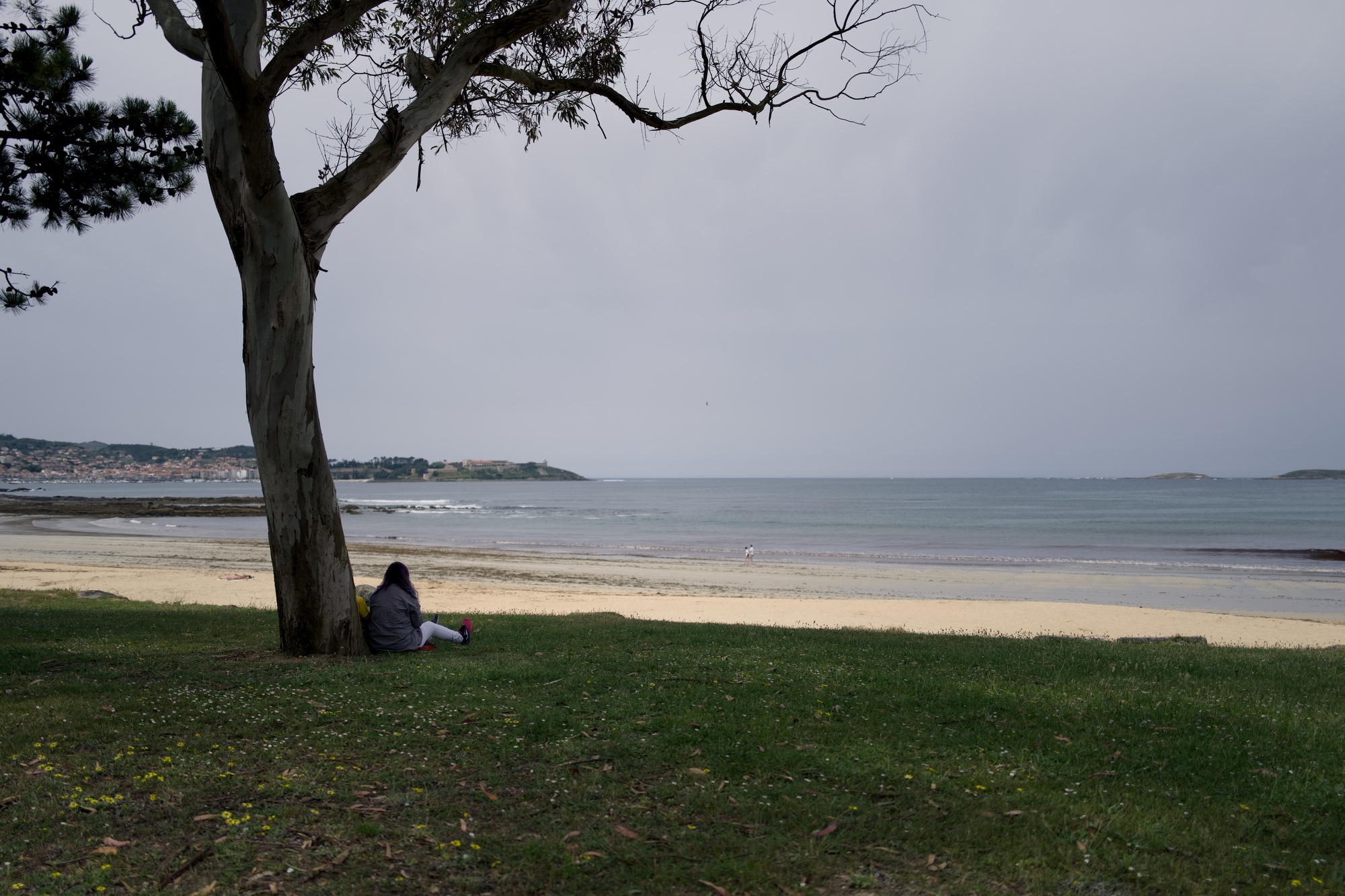
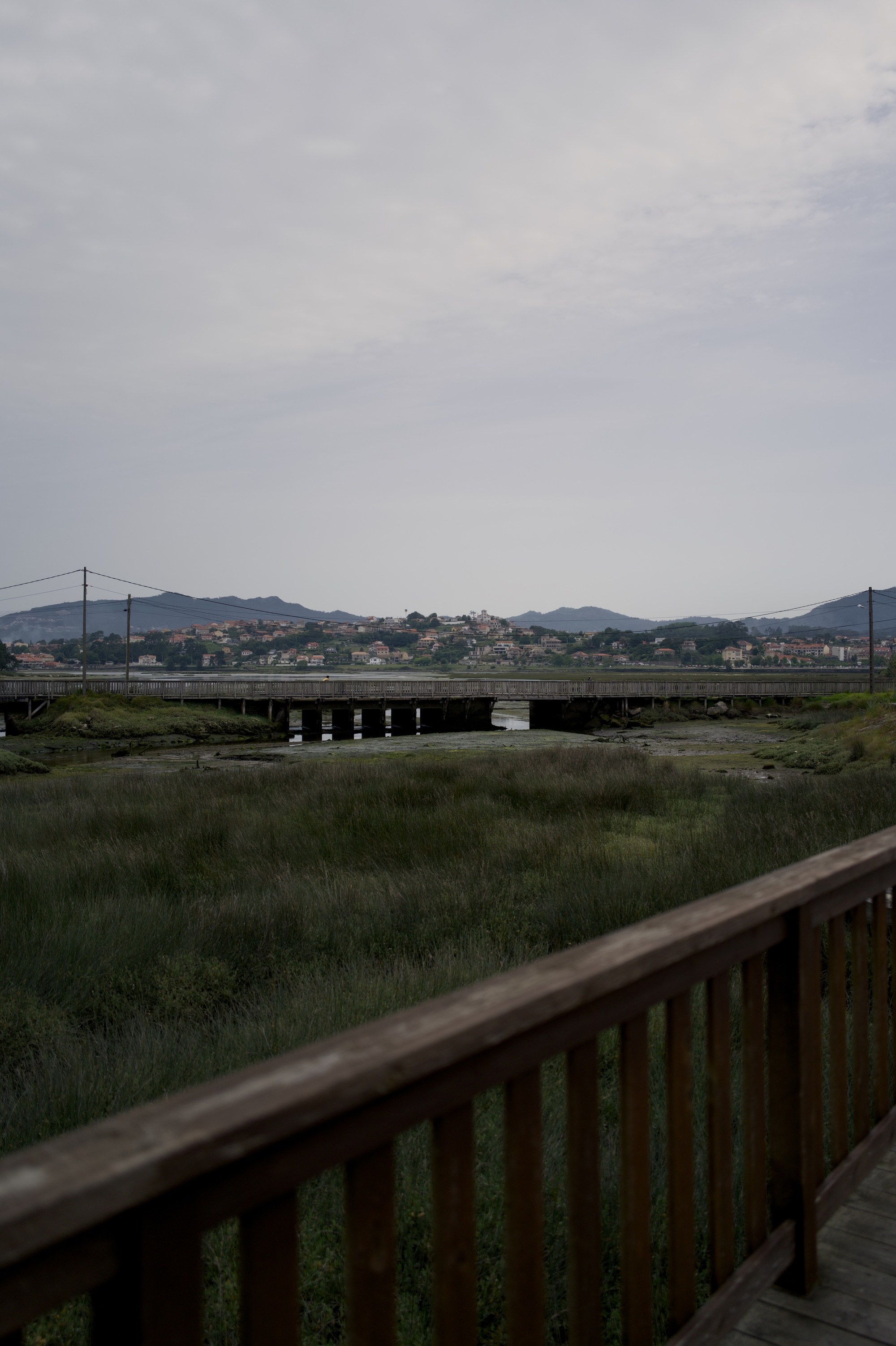
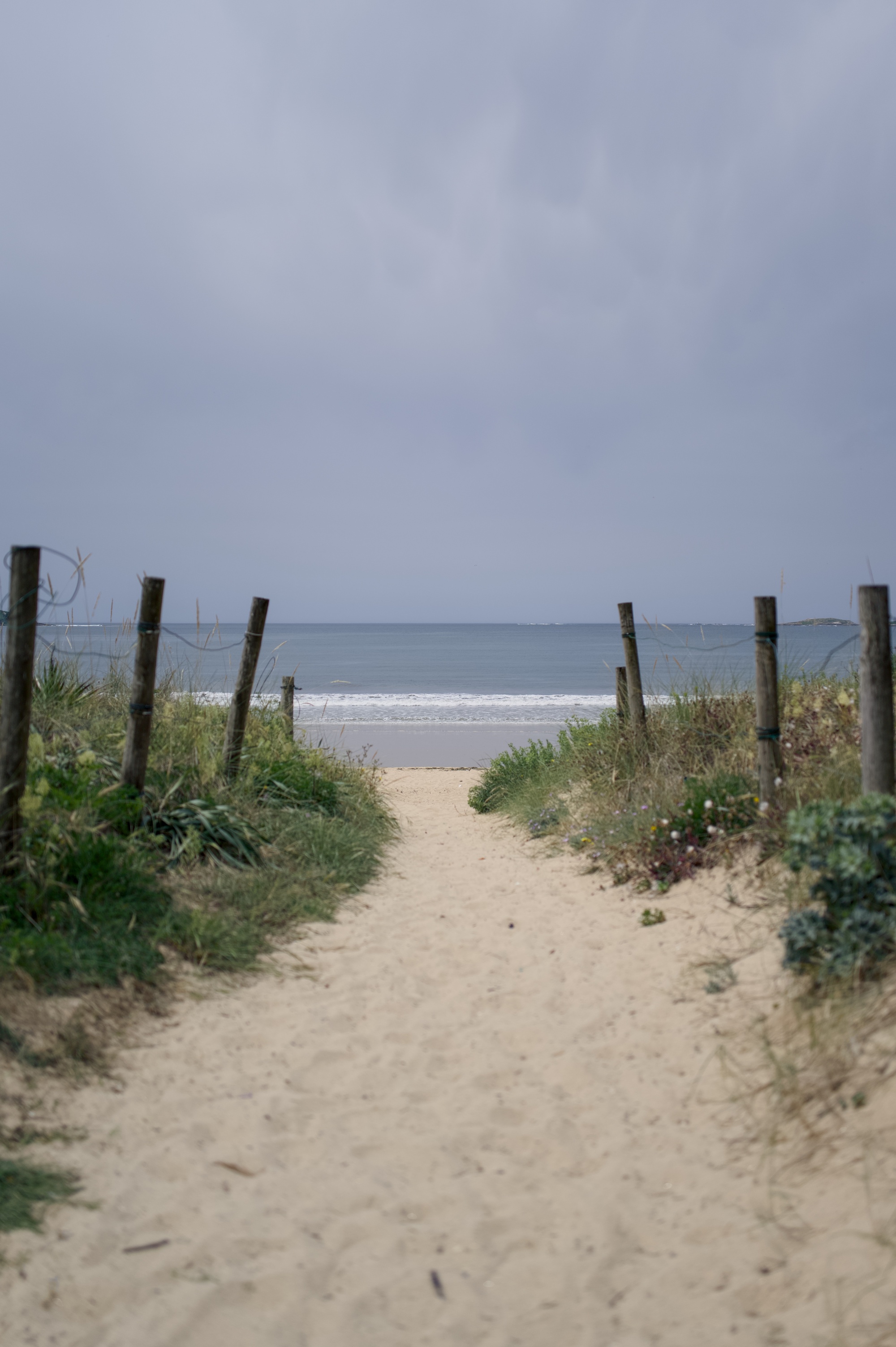
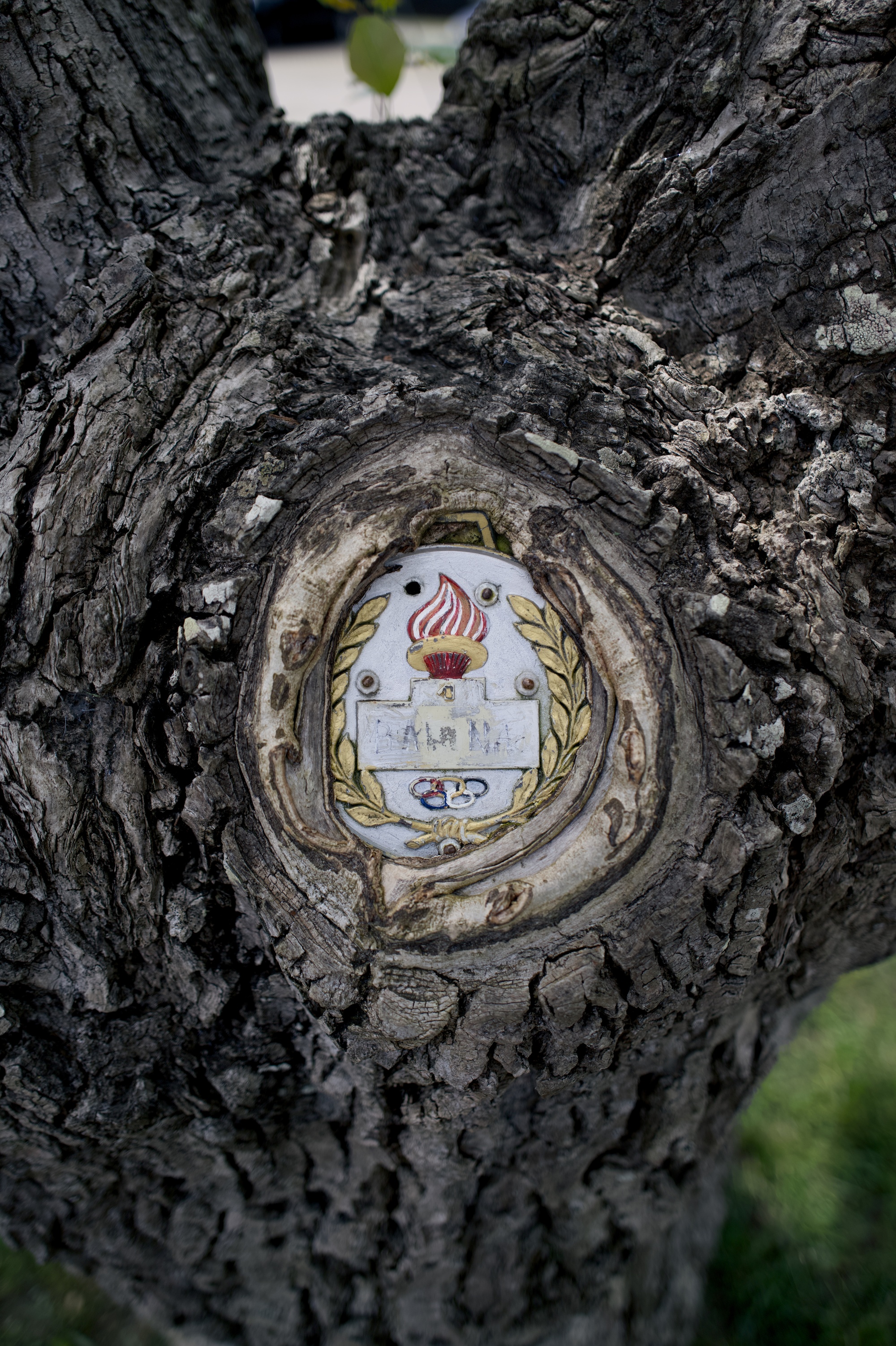
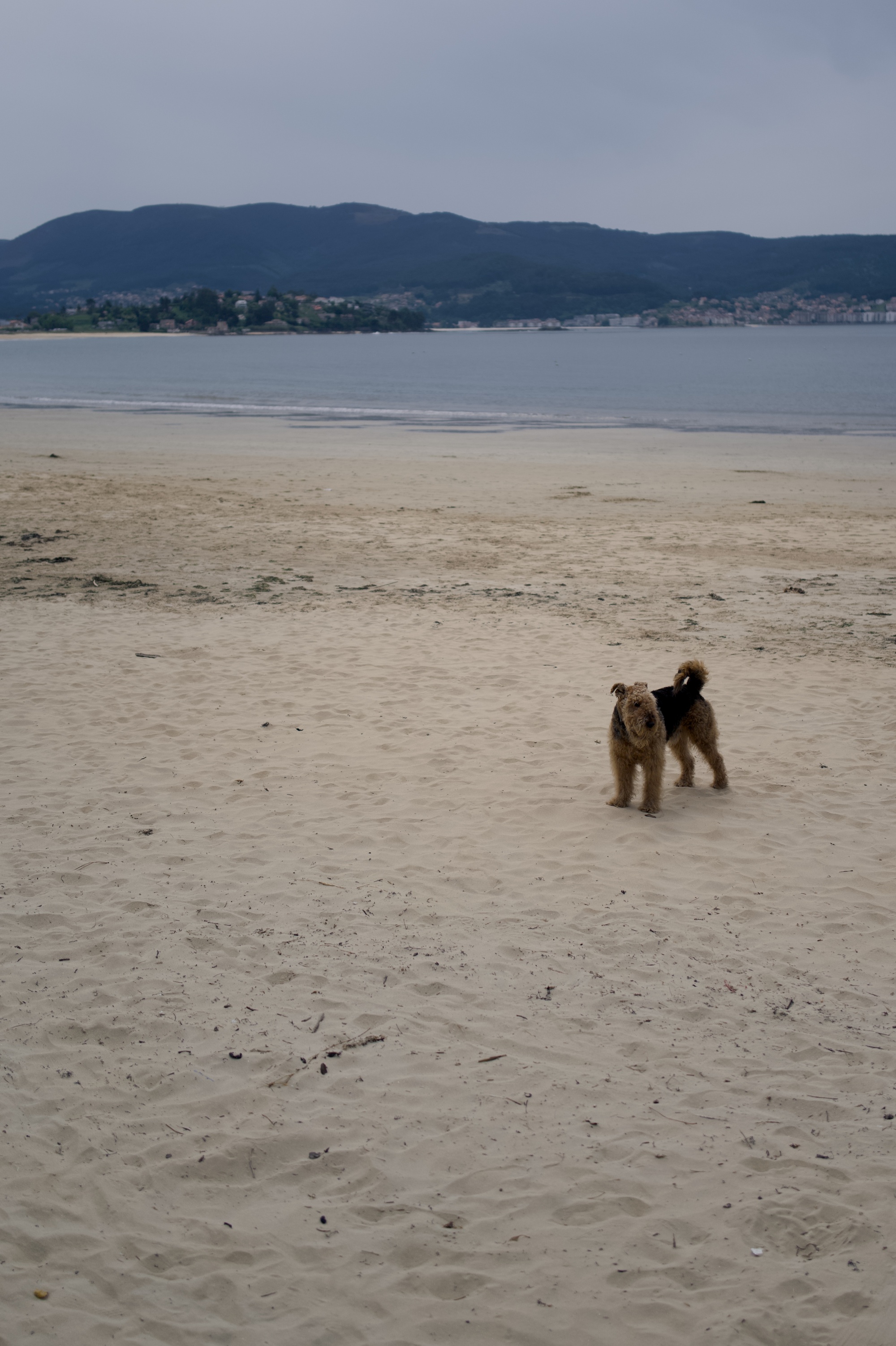
The walk by the coast was perfect, despite the high temperature. The wind was gentle and refreshing. Ships could be seen on the horizon, and between the ocean and the sidewalk there were bands of sand stretching far enough to look like a carpet. People walked barefoot while their dogs hurried to sniff around any salted corner they could find. For about 15km, we moved along through Playa Ladeira, Playa América, Playa Patos, playa, playa, playa. The breeze on my face gave me unreasonable optimism for this journey.
What if the next five days were as perfect as this?
When we turned inland toward Vigo for the remaining 10 kms, my ears started buzzing with relentless car honks and my heel started pulsating with pain. Suddenly, we were being swallowed by a jungle of concrete. It was almost funny to end the day with an internal competition between thoughts and the loud traffic. It became an opportunity to practice those meditation skills while grimacing in response to the pain.
My left heel ached like I had stepped on a nail. It wasn’t an unknown pain because it had haunted me in Japan 10 months earlier. In some ways, I expected it, but I didn’t pay much attention because it had faded away. However, a couple weeks before this walk, it started pulsating again, with intensity of 1 out of 10. I rushed to a doctor to investigate, but the tests came back inconclusive. It was too late and I would never cancel a walk because of an intensity-one pain, right?
What I did not expect was that it would return with such intensity. By the time I arrived at the hotel, it was excruciating, an 8 out of 10.
Evening notes
For this journey, I brought in my pocket a notebook to collect my thoughts. Every night, I’d lie down in bed, and the day wouldn’t end until I reflected on six things.
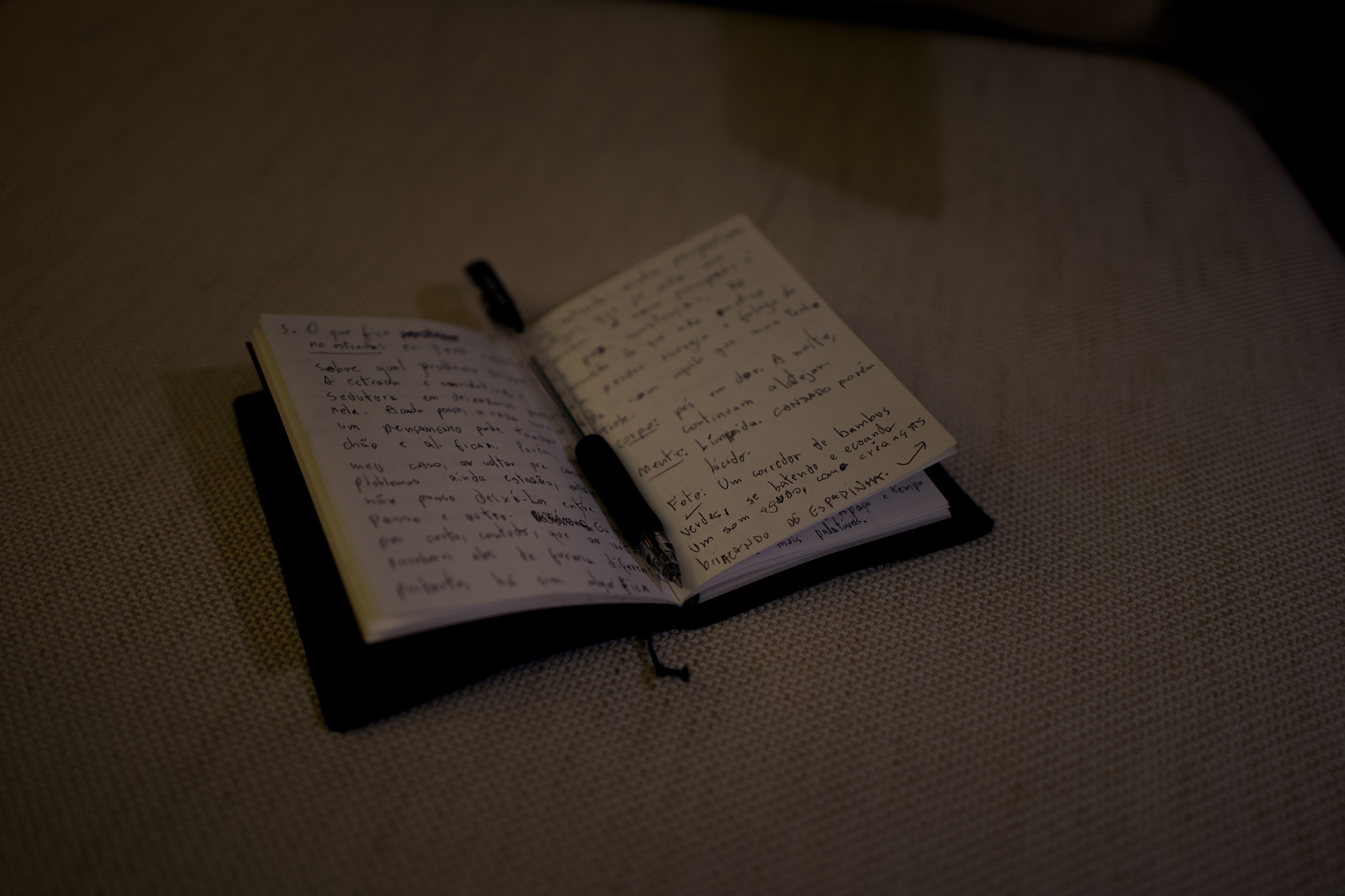
22/May/26 | Baiona → Vigo
What I am grateful for: For the friendship during this travel.
A lesson: It’s possible to fix a bad day if you finish it at a Michelin-star restaurant.
What stays behind: The notion that a gone pain won’t return.
Kaizen / what to improve 1% for tomorrow: I need walking sticks.
Body: Pain! 8 / 10. Fortunately feeling better at the hotel.
Mind: Dazed, spaced out. 8-10km on the highway beside non-stop cars left me overwhelmed.
A picture: The Baiona peninsula shrinking behind us.
The next morning, I bought a pair of walking sticks.
Day 2: Vigo to Redondela
16km. Ferns, elevation, ships on the horizon.
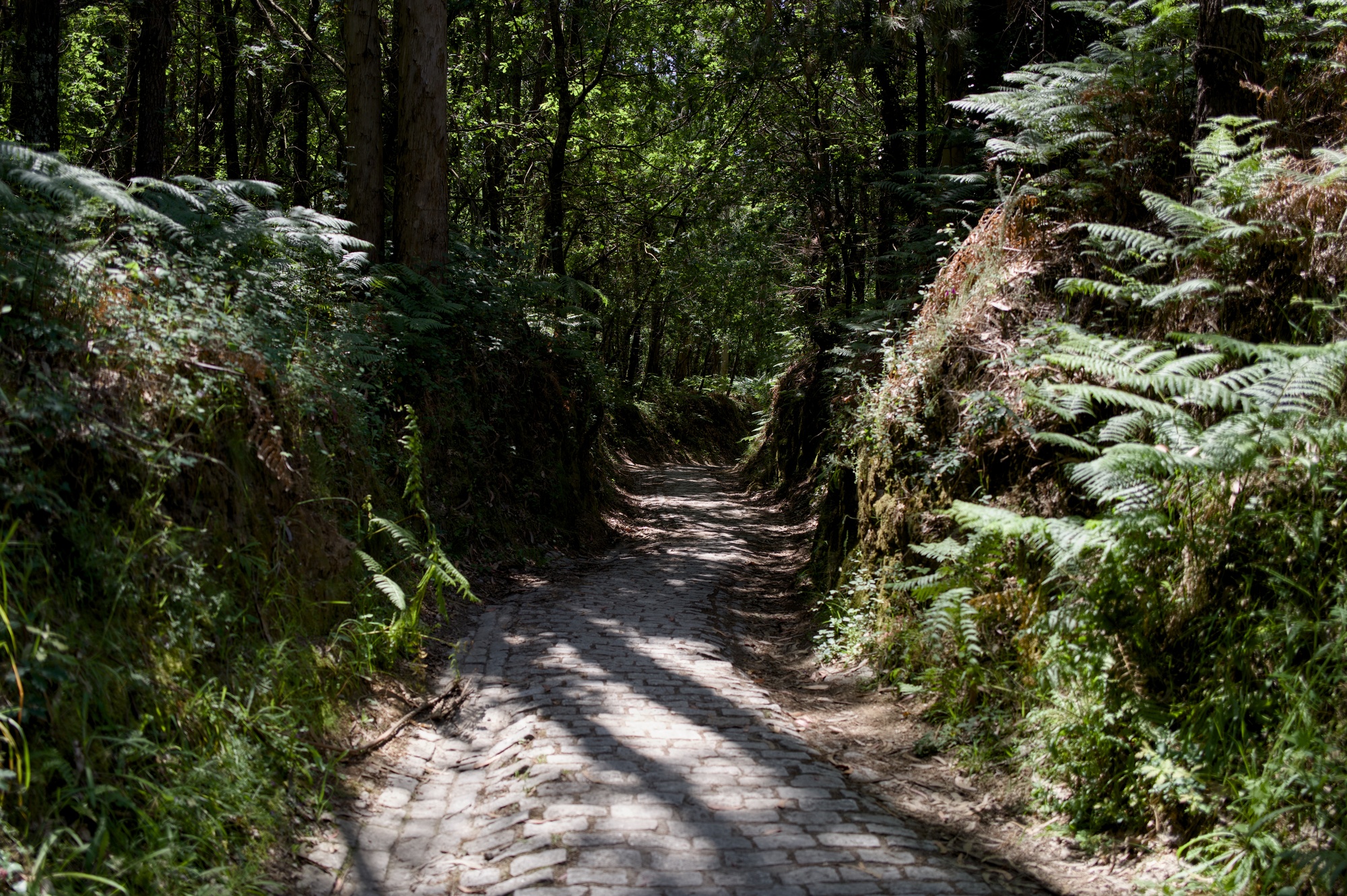
On a map, Vigo and Redondela look like a single gray patch of concrete. They touch each other and you don’t know where one ends and the other starts. The cities circle a green mountain sitting in between, where the Vixiador Forest Park is. It’s like the elevated terrain pushed the road to the side.
To escape the gray concrete from yesterday, we ignore travel guides and draw our own route: A roughly straight line over that mountain. The plan works out, and we are rewarded with a great day. The walk alternates through greenery and tiny neighborhoods, always returning us to the trees.
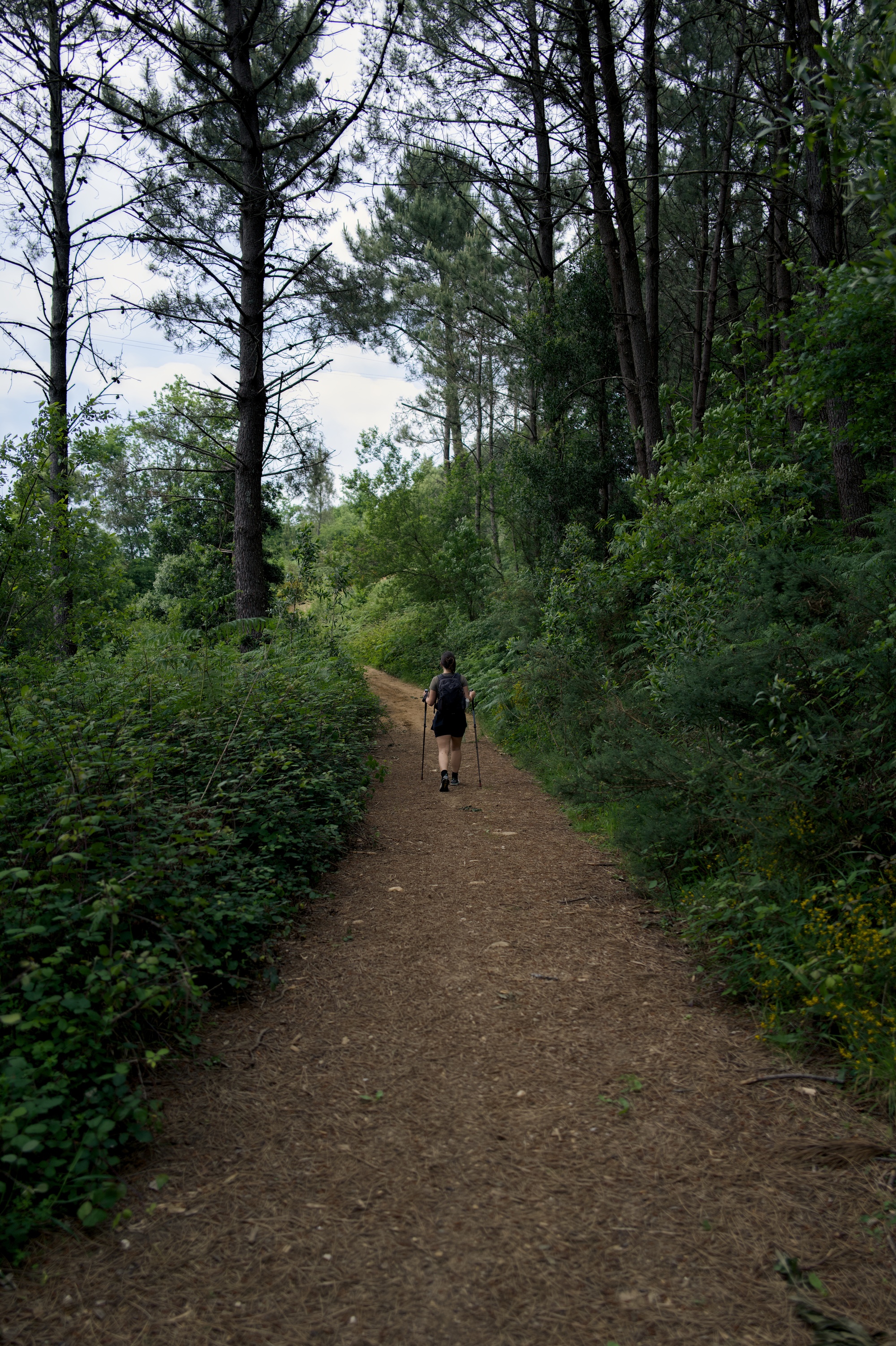
I wrote that night,
23/May/26 | Vigo → Redondela
Grateful: for my wife, for rescuing me from the ants. For massaging my aching feet after an impossible day, even though she was tired herself.
Lesson: Today I learned first-hand how a mere 10% of improved efficiency from walking sticks can be a great resource to help reduce pain, or at least delay it. Worth the purchase this morning.
Kaizen (to improve 1%): Improve my posture with the walking sticks.
Body: My body gave a lot today. Too much. Feet pain around 6 / 10. At least not the 8 / 10 from yesterday. Calmer now.
Mind: At peace. Serenity.
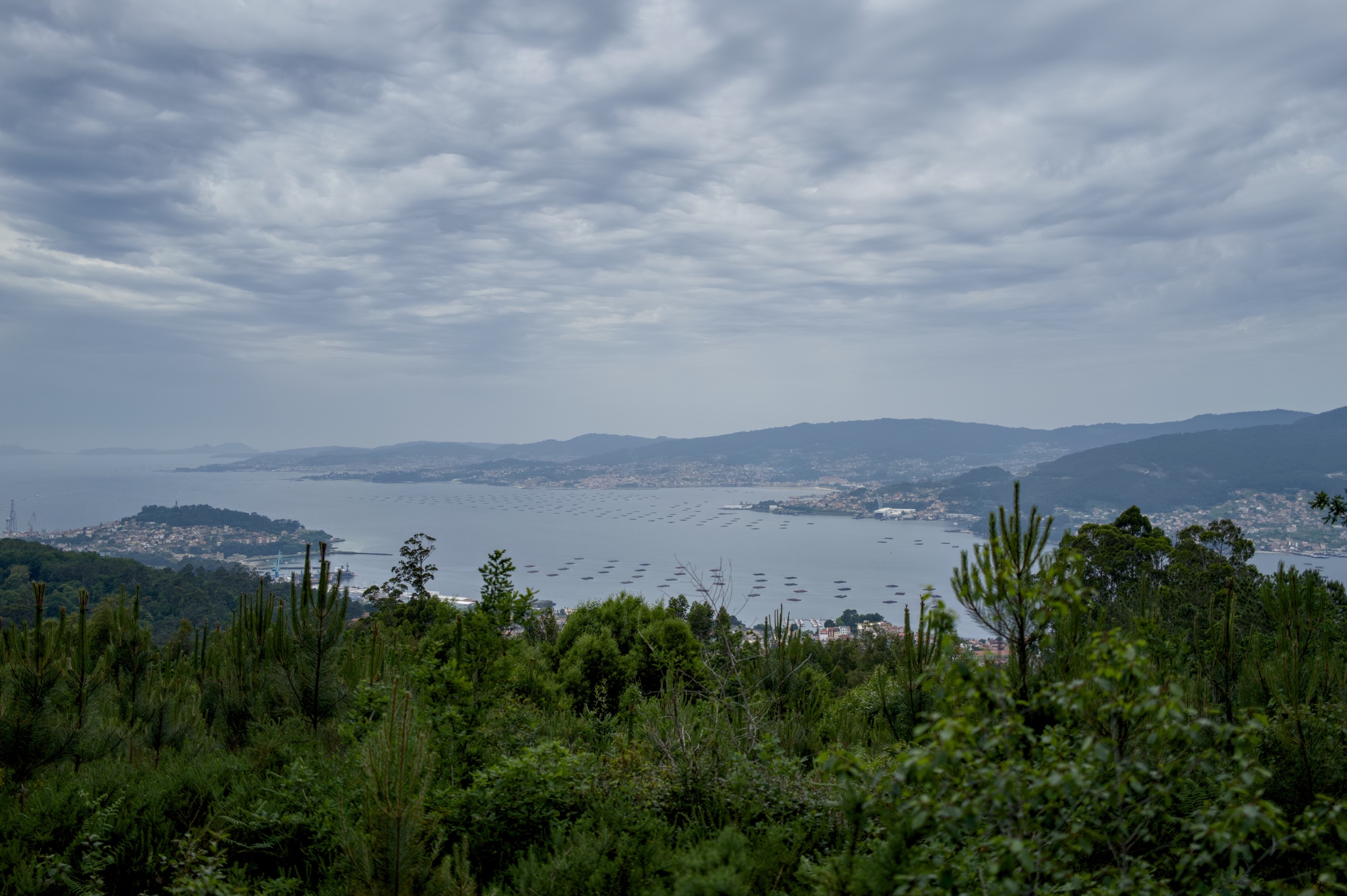
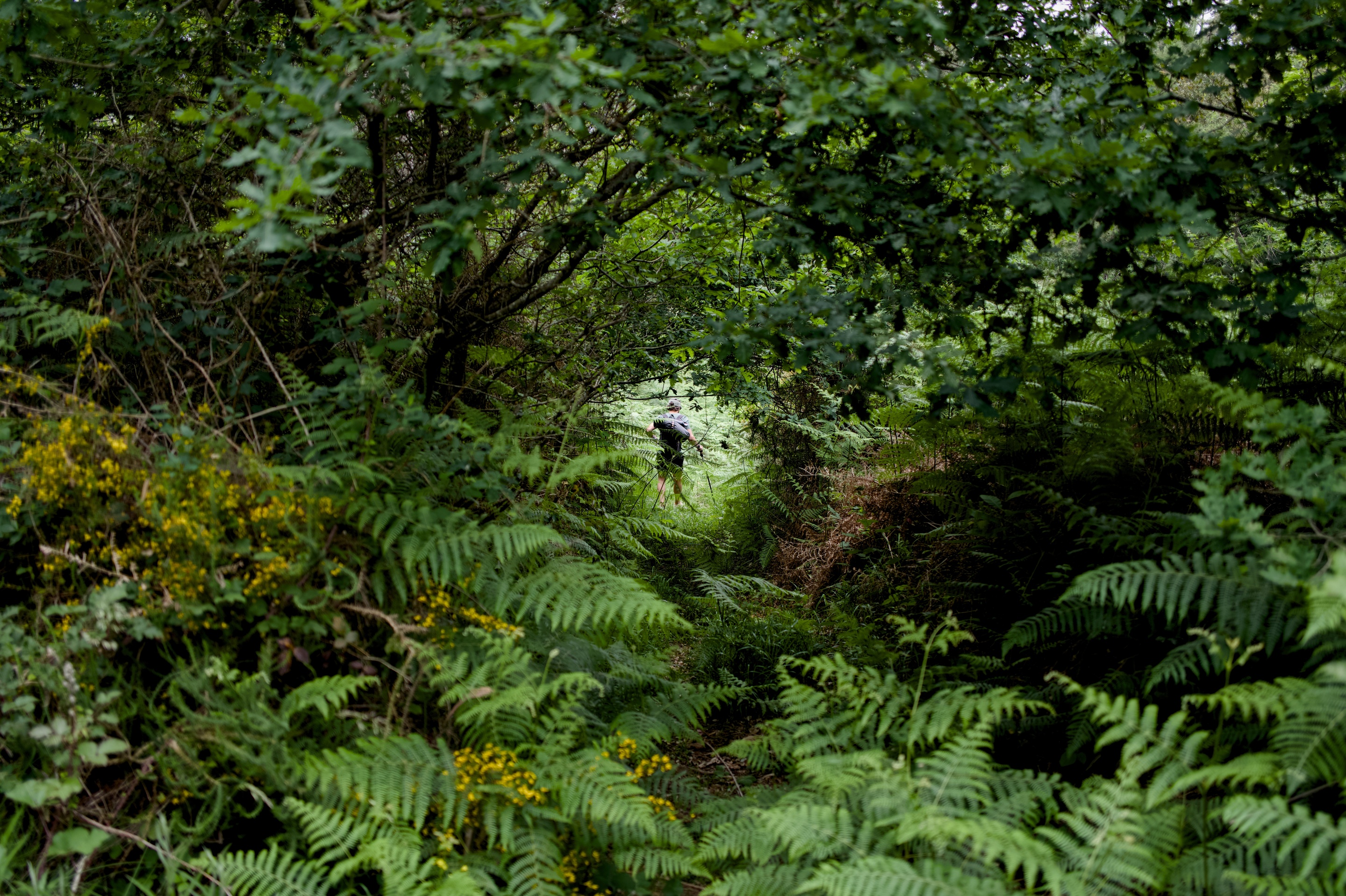
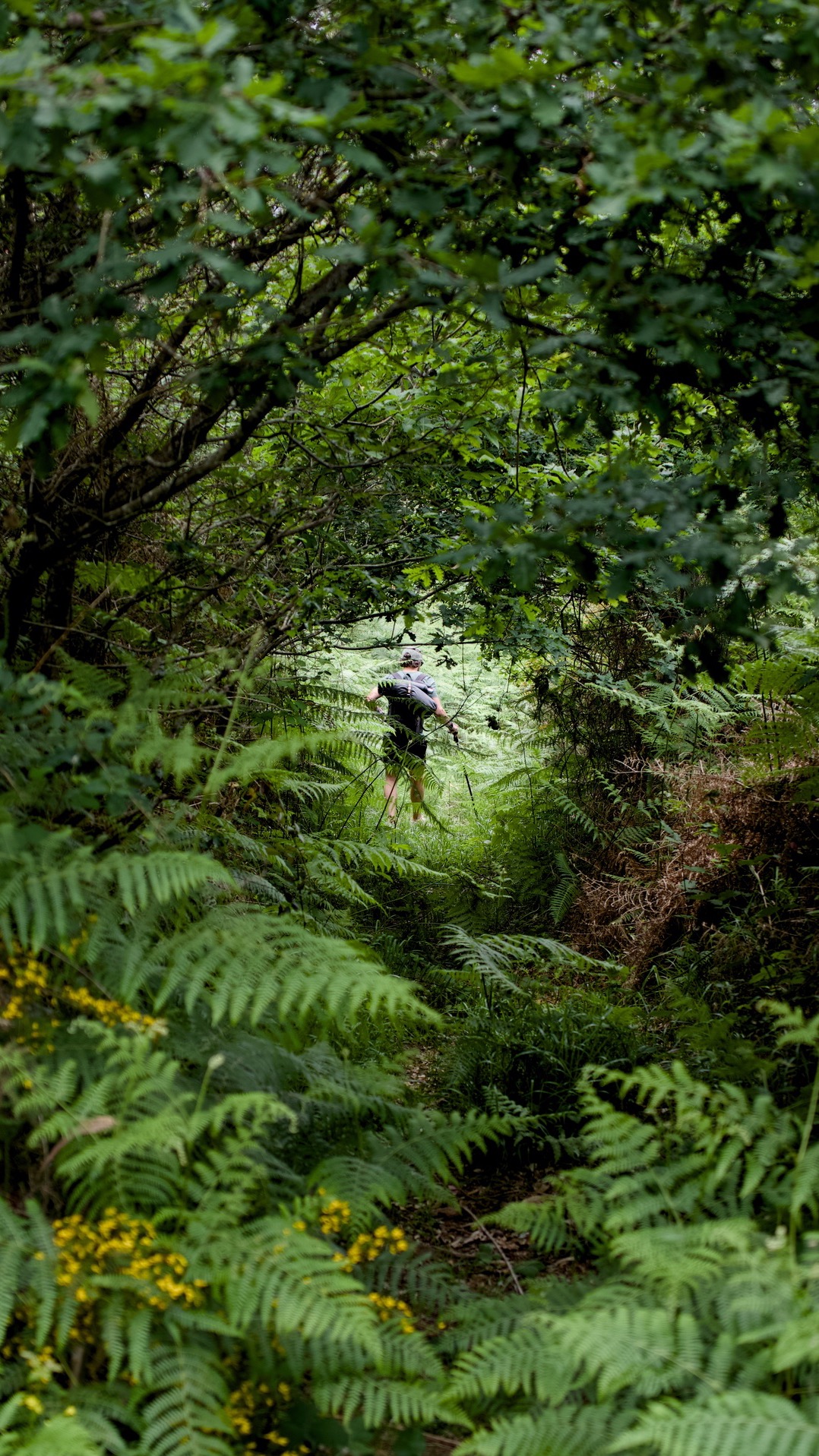
A picture: A forest of ferns, almost lime green, some tips curled like snails. In the background, the bay of Redondela. Ships.
Day 3: Redondela to Pontevedra
24km. The tired body that said “no” the evening before, woke up in the morning saying, “maybe.”
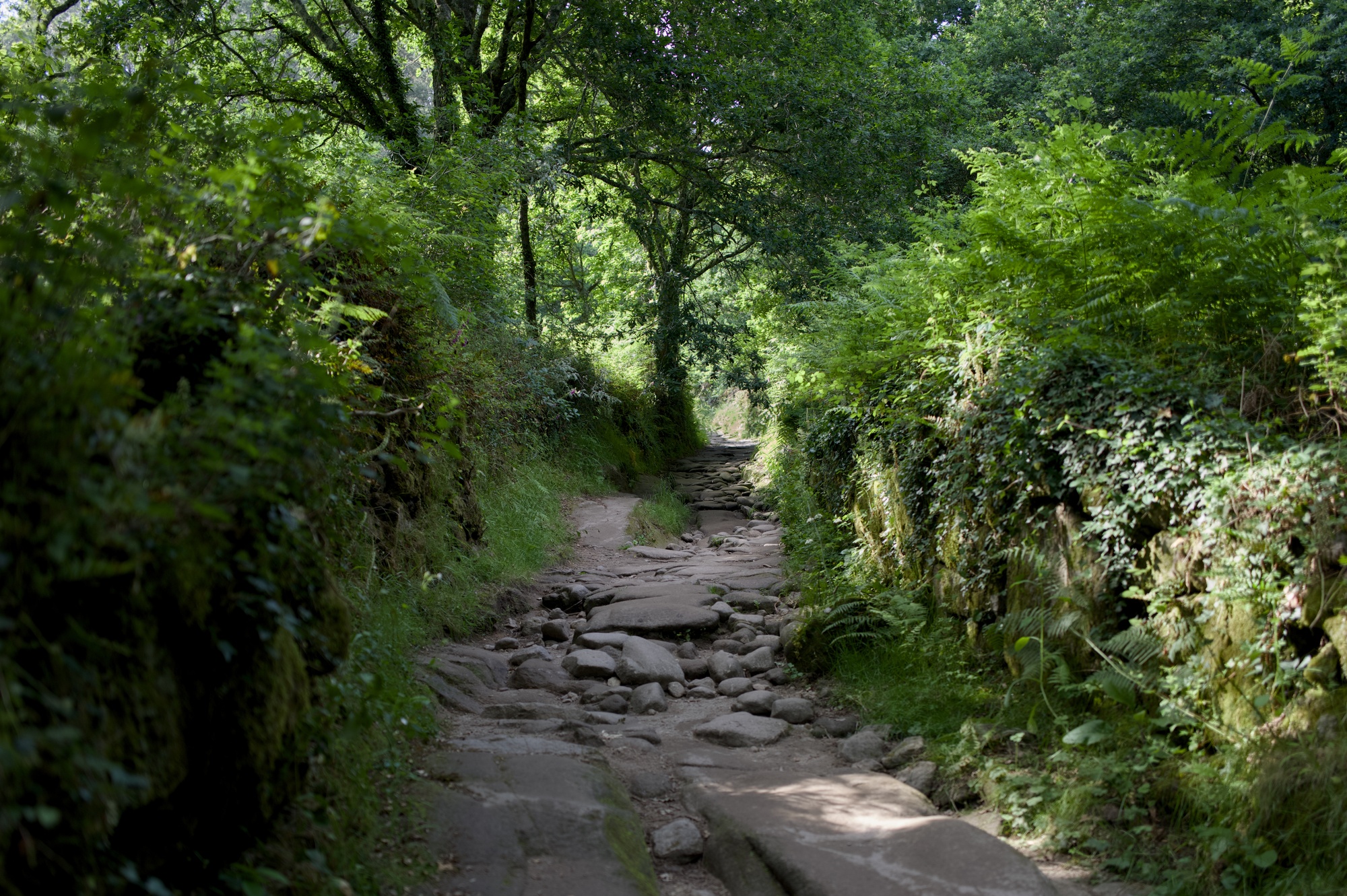
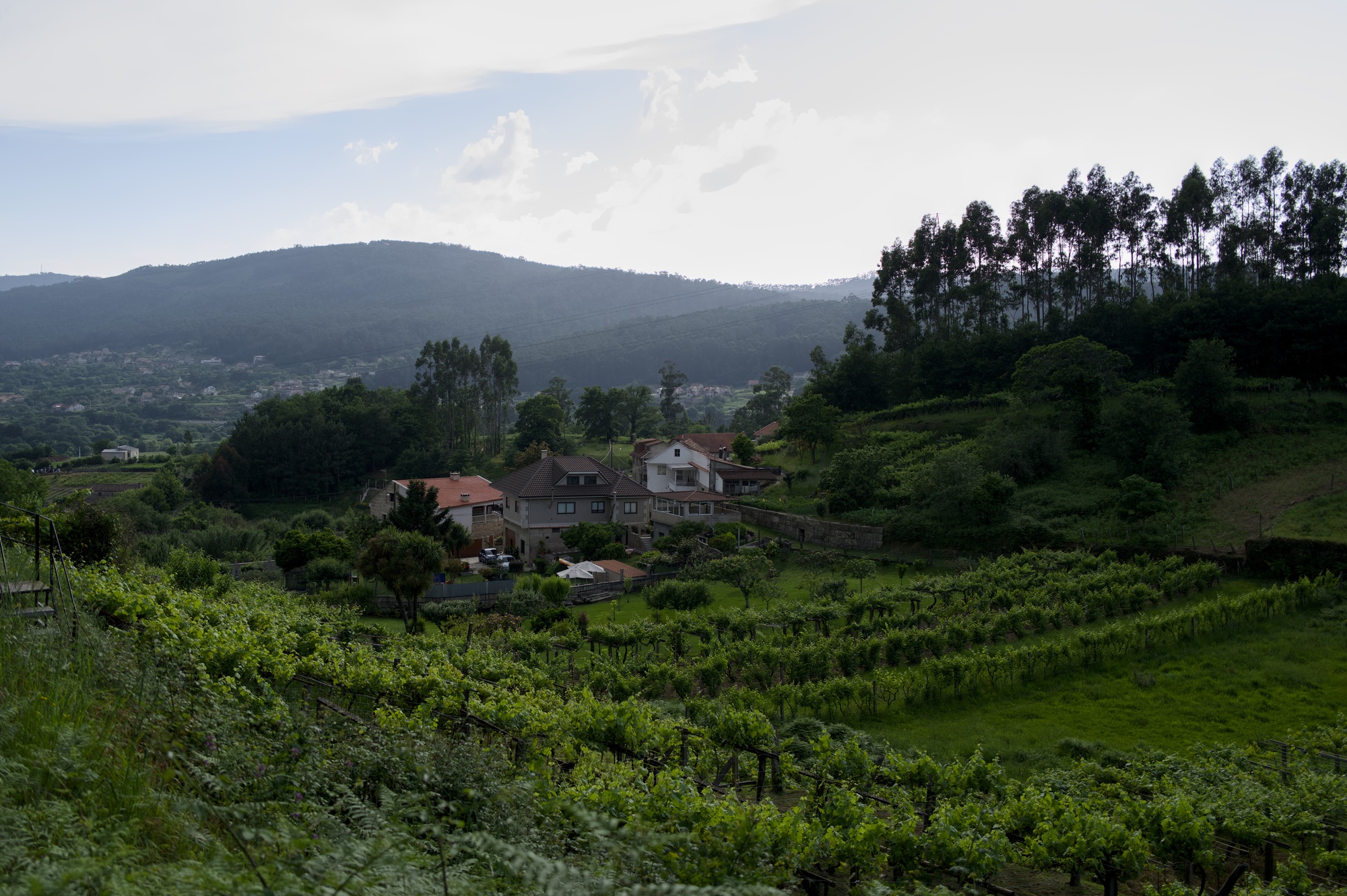
When you leave Redondela, you start walking up and down. The flat terrain gives way to small hills and valleys. The path keeps changing, but into versions of the same thing: another rise, another dip, another stretch of trees. It is beautiful, but it makes progress hard to feel. My steps set a persistent rhythm, like a metronome, but the distance feels fuzzy. I don’t know if I’ve moved 1 or 3km.
The map, however, insists that about 5km have passed since I last looked at it, and Pontevedra is closer. That gap between what I feel and what the map shows reminds me to stop measuring progress by how it feels and instead focus on the next step.
Life feels like that sometimes. The highs and lows rob us of perspective and make us feel stuck. We don’t always have an objective measure telling us that we’re moving forward. Walking teaches that perception can be misleading. Sometimes, the next action matters more than the feeling of progress.
Bad moments are just checkpoints.
The journey teaches us to let go of the need to feel progress all the time. Progress doesn’t always announce itself with checkpoints or signs. Sometimes you only recognize it when you look back.
What matters is knowing where you’re going and correcting your course when you’ve wandered off it. The green forests, the sound of running water, and the cool shade didn’t bring the destination any closer, but they changed what it felt like to walk it.
In retrospect, while the Kumano Kodo felt like a series of different hikes, the Camino feels like one long road that repeats once a day.
The Japanese trail is exquisite and chaotic, and you never know what to expect around the next corner. The climbs put the knees to the test. The terrain requires concentration on every step, decisions about which stone not to step on, or which gap between the roots is safer for the ankle. Every day is different. Countless times I found myself dropping my jaw facing the most beautiful landscapes.
This one, on the other hand, is the ideal environment for reflecting, repeating itself every day. Not that the Kumano isn’t suitable for that, but during the long straight sections on the Camino, you might find yourself on autopilot, absorbed in a thought, then realize several minutes have passed.
That night, I lay in bed and wrote in my tiny notebook,
24/May/26 | Redondela → Pontevedra
Grateful: for the smells, for being carried forward, for the sound of water in the stream, and for the sensory immersion in nature. For stepping on Pontesampaio. For the privilege to keep walking.
Lesson: to be fierce in the combat against frustrations over circumstances. To exercise my focus on the things I can control, and gratitude for the things I can’t.
What stays behind: The unintentional frustration by circumstances.
Kaizen (to improve 1%): Stretch my calves more effortfully. Take more pauses for my feet. Walking sticks helped a lot, but were not enough. I should pause every 1h, with or without pain.
Body: Feet feels better than yesterday. I compensated a bit with my calves and they suffered the cost.
Mind: Clean.
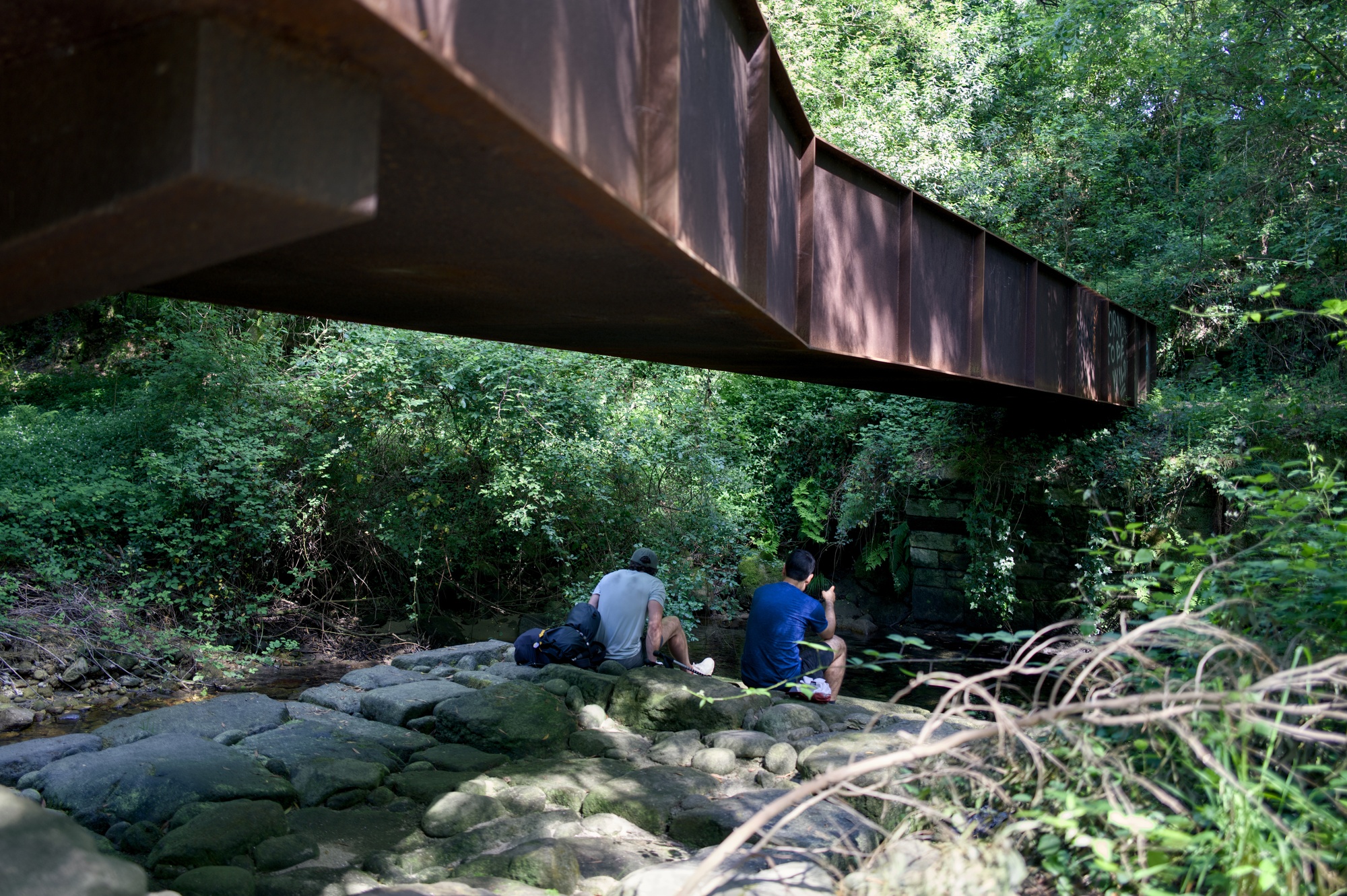
A picture: Running water under the small red bridge. Crystalline, clean. Bare feet on the cold stone, the feeling of stars under my soles. Thoughts emptying out.
Day 4: Pontevedra to Caldas de Reis
26km. Space stretching time. Movement, uninterrupted time.
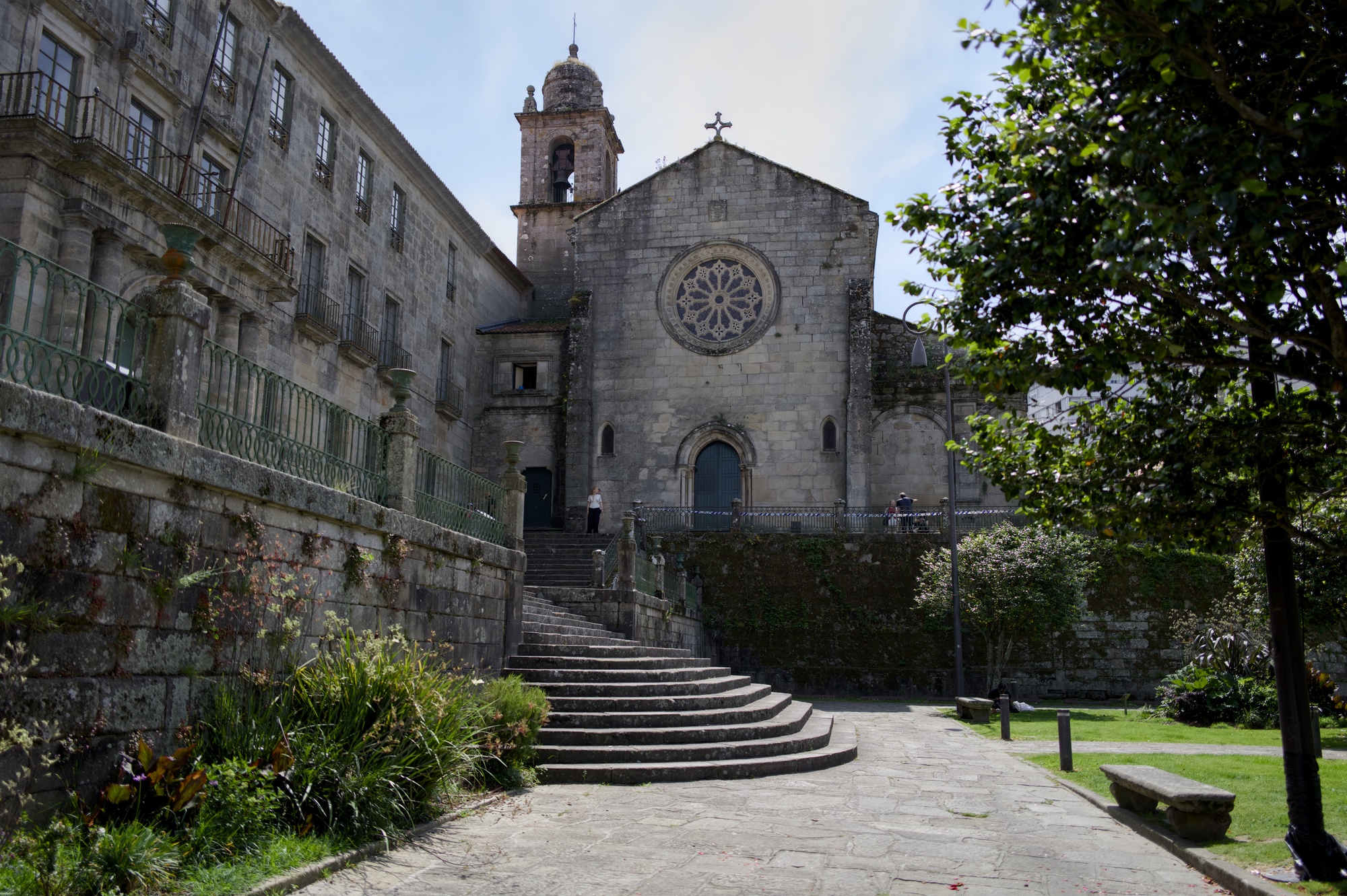
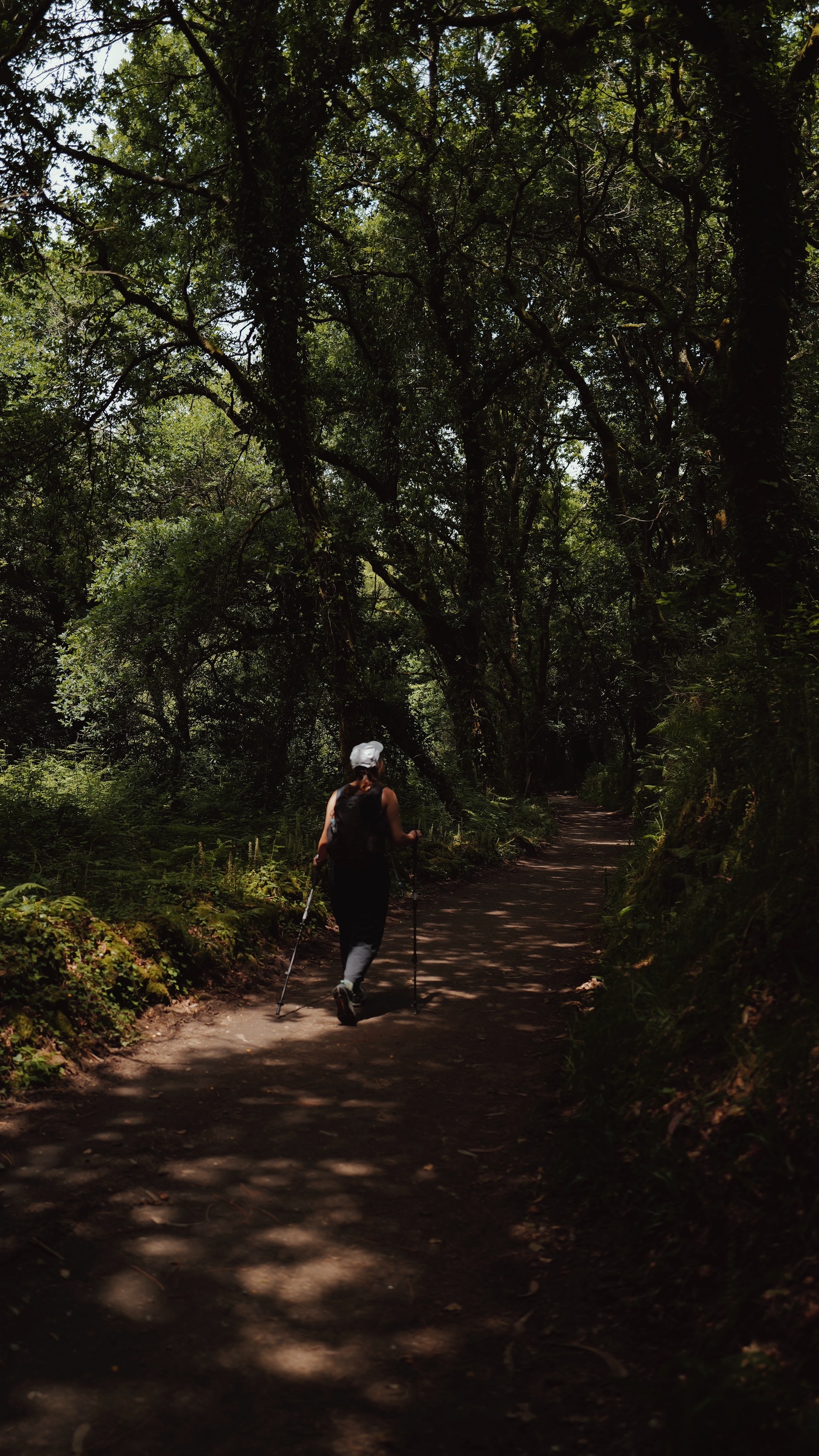
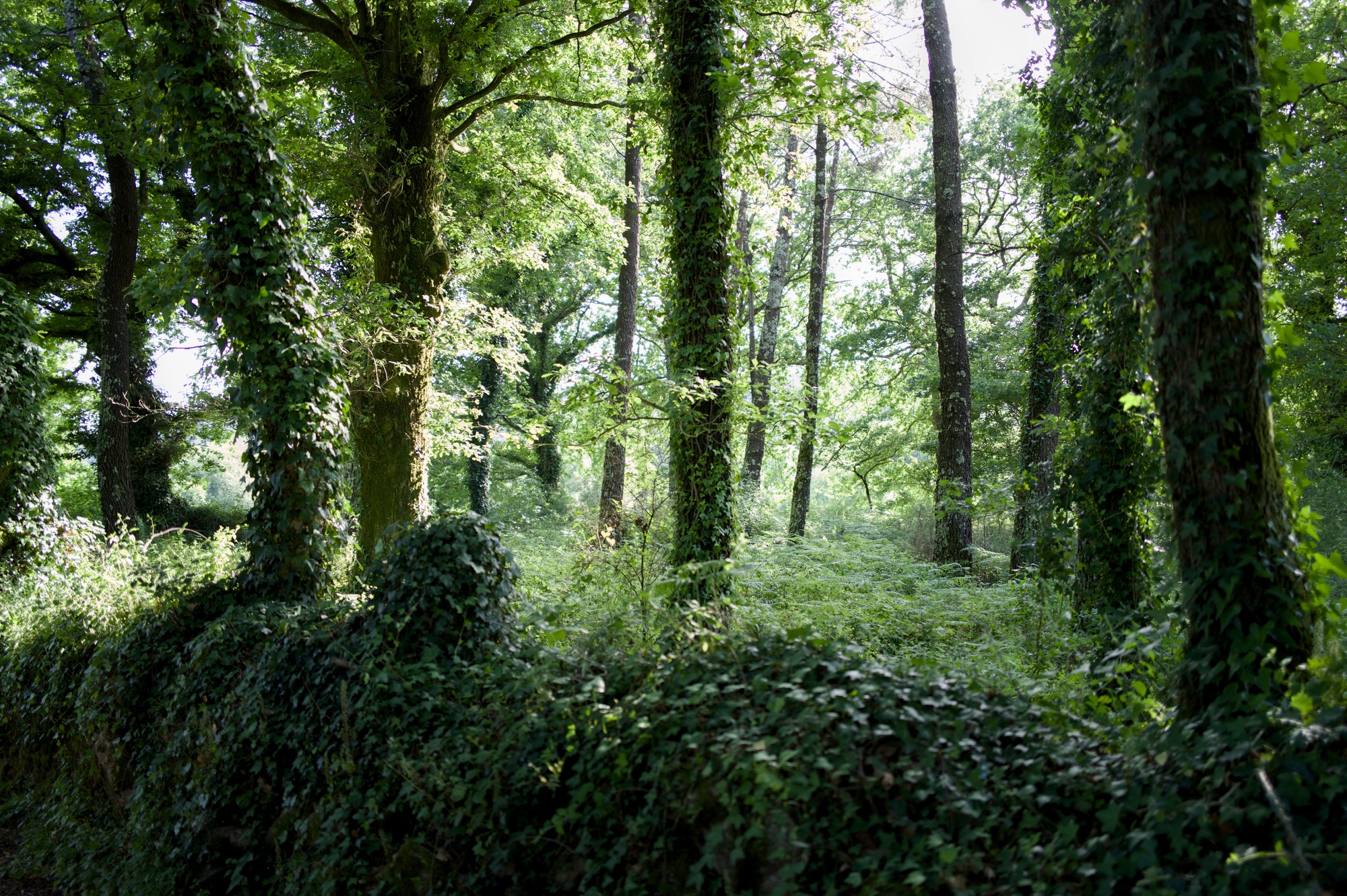
By the fourth day, somewhere between Pontevedra and Caldas de Reis, I had already walked about 9 kms. The path disappeared into the forest, following old roads that had been connecting villages long before any of us were born.
As I walked, I found myself thinking about what this journey was really about. One pillar is the feeling that every day offers an opportunity to leave something behind.
While I walk, I replay conversations, revisit problems and think about the things that have been bothering me. After each kilometer, those thoughts somehow feel farther away, as if they had been left somewhere along the trail.
Of course, that’s not entirely true. Most of those problems will still be waiting for me when I get back home. The walk doesn’t solve them and the distance certainly doesn’t erase them.
What changes, however, is the way I see them. That, more than anything else, is what stays behind on the road. Old assumptions, old judgments, old ways of interpreting the same situation.
Part of that change comes from the distance, and part from time. We often say that time is the best medicine, and there’s probably no better way of stretching time than walking.
The days become longer. Thoughts that would normally be interrupted by meetings, notifications, or errands are allowed to unfold until they naturally reach a conclusion. It feels as if the walk gives time more room to do its work.
Maybe that’s what I’m really looking for out here, not to leave my problems behind, but to leave behind the person who was looking at them yesterday.
Loosening up
Before arriving on the Camino, it felt like my mind was pulling an iron ball.
That’s what stress does to me. I avoid ambiguity, resist context-switching and struggle to explore even the things I’m passionate about. Looking back, it’s like my mind had lost its range of motion after holding tension for too long.
For me, three or four days are usually enough for a short reset, to get the systems back online. The reboot is accelerated when I combine walking with meditating.
Walking gives my mind a track to follow. My legs find a steady rhythm to settle into, and before I notice my thoughts begin moving at the same speed.
The difference between good and bad days is where our attention goes. Modern life is good at deciding that for us. Notifications, news, errands, conversations, unfinished tasks. Suddenly, my mind drifts towards things I can’t control.
Walking interrupts that pattern in a way that a vacation rarely does. My body already knows what to do, my feet keep moving and my eyes track the trail. Thoughts that would normally be interrupted dozens of times are finally allowed to reach their own conclusion.
For hours, there’s nothing competing for my attention except the trail. After a few days, I find myself thinking more deliberately again, not because the Camino changes me, but because it gives me enough silence to notice where my attention has been all along.
25/May/26 | Pontevedra → Caldas de Reis
Grateful: for my foot pain improving. In general, 3 / 10, except on asphalt climbs, reaching 7 / 10. Grateful for being able to enjoy the view, the smells, and the sounds much more without that constant nagging.
Lesson: Pay closer attention to the meditative state when it arrives through silence. Give the proper focus and attention to that moment, the sensation, and experience it fully.
What stays behind: I was reflecting on which problems to leave behind. The road invites me to drop problems along the way. With each step, each new scene, a thought can fall to the ground and stay there. In my case, when I go back home, those problems will still be there. I cannot simply leave them between one step and another. What I do know is that I will see them differently when I return, therefore what stays behind are old perspectives, the ones that no longer serve me. The new perception is peaceful, constructive, and with a conviction that I shall not waste energy with things I do not control.
Kaizen (to improve 1%): More attention to asphalt climbs and foot pauses.
Body: Feet in pain. At night, they keep throbbing.
Mind: Clear. Tired, but lucid.
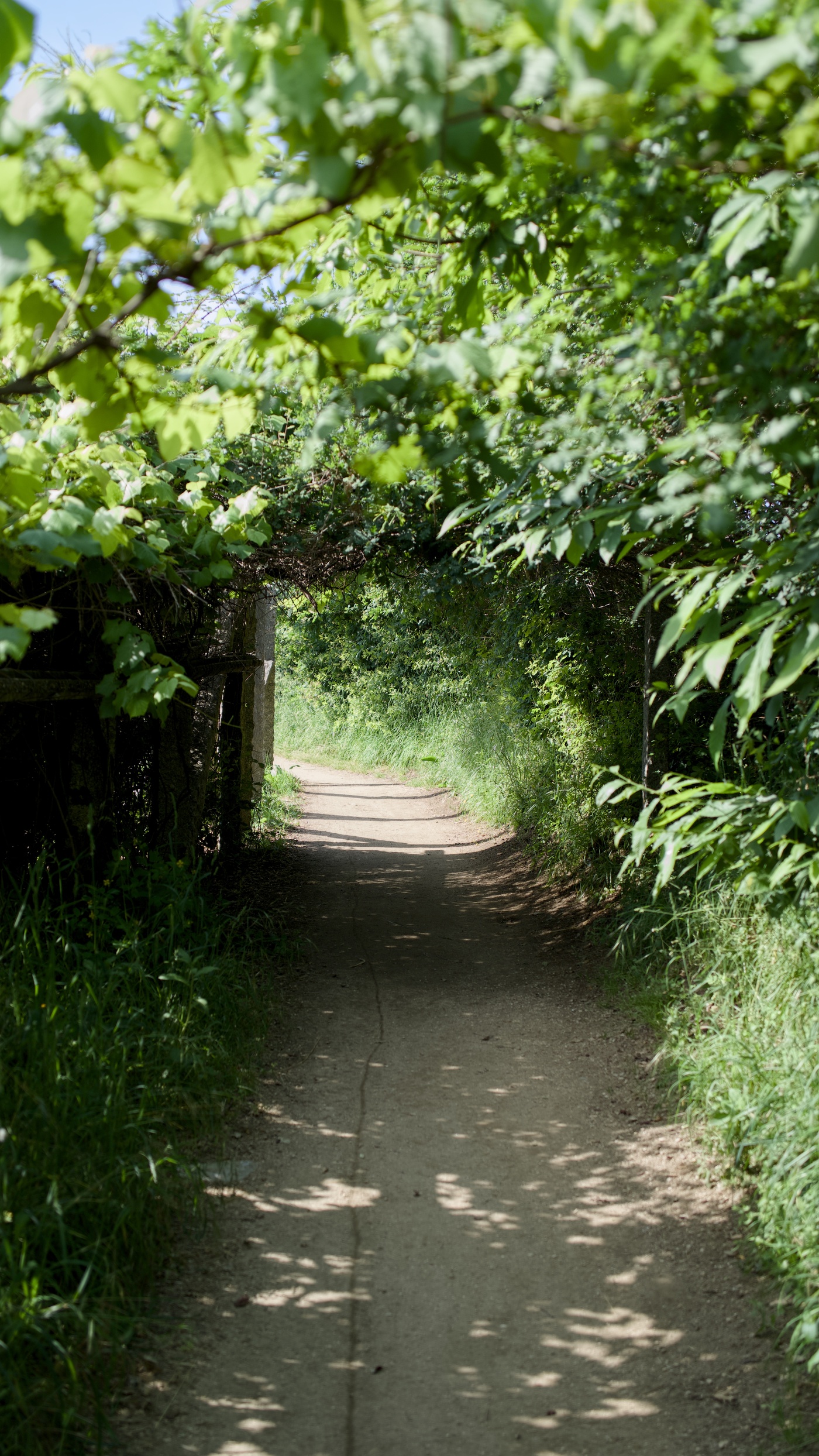
A picture: A corridor of green bamboos, knocking against each other and echoing a sharp sound, like children playing hopscotch. A thin stream of water cuts the scene, carrying a sound of peace from one ear to the other. My eyes close, thoughts disappear, and under my feet a stone bridge sustains me.
Day 5: Caldas de Reis to Padron
23km. Forests, vineyards, old stones. Pazo Arretén. Saudade.
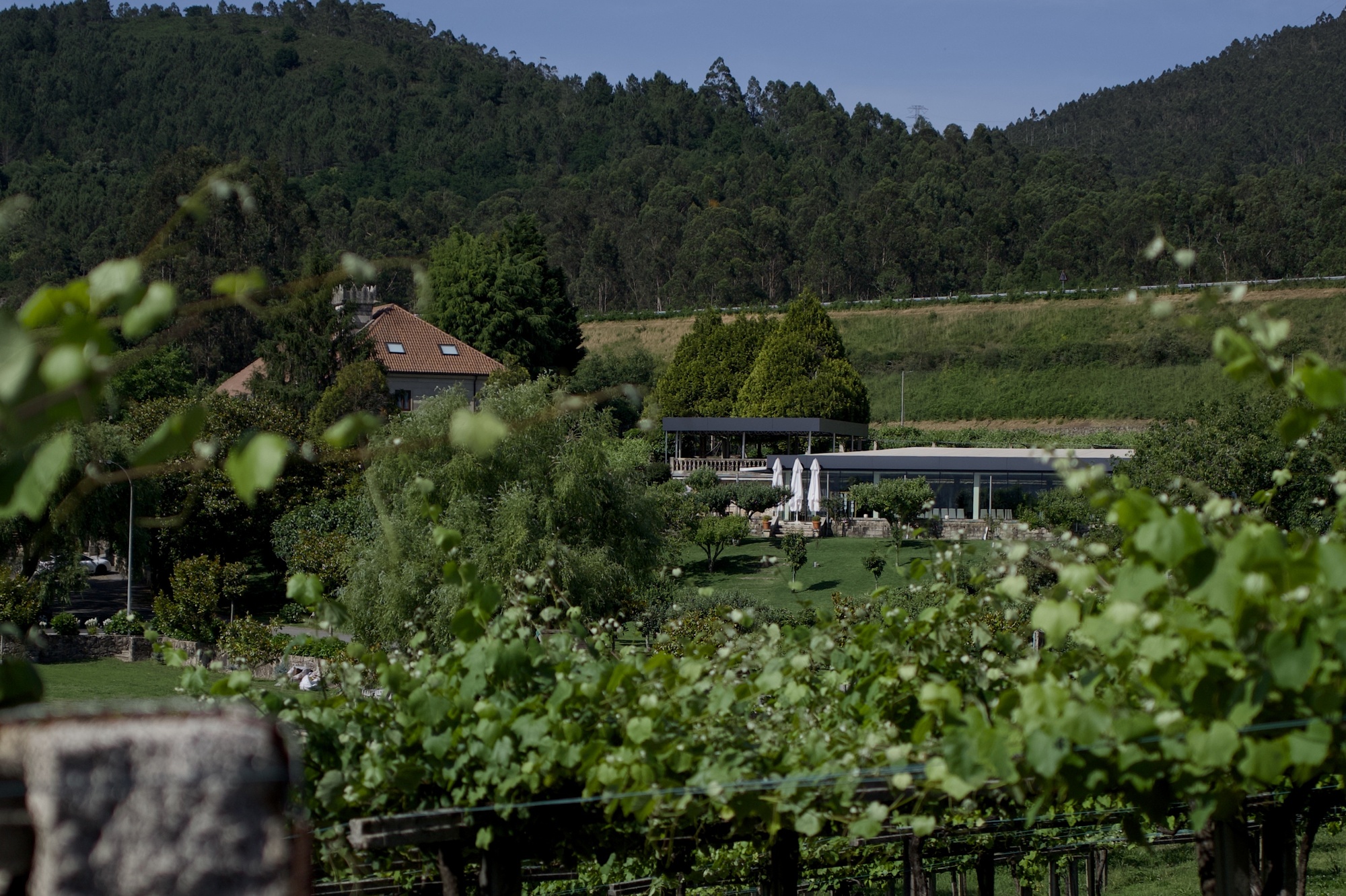
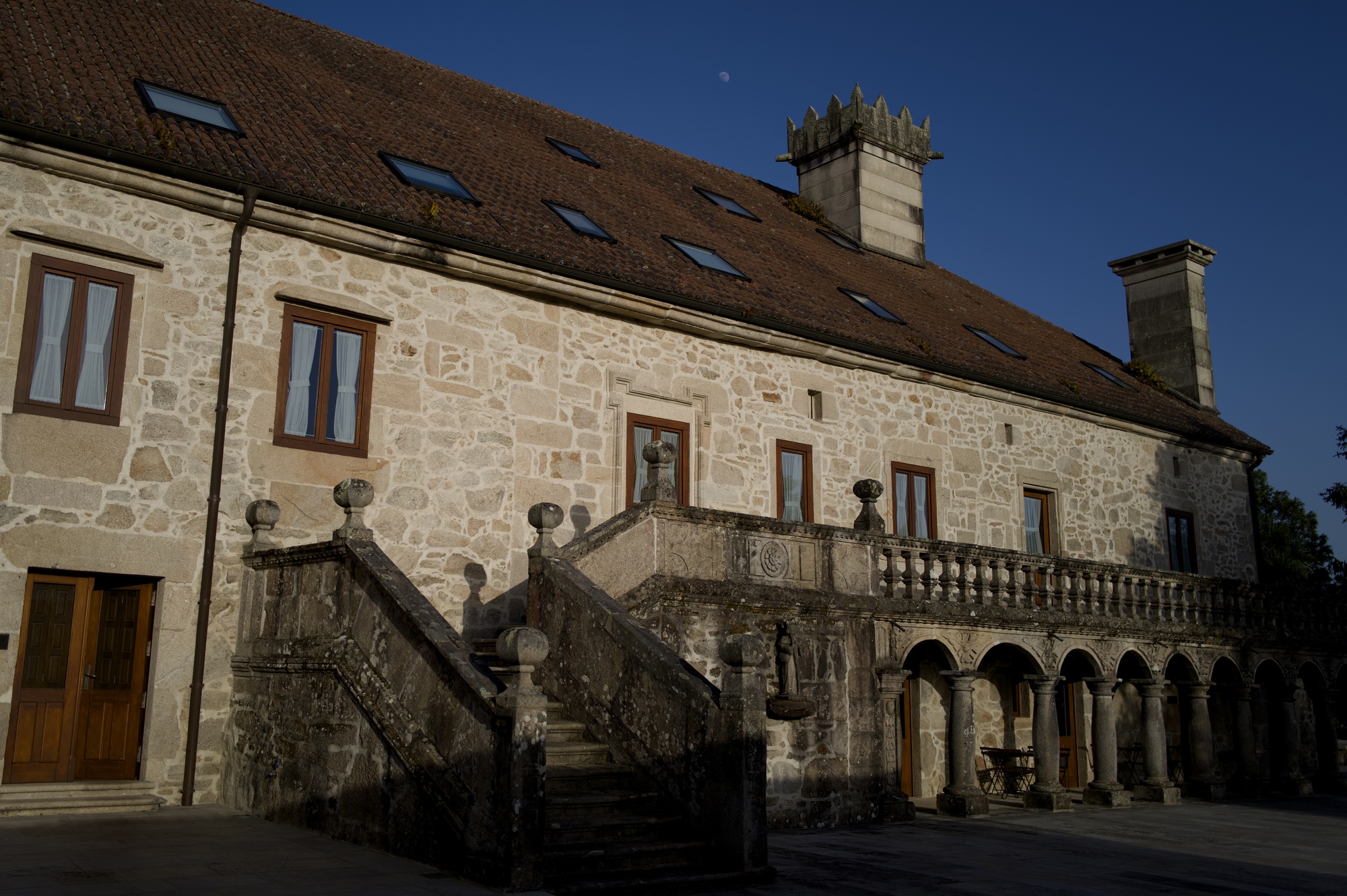
For months before the trip, I had been looking forward to one place in particular: Pazo Arretén. It was already in my mind long before we arrived in Padrón. I had read about it, seen a few photos, and decided it would be the kind of place where I’d like the Camino to slow down. It turned out to be exactly that, and more.
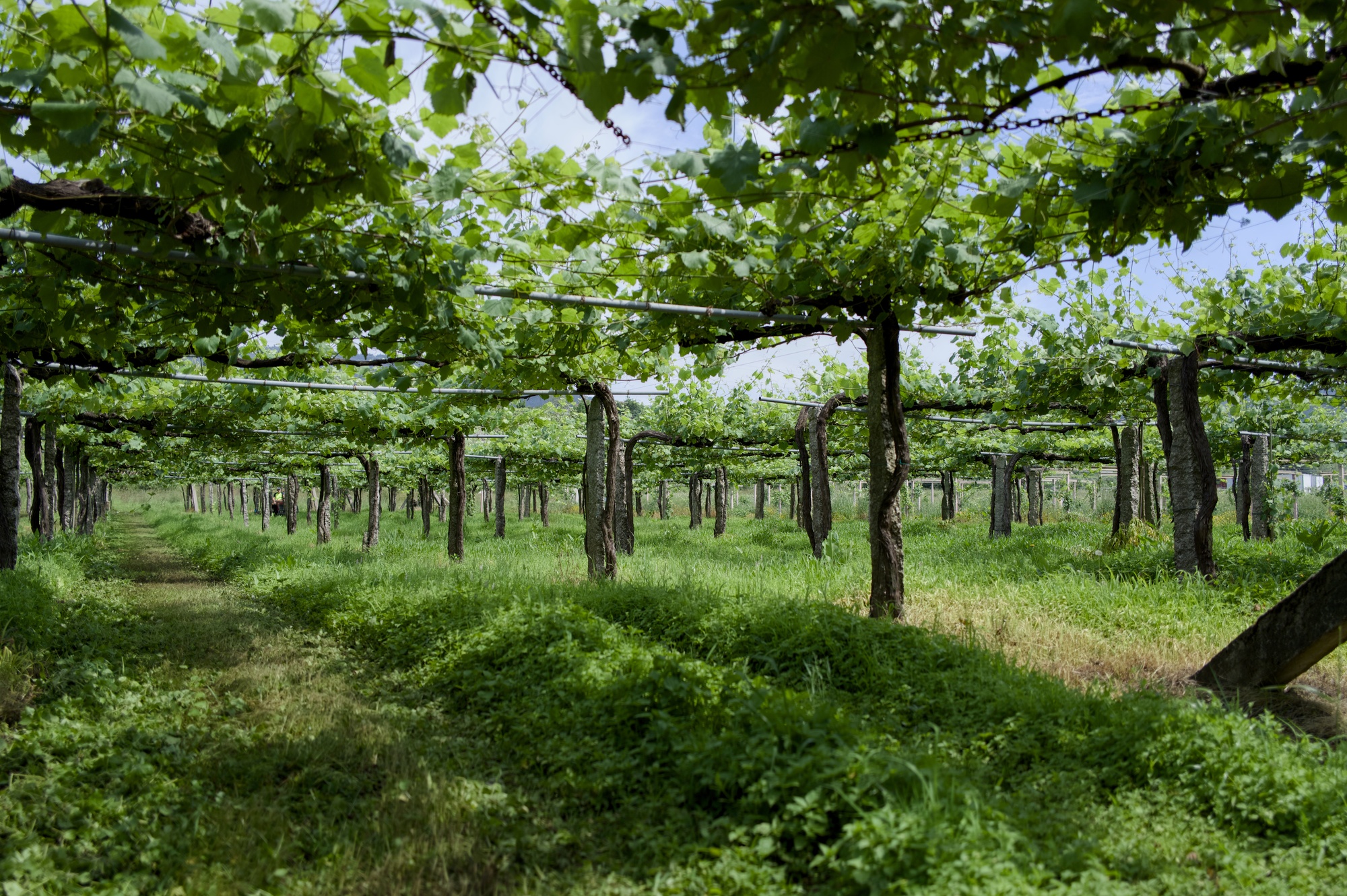
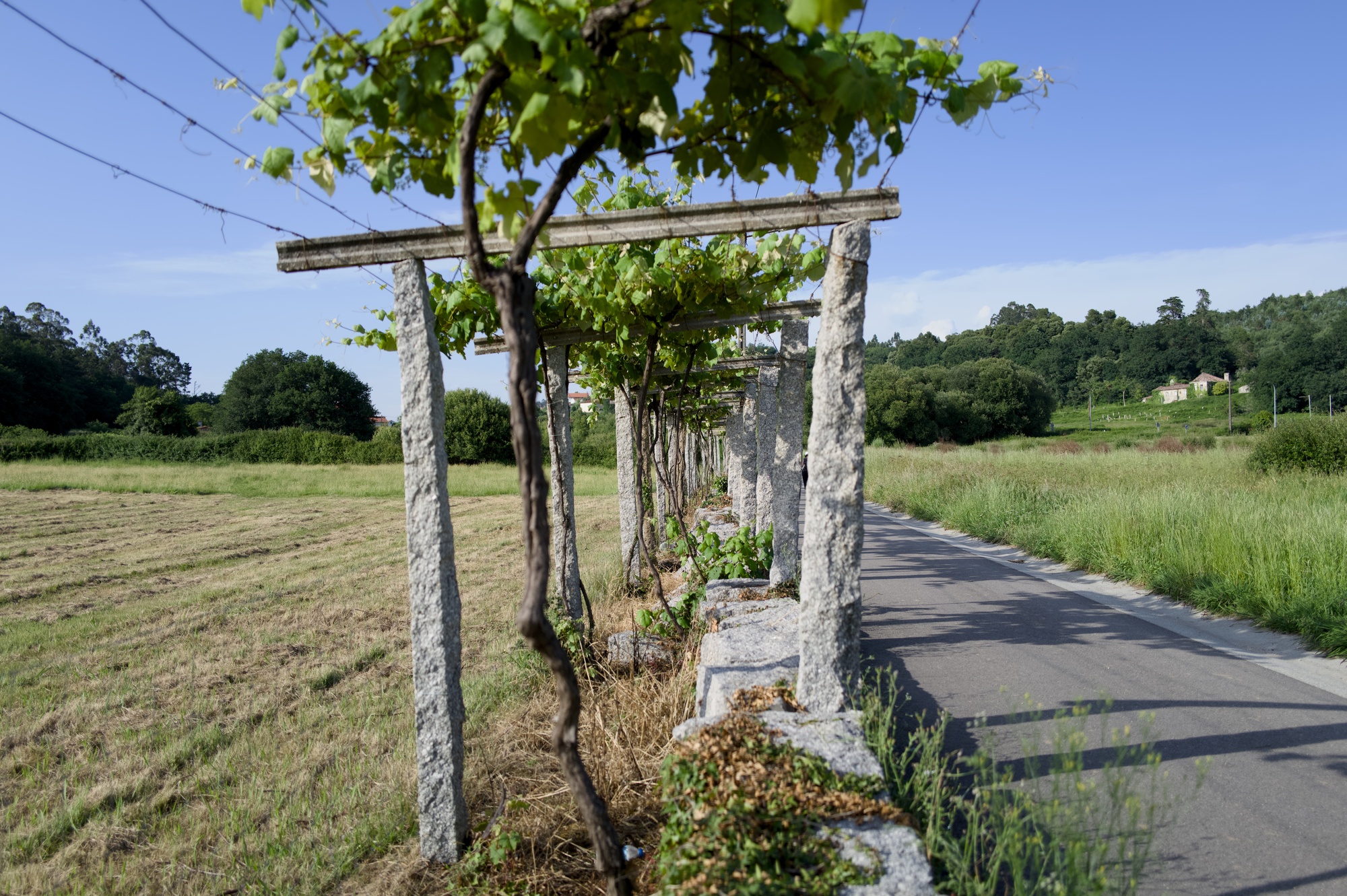
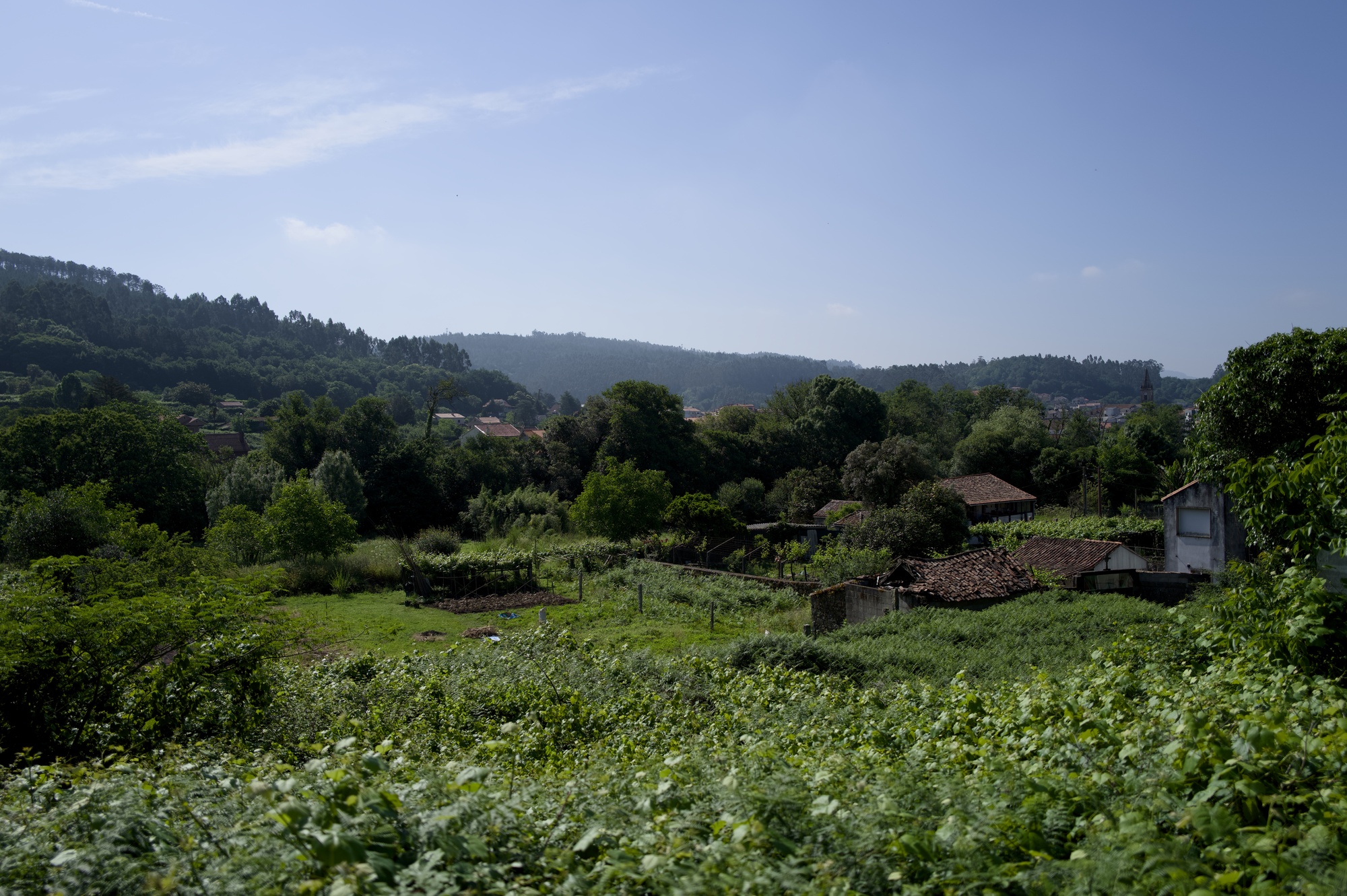
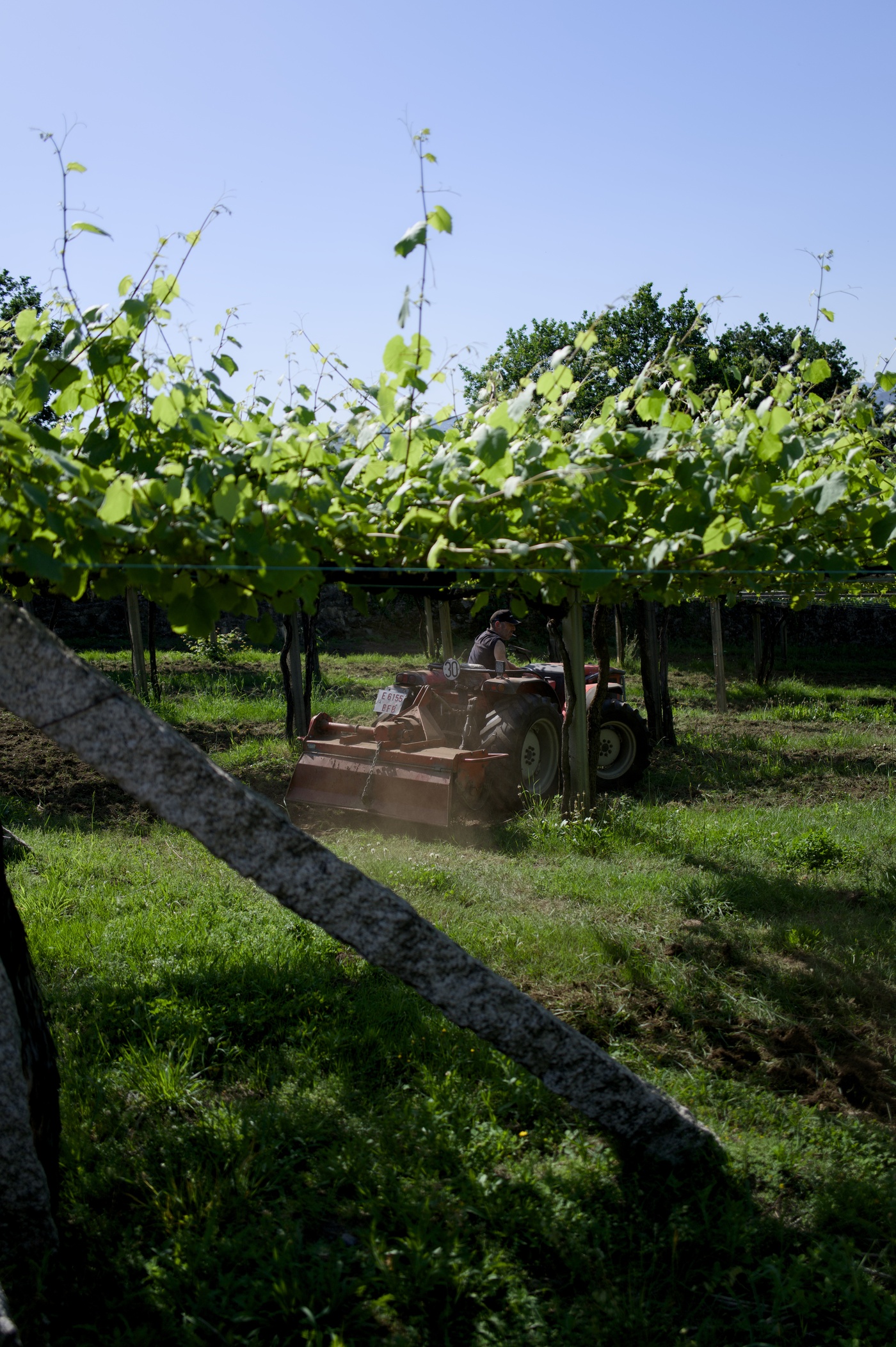
This will sound worse than it is, but for the walk itself, I have almost no memory of this day. I have flashes of a church, greenery, and the destination. Nothing went wrong. There was no problem to solve, no pain strong enough to occupy every thought, no dramatic change in scenery to split the walk into chapters. The road from Caldas de Reis to Padrón was beautiful in a steady, homogeneous way: forest, stone, vineyard, village, and then another version of the same.
Perhaps memory needs contrast. Day Five had no sharp edges. It survived mostly in photographs, so today I’ll let them speak for themselves.
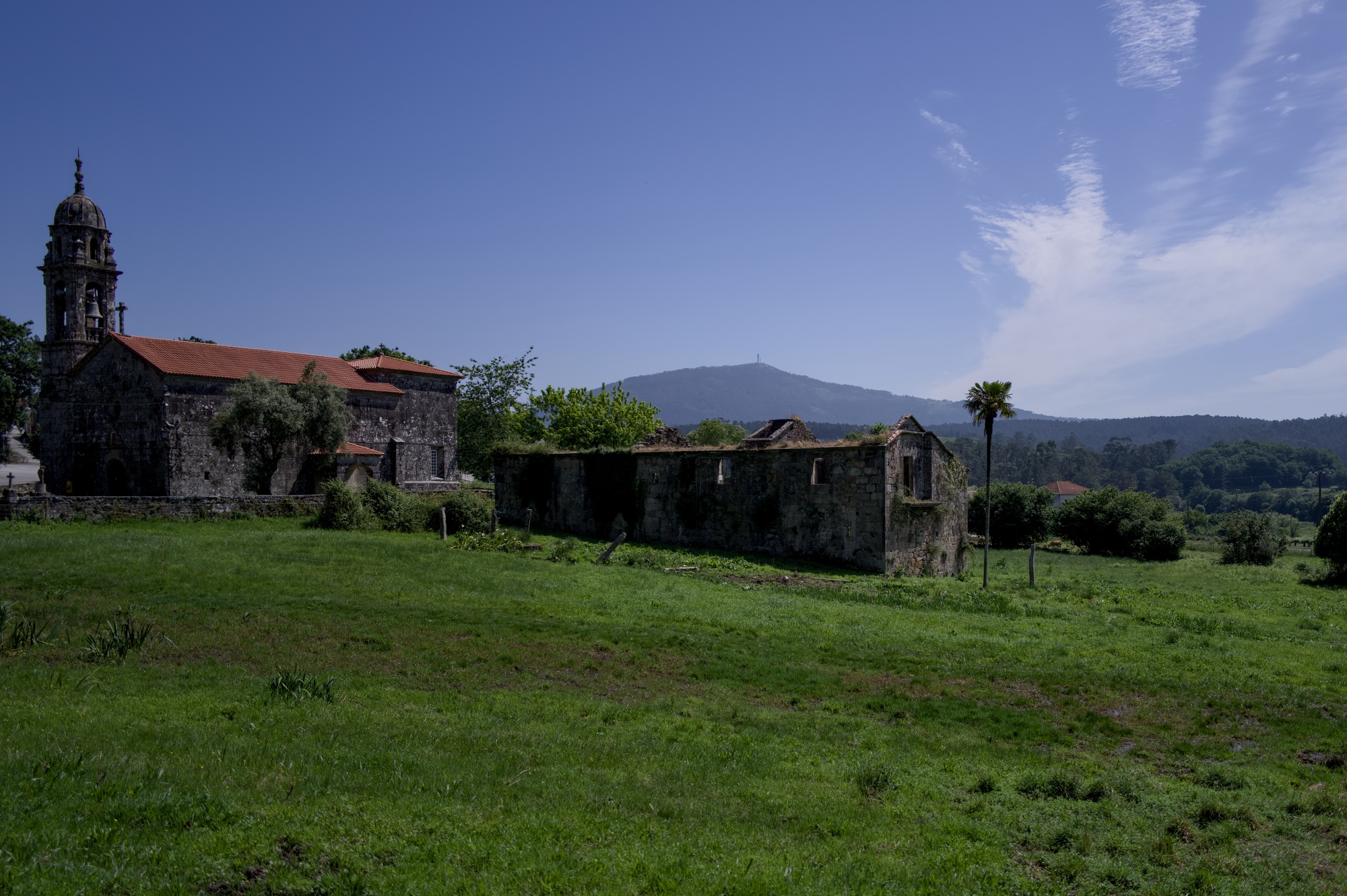
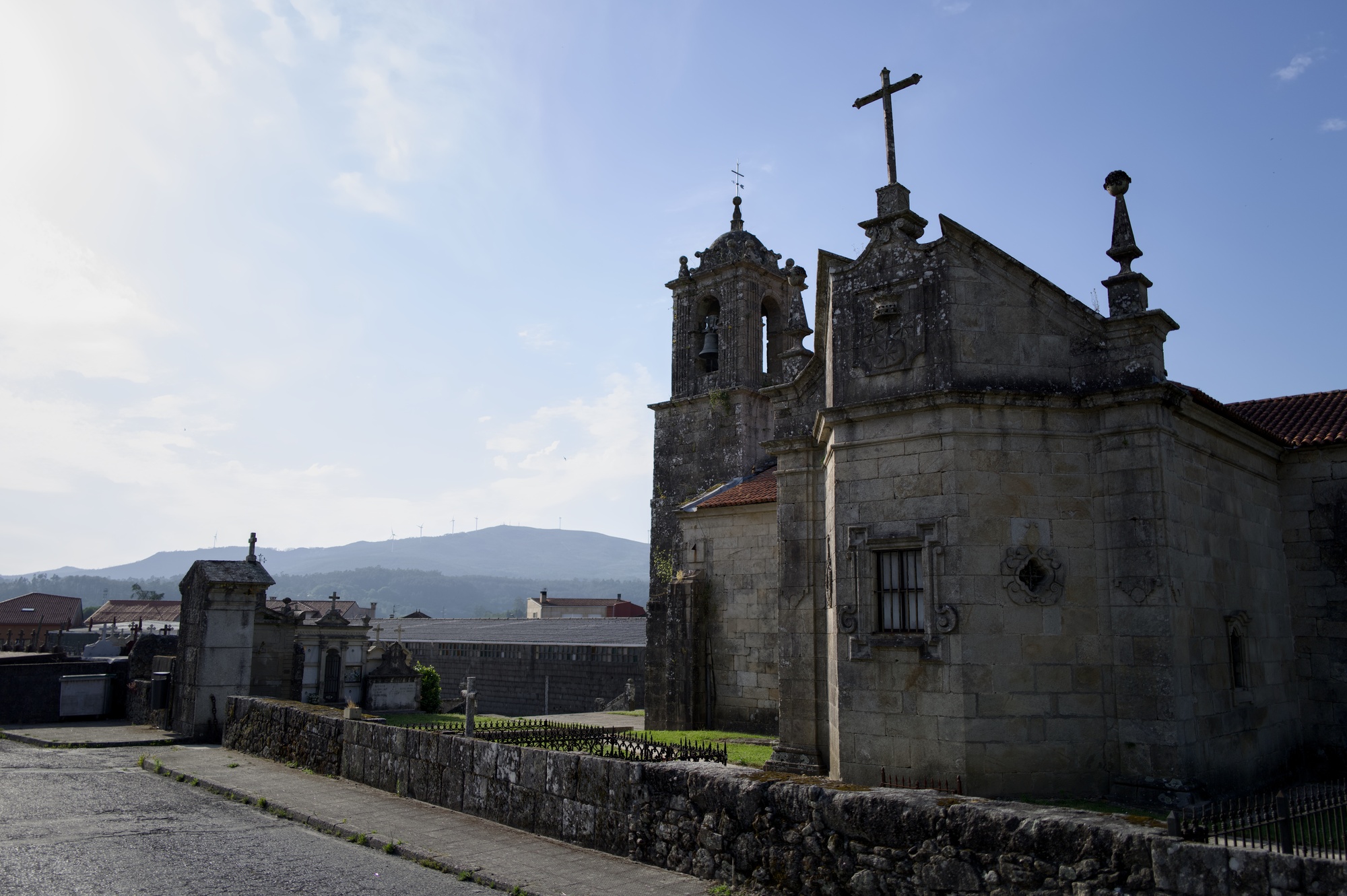
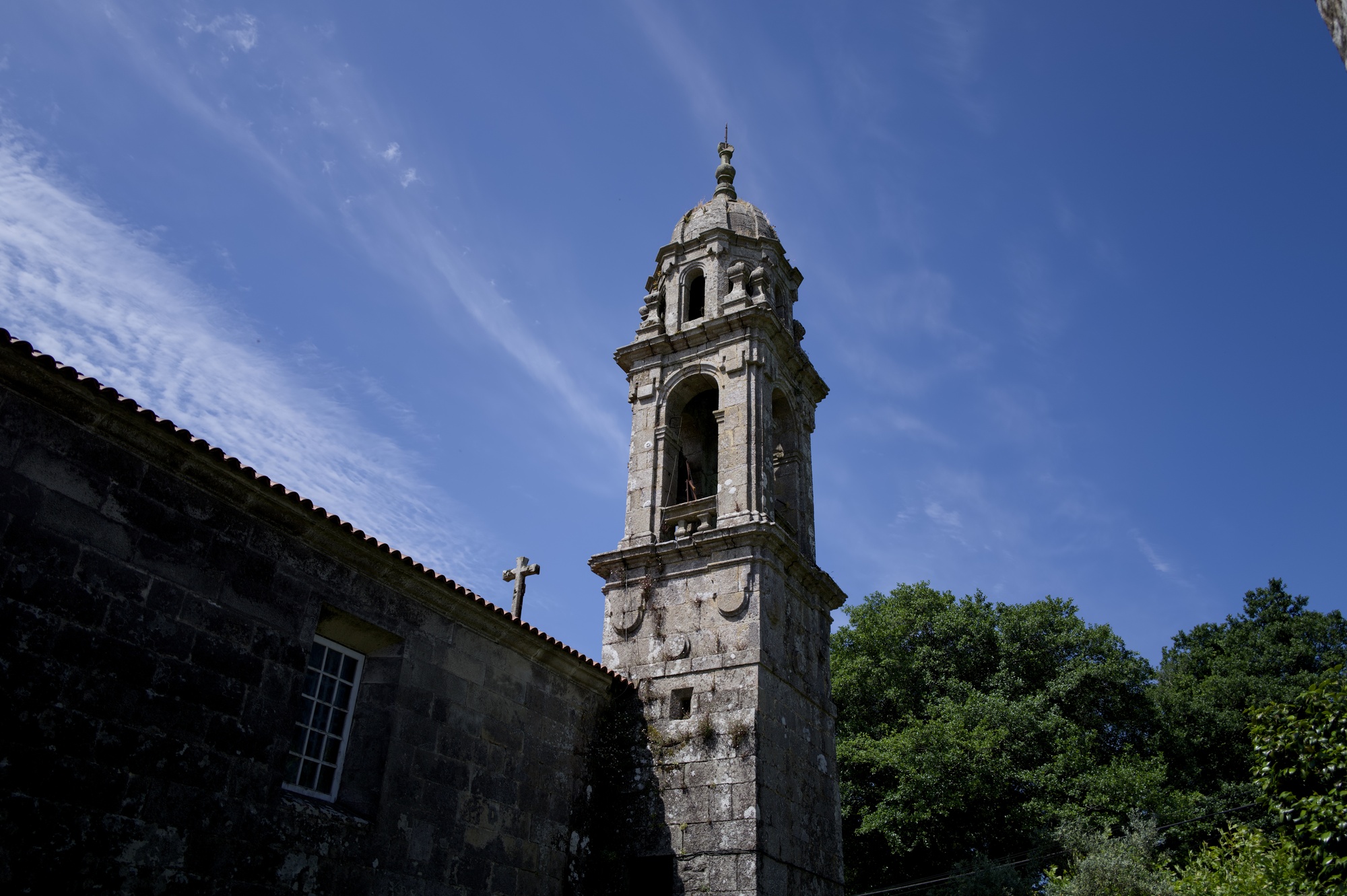
Sometime before noon, we stopped at the Santa Mariña de Carracedo church. We put down our bags and rested in the grass. It was not the greenest grass I had ever seen, but it felt like it in the moment: a soft carpet hugging the church, wrapped around the old stones like a bright scarf around an old man. For a few minutes, there was nowhere else to be.
The church grew from a medieval monastery, and its stones looked almost as old as the Camino. It was built sometime in the 12th century. Beside it stood a long building without a roof, slowly surrendering to the weather.
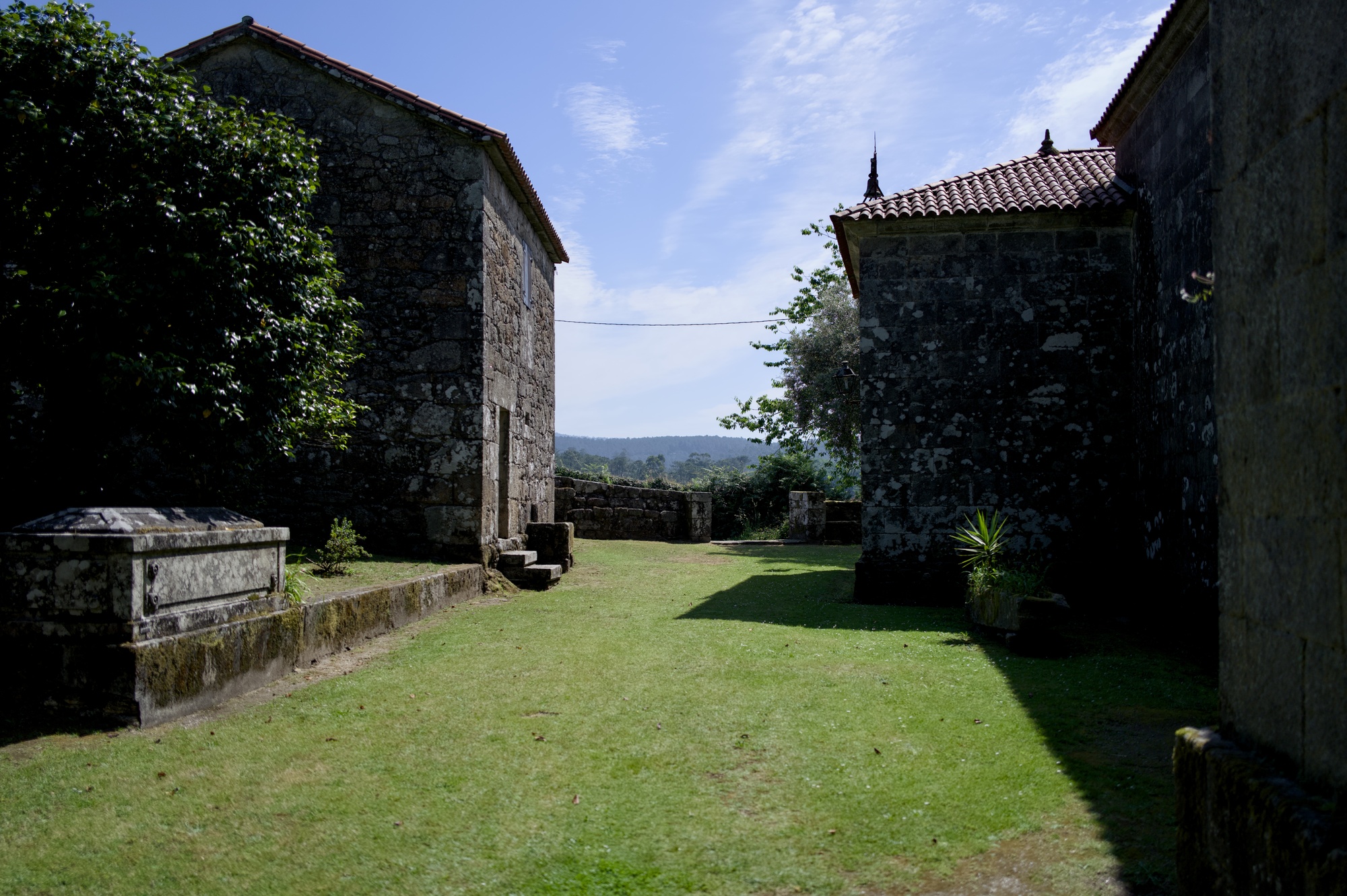
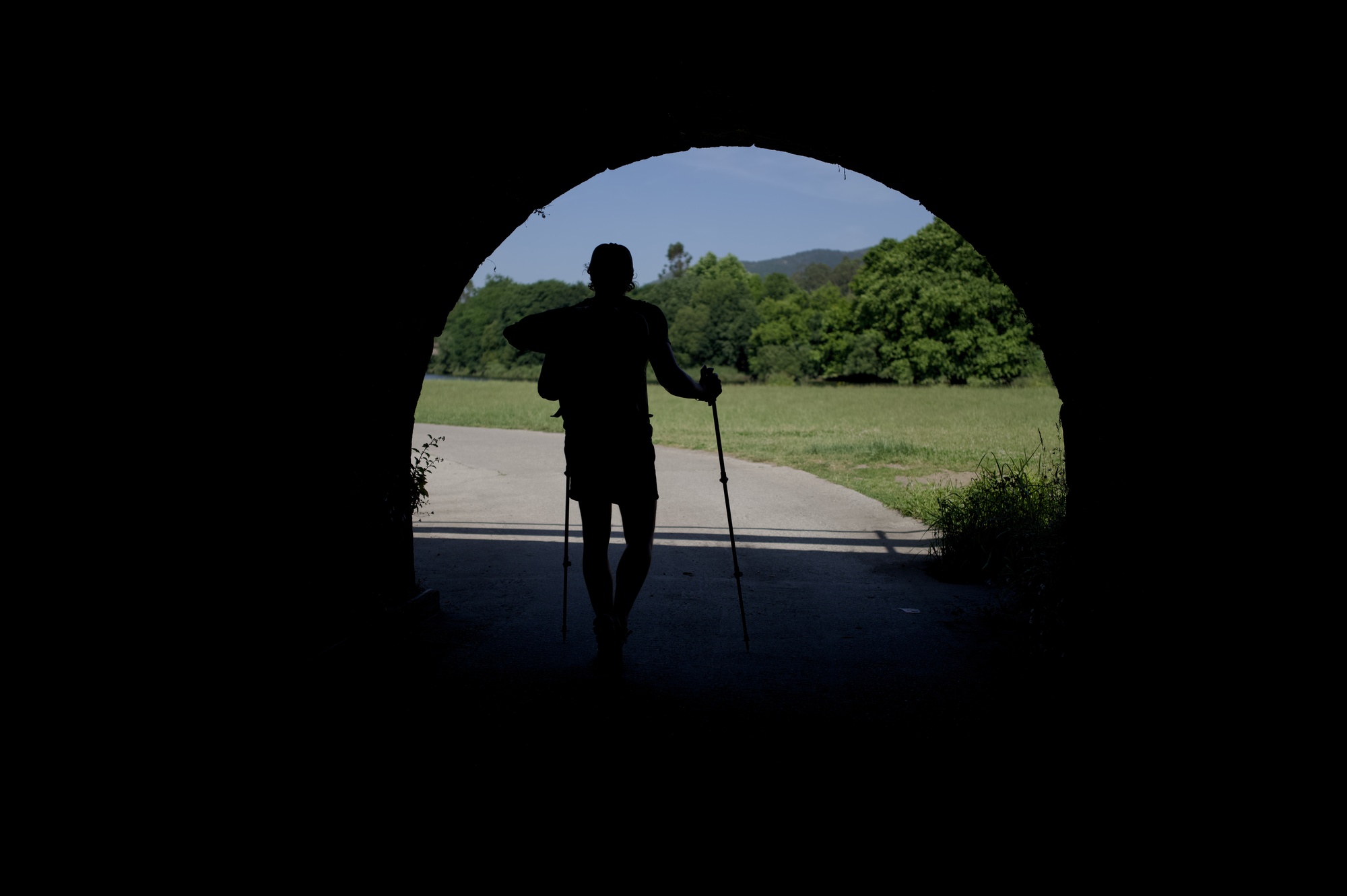
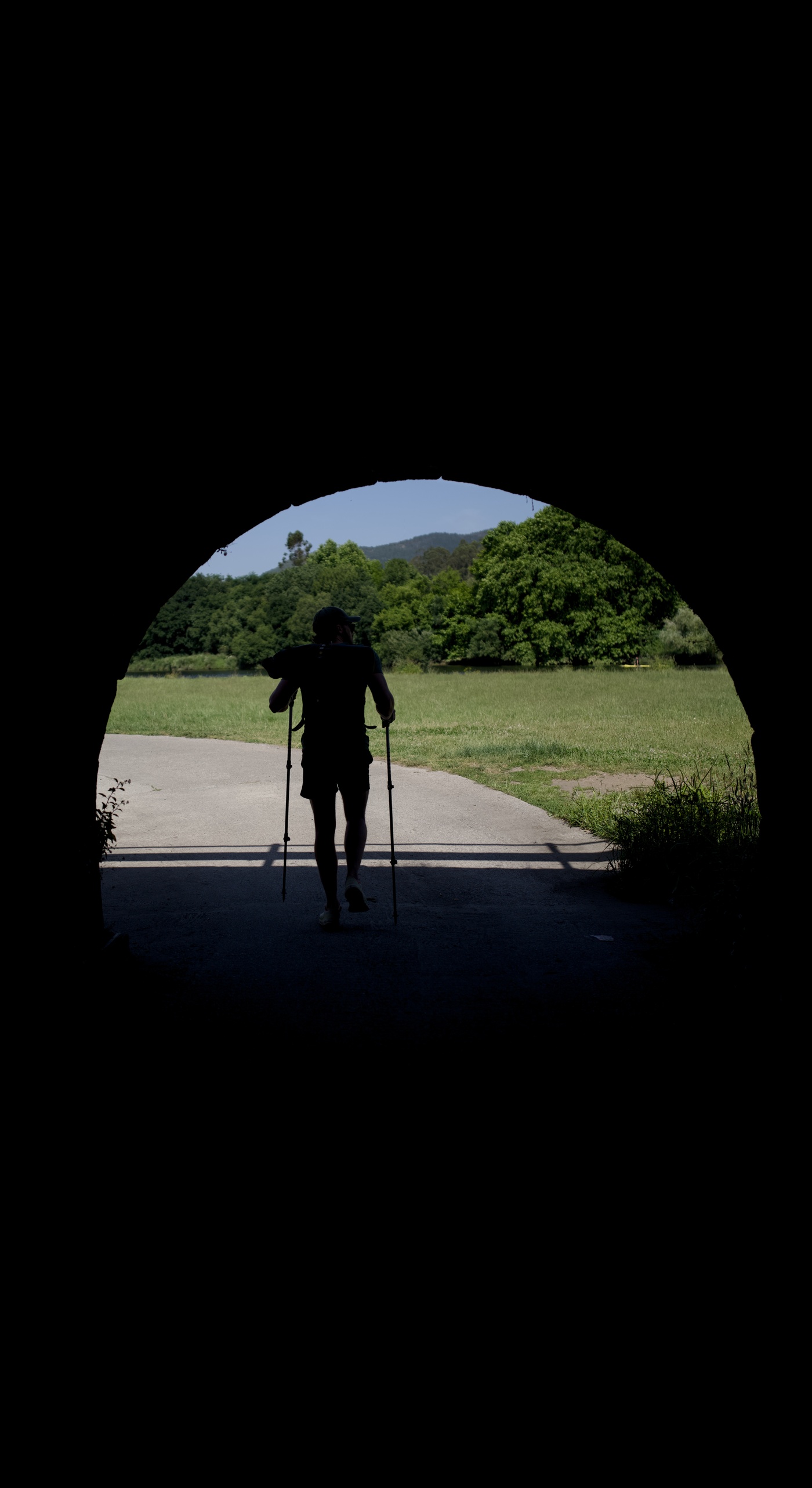
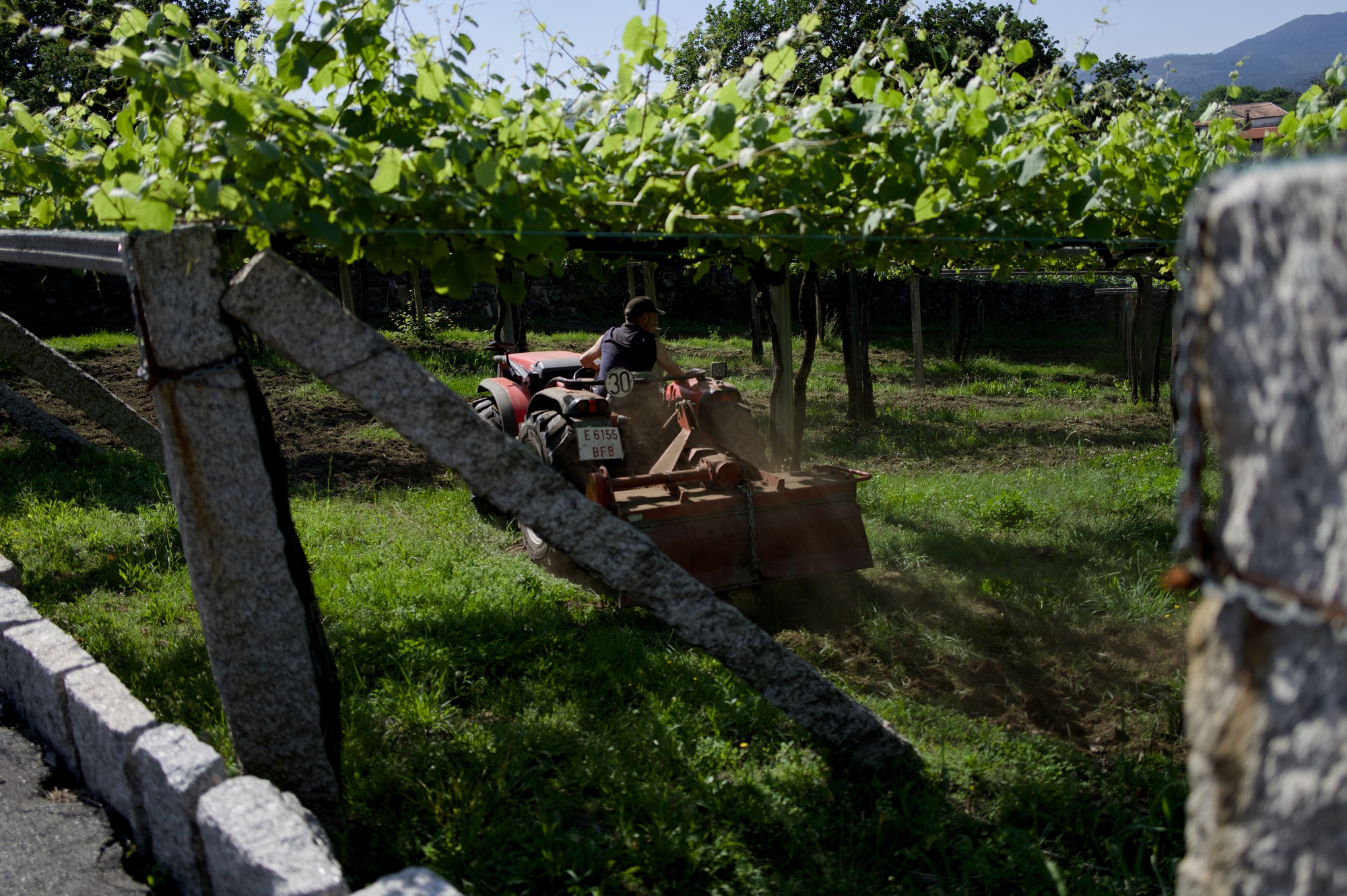
I had booked Pazo Arretén for the night because, well, it was the best place to sleep in this small town. I had also correctly predicted that by the fifth day, I would want a long dinner and wine.
What I hadn’t anticipated was Rosalía de Castro. The pazo belonged for generations to her maternal ancestors, and her mother was born there. Rosalía even wrote about the house in one of her poems.
Her Cantares Gallegos, published in 1863, is considered the first book published entirely in Galician. It helped begin the revival that returned the language to literary prominence, the Rexurdimento.
While reading about her work, one word made me pause: saudade. Growing up in Brazil, I had learned saudade existed only in Portuguese. English has no clean translation. Nostalgia comes close, but feels too neat. Saudade is the deep longing left by someone, somewhere, or something absent: an ache made of affection and distance.
Yet, there it was, in Galician, carrying mostly the same meaning.
We had dinner in a glass room attached to the old stone walls, watching the evening settle over the estate. The food was good, but it was the setting that stayed with me: wine from their own winery, warm light on glass and stone, the sense that time had softened everything around us. At some point, we even managed to convince the waiter’s boss to let us take a bottle with us, something they don’t normally sell. It felt like a small, improbable victory at the end of a long day.
That night, I wrote in my tiny notebook:
26/May/26 | Caldas de Reis → Padron
Grateful: for having the means to eat well, sleep in good places, and not carry major worries.
Lesson: it’s incredible how the body adapts so quickly. I had almost no foot pain today. It was 3 / 10, and at the end 4 / 10.
Kaizen (to improve 1%): Leave earlier in the morning.
Body: Good.
Mind: Great.
A picture: Pazo Arretén.
Day 6: Padron to Santiago de Compostela
28km. Our final day.
A few kilometers into the road, while the morning sunlight invades the gaps between leaves and branches, hitting the ground in an incandescent yellow, we hear a familiar sound in the distance, a kind of flute, faint and continuous. Scotland pops into my mind.
The sound gets louder and more defined with every step. Turning a corner in the woods, we see two ancient men playing a bagpipe and a snare drum, as if leading an army into battle. We smile at a combination of elements that we will probably never experience again in our lives, the soundtrack of a six-day movie.
We’re still about 24km from our destination.
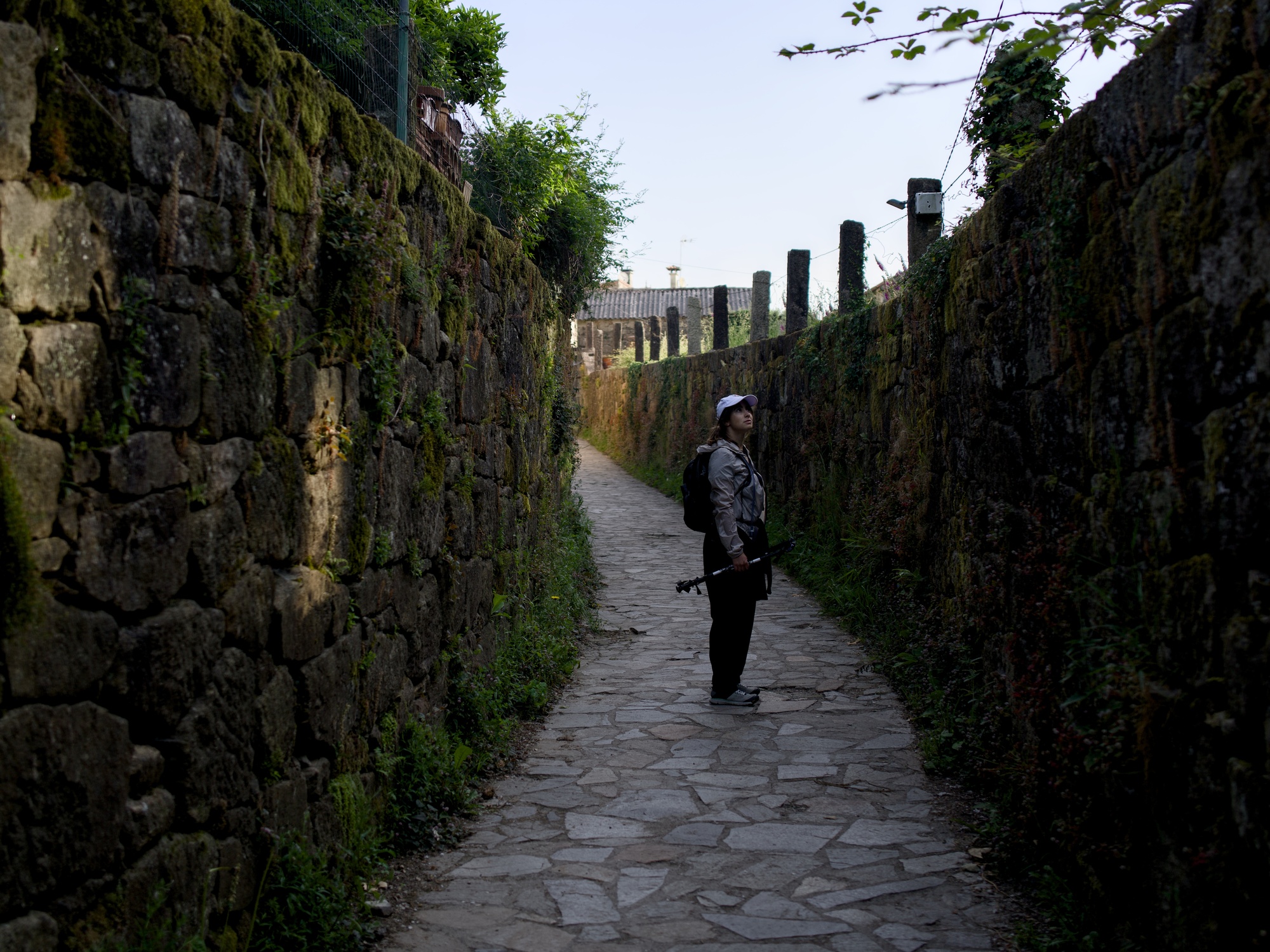
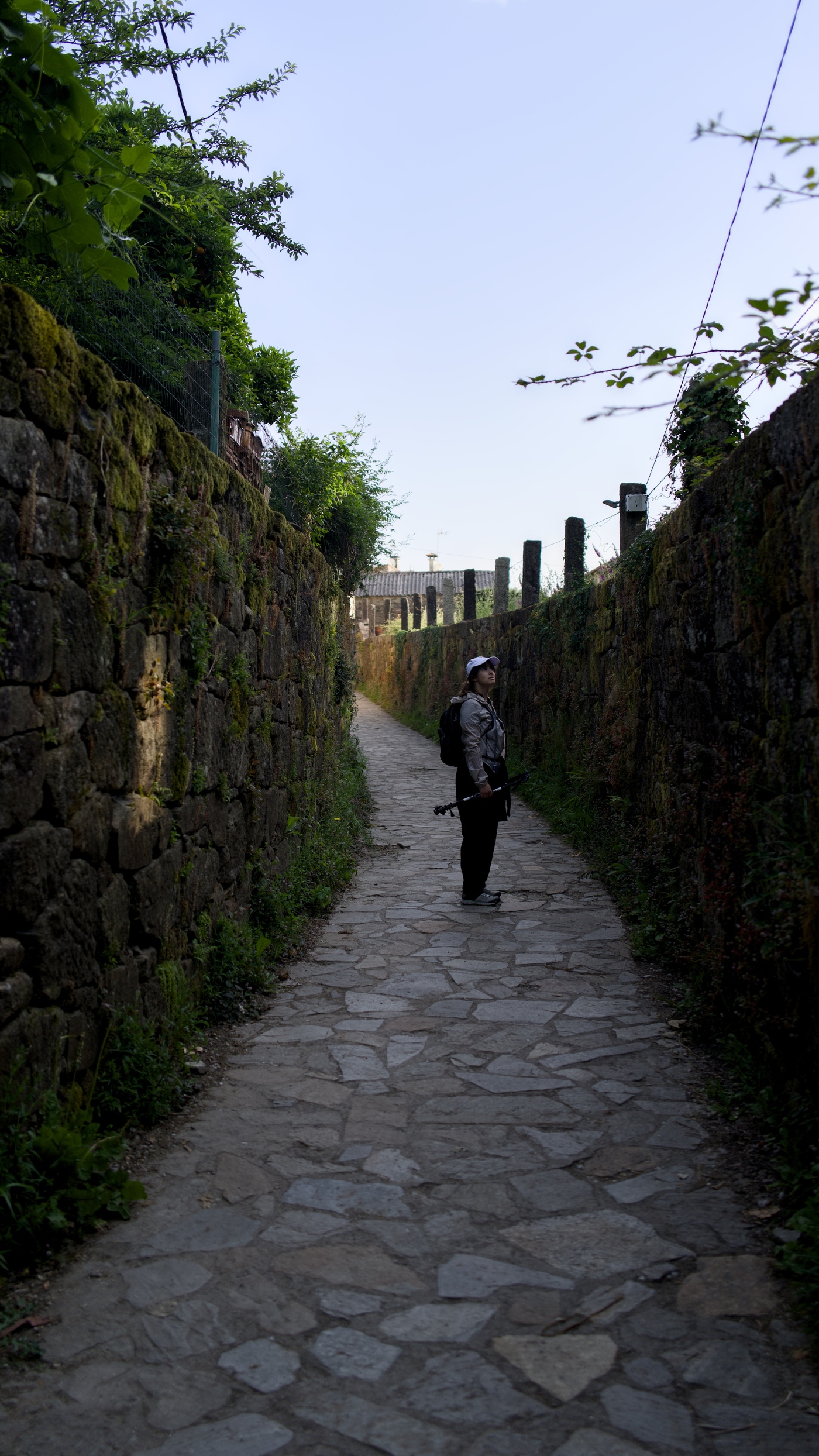
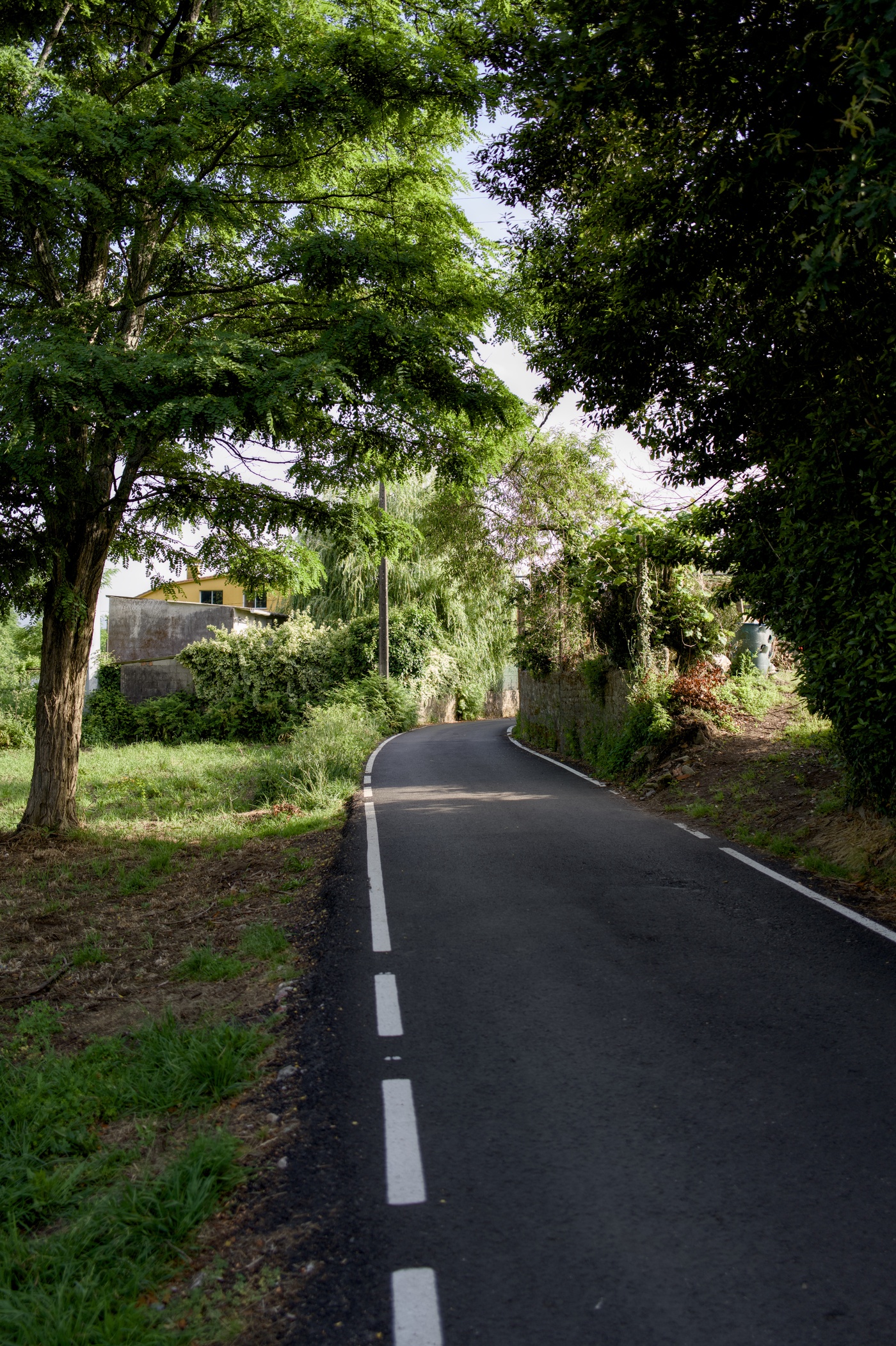
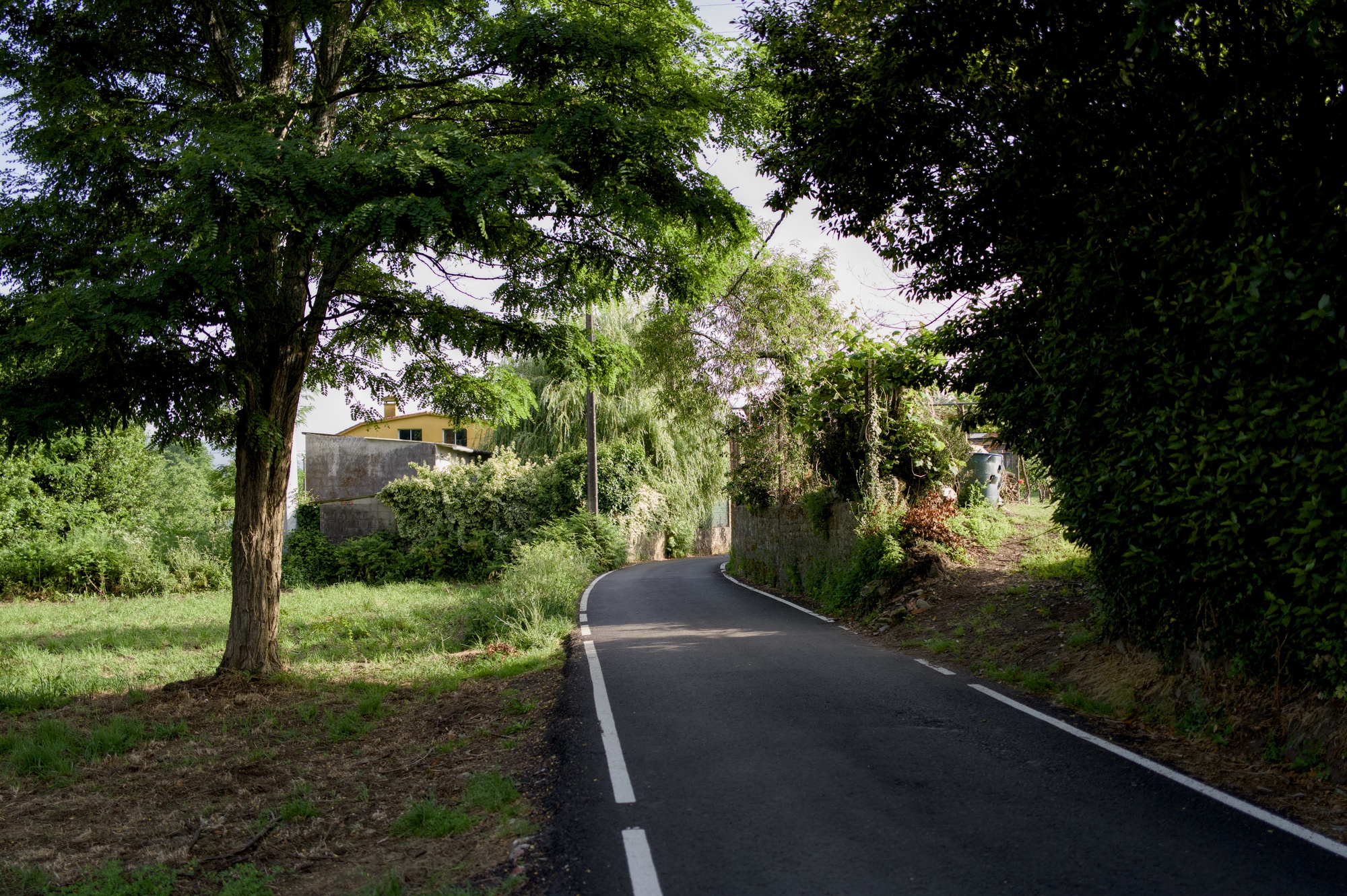
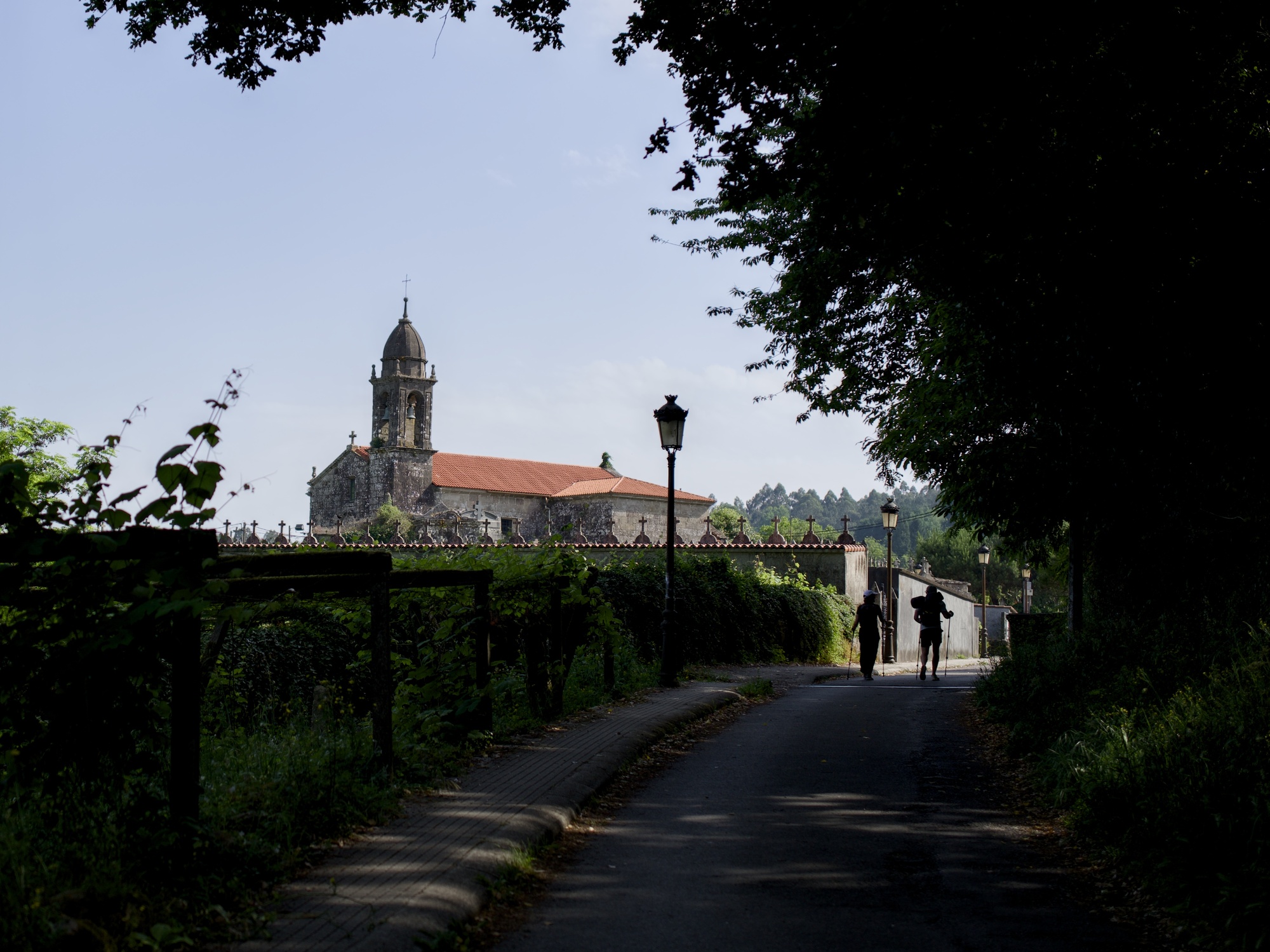
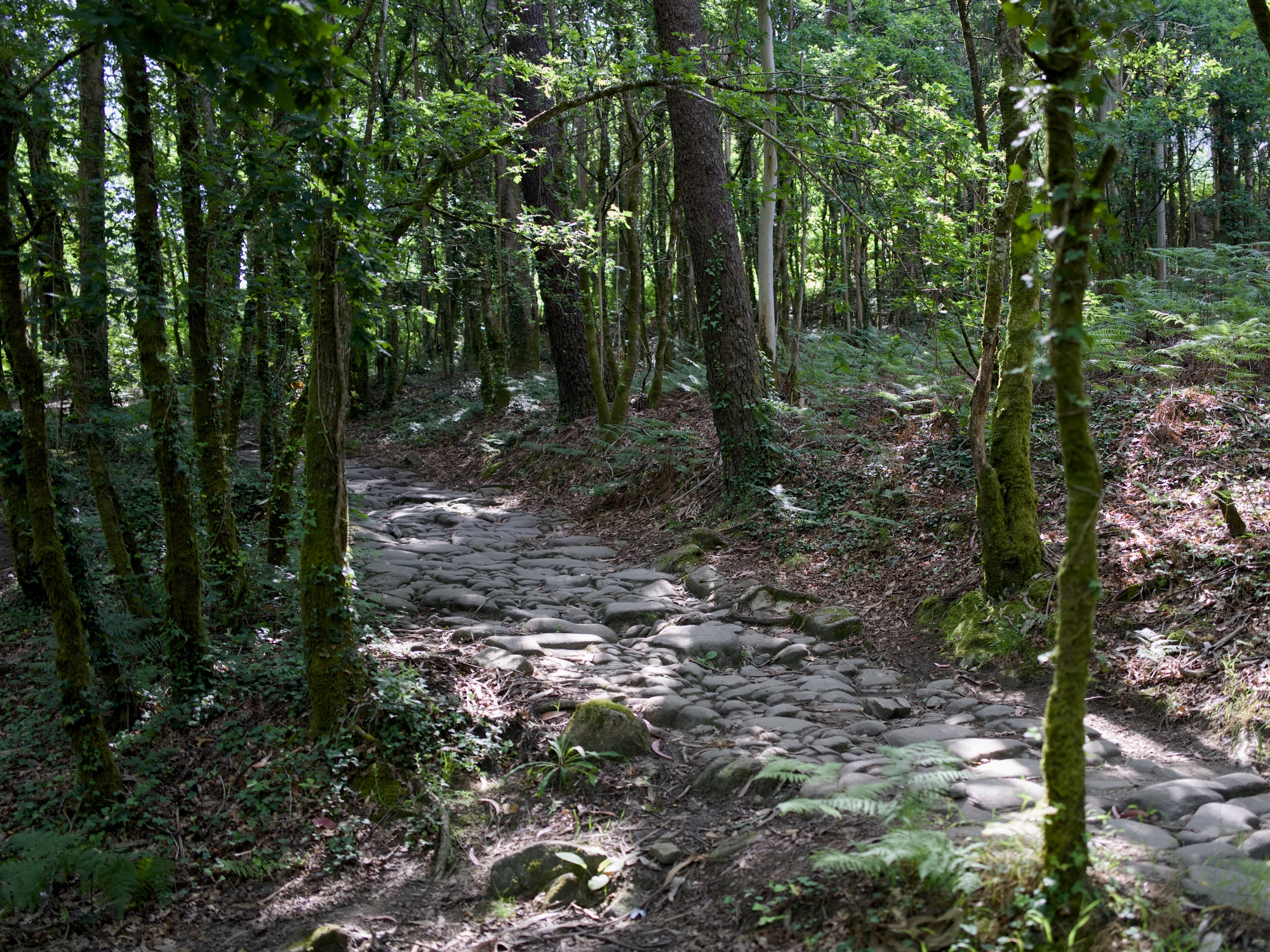
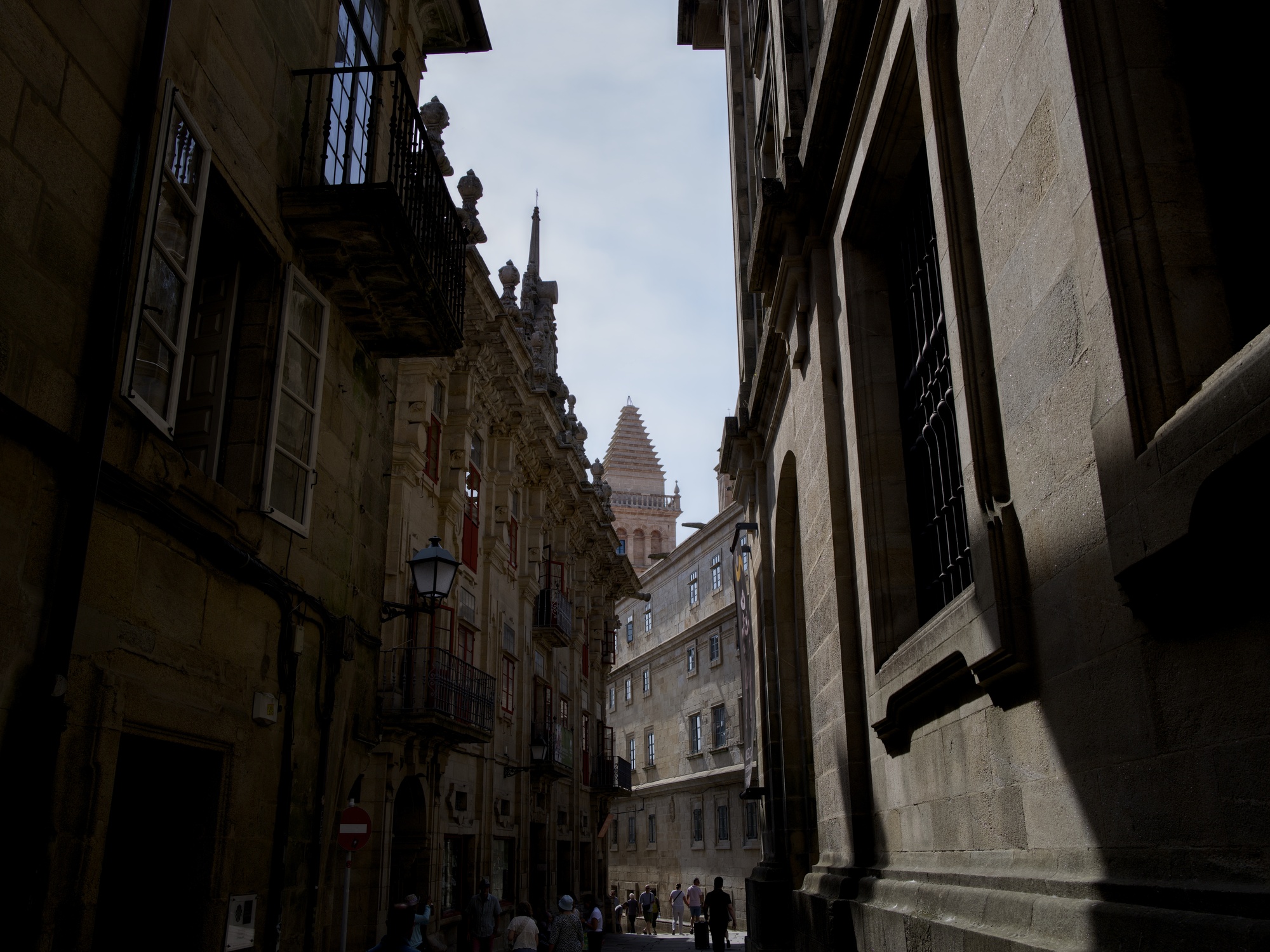
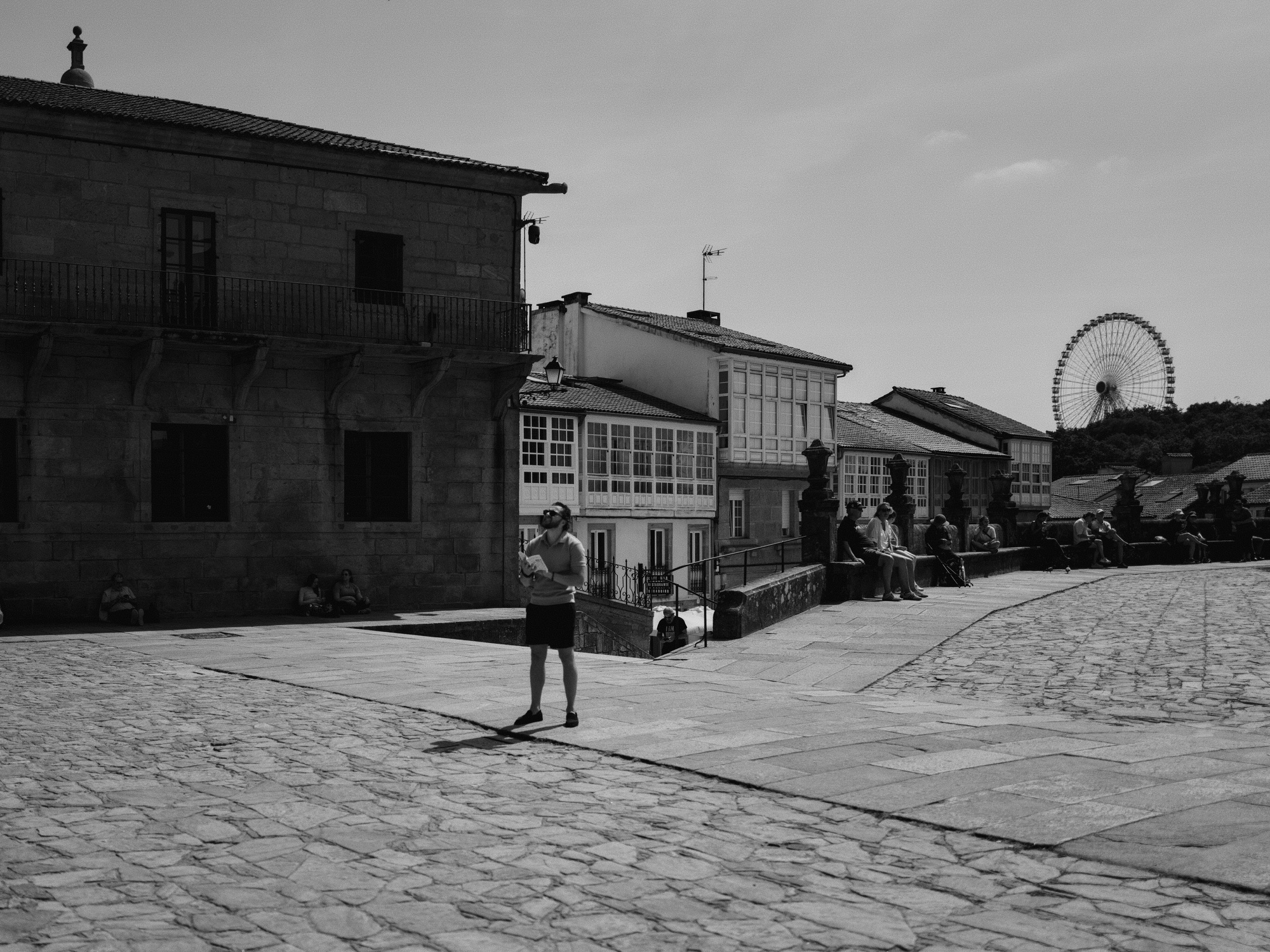
About 8km away, from a peak between the trees, we see buildings and a Ferris wheel on the horizon. From there, we descend into the valley toward Agrela, and the arrival is a new, steady climb. We go through tiny alleyways, bridge passageways, anticipating the end is closer.
Gradually, we are met by cars, sidewalks and everything that makes a lively city. We must be in Santiago. We see people in their walking boots across the street, couples pushing the feet forward, families rushing through the corners. We advance through neighborhoods for about an hour until we start seeing what must the city center. The pilgrimage transforms from trees and rivers into tarmac and shops.
Suddenly, an alleyway is ahead of us, and hundreds of people are walking through it. It must be our final destination.
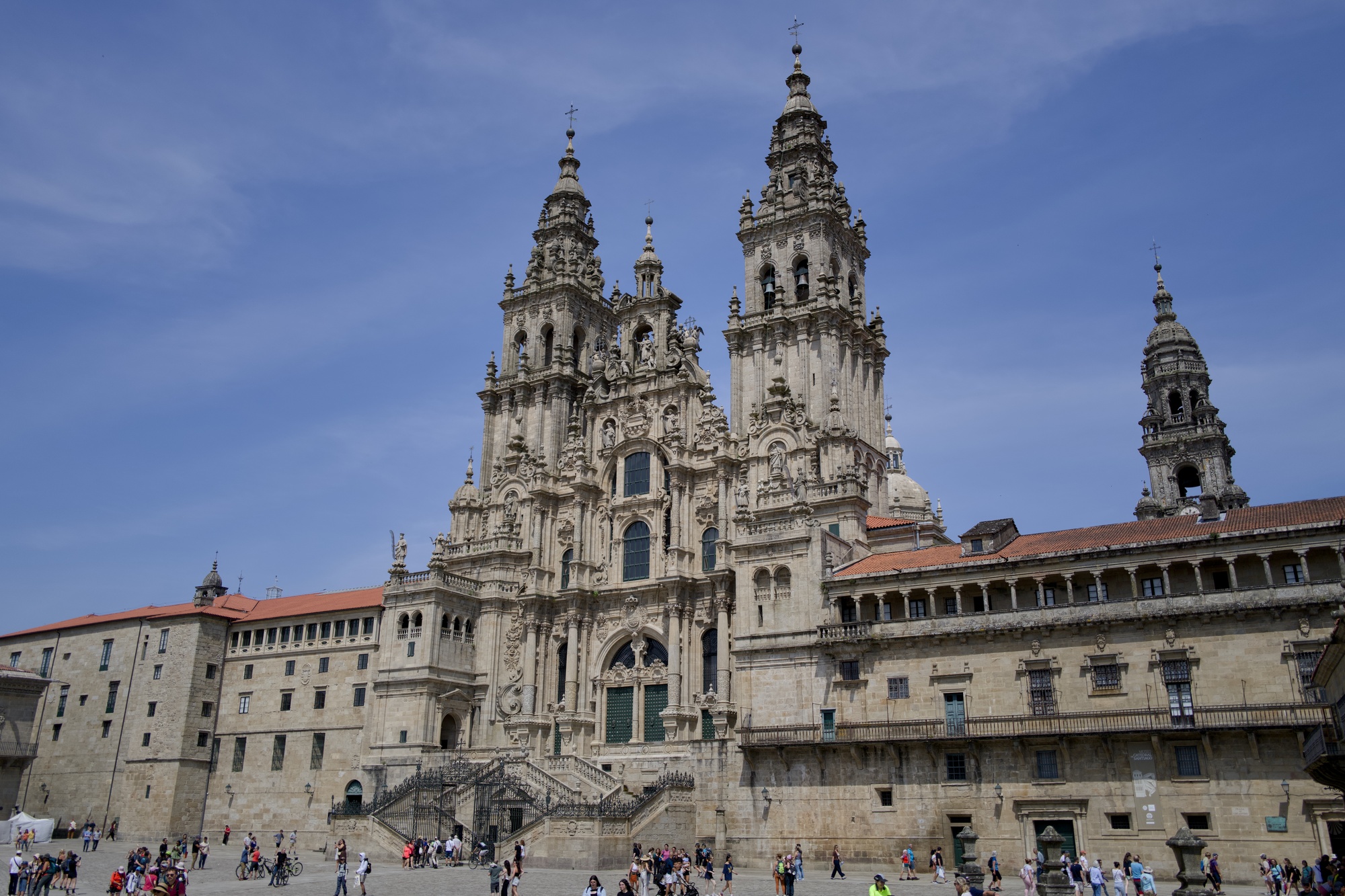
When I stepped into Praza do Obradoiro, the final destination, I felt something I wasn’t expecting. Or rather, I didn’t.
People came into the square from every narrow street. Every few seconds another group arrived, smiling, crying and hugging one another. The cathedral towered above everyone, its facade covered with carved figures that generations of craftsmen had spent centuries shaping. It was impossible not to notice the scale of it all.
I had imagined this moment many times. After walking more than 140 kilometers, I expected excitement, perhaps relief, a sense of triumph, maybe even the urge to cheer.
But for God’s sake, I felt nothing! A kind of peaceful emptiness, like staring at a wall after a strenuous gym session!
I lay down on the stone pavement, using my backpack as a pillow, and stared at the cathedral, waiting for feelings to rush in at any moment. My eyes wandered across the countless carvings, wondering about the people who had built each corner of that place, one generation after another. My thoughts drifted back to the previous days. My GPS said 144 kilometers, but my memory saw a single snapshot, as if the whole journey was compressed into a blur. I was tired.
The exhaustion slowly gave way to a feeling of accomplishment. I was proud of the walk, grateful. Yet the ending itself left me strangely unsatisfied. I wouldn’t understand why I felt that way until the next morning.
Walkers keep appearing from every corner. Behind them, narrow streets leading into the plaza echo sounds of an invisible crowd. Distant cheers announce another group of pilgrims, and those in the plaza clap their arrival, over and over. A minute later, another group arrives. Then another. They come from everywhere: France, northern Spain, Andalusia, Portugal. The cycle repeats over and over multiplied across the many routes, the Francés, the Norte, the Primitivo, the Inglés, the Portugués, the Vía de la Plata, the Mozárabe, from the Pyrenees to the Strait of Gibraltar.
Some collapse into tears, others laugh. Friends hug each other, families celebrate. Every few moments you witness someone reaching the end of a deeply personal journey, and no two arrivals look the same.
The square never stops morphing into something else.
I feel a gentle touch on my left arm. As I turn around, a smiling woman in her sixties is standing. She asks if we can take a picture in front of the cathedral.
After taking the photo, we start talking. She’s from a small town in Mexico, and for more than ten years, had been living as if life was already behind her, not living anymore, waiting for death’s arrival.
One day she realized life was slipping through her fingers. A rebellious moment led her to find the Camino. She came alone and walked more than 160 kilometers.
As she tells us her story, tears start coming down. She had just picked up her pilgrim certificate, which she held tightly in one hand while gesticulating with the other what had happened over the previous days. The Camino taught her a lesson: that life is meant to be lived, not watched while waiting for something that may never come.
Then she smiled through her tears and told us that the woman who had arrived in Spain a few weeks earlier no longer existed. She was going home as someone else.
I don’t know whether the Camino, or walks more broadly, changes everyone in the same way. I doubt it does. What I do believe is that it has a way of giving people exactly what they need.
Some people find courage, others find peace. Some leave with renewed purpose. Others simply leave lighter than when they arrived. The distracted find focus, the confused find clarity.
For me, it brought perspective. The problems waiting for me back home hadn’t disappeared, they would still be there after the flight back, but they would no longer occupy the same space in my mind.
Walking day after day doesn’t solve your problems, but instead, you return with enough distance to look at them differently. In a way, it reminded me of how I felt after walking the Kumano Kodo in Japan. Every long walk seems to send us home as a slightly different version of ourselves.
The next morning, I returned to the cathedral, but this time, I went inside. The moment I looked up, my jaw dropped.
The enormous columns, the golden altar, the organ pipes disappearing into the ceiling. The sheer height of the place. Everything seemed impossibly large. I stood there like a child seeing an airplane for the first time.
For the first time since arriving in Santiago, I felt the emotion I had expected the day before. I finally understood why pilgrims had walked across Europe to reach this place, sometimes for months.
Looking up, it struck me how unimaginable this building must have been to someone arriving here in the Middle Ages. What would be the modern equivalent? Maybe seeing the International Space Station up close. It’s hard to think of many human creations that inspire that same mix of disbelief and admiration.
I found a quiet place to sit and stayed there for a long time, absorbing the peace and trying to imagine what it must have felt like to arrive here as a medieval pilgrim after crossing forests, mountains, rivers, and kingdoms entirely on foot.
Only then did Santiago truly feel like the end of the journey.
27/May/26 | Padron → Santiago de Compostela
Grateful: for being able to carry this achievement with me. 144 km.
Lesson: despite the feeling of little progress, through climbs, descents and repeated scenery, the map shows that 5 km have passed. I didn’t get this on the Kumano Kodo (there progress felt like progress).
What stays behind: The need to feel progress all the time. Progress doesn’t always come with checkpoints or signs. Sometimes it only becomes visible when I look back. It is necessary, however, to have a clearly defined destination, to be willing to change direction when on the wrong path, and to enjoy the journey. The beauty of the green, the sound of crystalline water, and the refreshing shade make the passage of space and time much more bearable.
Kaizen (to improve 1%): Daily stretches and self-massage eliminate pain. During the walk, I repeated this process every night and woke up pain-free. I missed one of the days and suffered throughout the next day with discomfort. Beyond this pilgrimage, I should incorporate this process in my routine.
Body: Exhausted. The last day was rough. The foot pain was easing, but on the last day I was totally limited.
Mind: Clear. I did not feel the euphoria I was expecting when I arrived at the church. Only relief. The reward came the next day, when I finally entered the cathedral.
A picture: The architectural details of the church of Santiago. The small and infinite reliefs on the walls, carrying stories from centuries ago. Gold everywhere elevating historical figures.